100 Ohm Resistor - (Pack of 10)


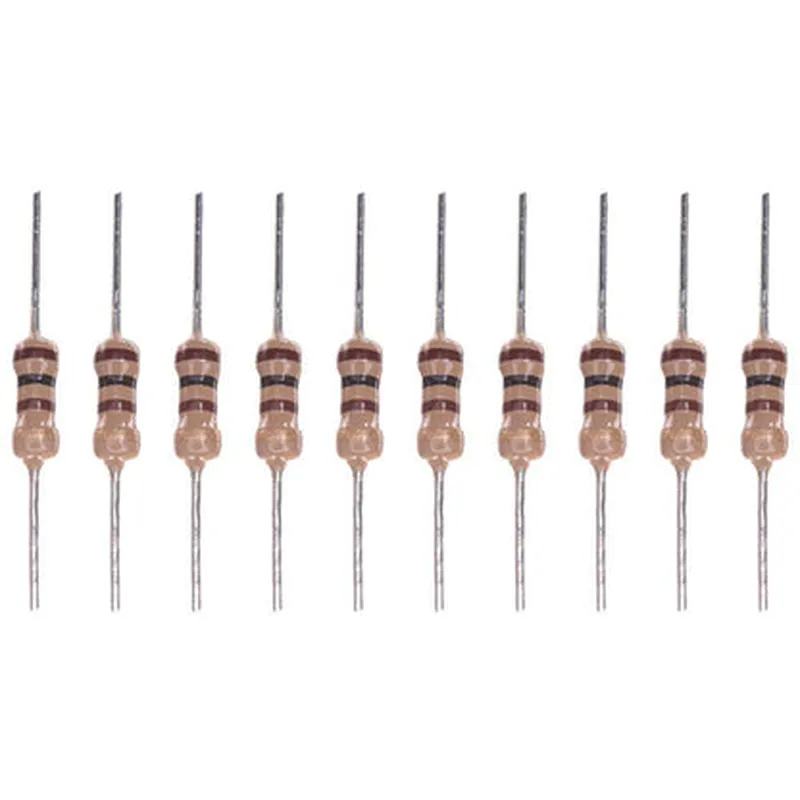
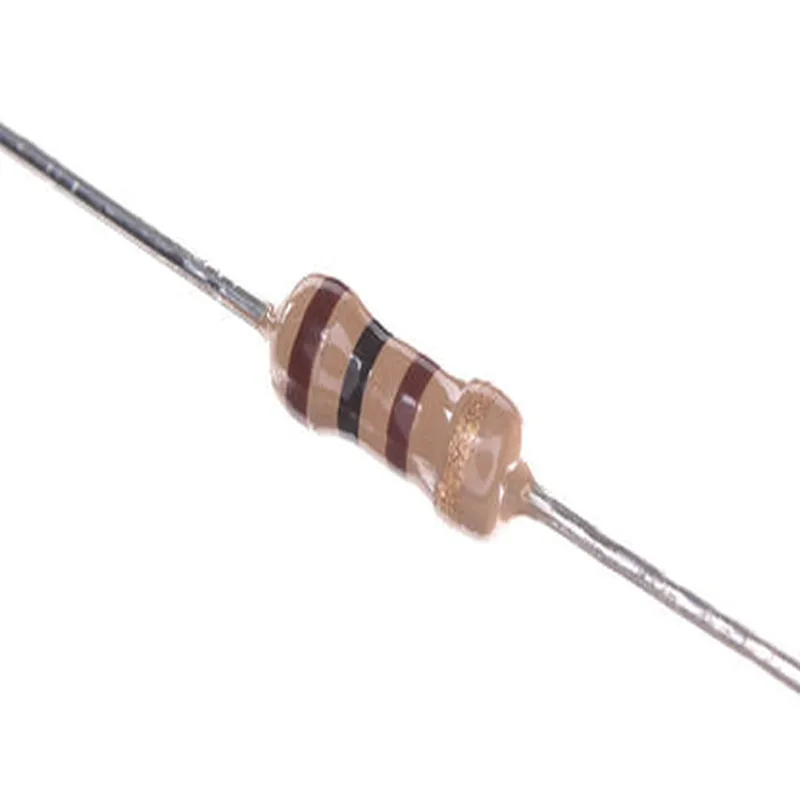
100 Ohm Resistor - (Pack of 10)
The 100 Ohm Resistor is a passive electronic component that offers a fixed resistance of 100 ohms to the flow of electric current. This pack of 10 resistors is designed to provide a reliable and efficient way to manage voltage and current in a wide range of electronic circuits and IoT applications.
| The primary function of a 100 Ohm Resistor is to |
By inserting a 100 Ohm Resistor in series with a voltage source, the voltage can be reduced to a desired level, making it suitable for various IoT devices and sensors.
The resistor restricts the flow of current to a safe level, preventing damage to sensitive components and circuits.
The 100 Ohm Resistor can be used as a voltage divider, allowing multiple voltage levels to be generated from a single source.
The resistor can be used to match the impedance of different components, ensuring maximum power transfer and minimizing energy loss.
100 ohms 1% tolerance
1/4 watt
1%
-55C to +155C
Through-hole, axial lead
3.5 mm x 1.5 mm x 1.5 mm (L x W x H)
Metal film or carbon film
Brown, black, brown (100 ohms)
This pack of 10 resistors is packaged in a single bag or on a tape reel, making it easy to store and manage inventory.
| The 100 Ohm Resistor is suitable for a wide range of IoT applications, including |
Sensor circuits
Power supply circuits
Signal processing circuits
Audio circuits
Automotive systems
Industrial automation systems
Consumer electronics
Robotics and drones
High accuracy and reliability
Low power consumption
Compact size and lightweight
Easy to use and integrate into circuits
Cost-effective solution for IoT applications
Handle the resistors with care to prevent damage to the leads or component body.
Avoid overheating, as it can lead to a change in resistance value or component failure.
Use the resistors within the specified operating temperature range to ensure reliable performance.
By incorporating the 100 Ohm Resistor into your IoT design, you can ensure accurate and reliable voltage and current management, making it an essential component for a wide range of applications.
100 Ohm Resistor - (Pack of 10) DocumentationOverviewThe 100 Ohm Resistor is a type of fixed resistor with a resistance value of 100 Ohms. This pack of 10 resistors is suitable for a variety of electronic circuits and projects, including IoT applications.Key FeaturesResistance Value: 100 Ohms 1%
Power Rating: 1/4 Watt
Tolerance: 1%
Package: Pack of 10Theory of OperationA resistor is a passive electronic component that reduces the voltage or current in a circuit. It works by converting some of the energy from the circuit into heat. The resistance value, measured in Ohms (), determines the amount of energy that is dissipated.Code ExamplesHere are a few code examples that demonstrate how to use the 100 Ohm Resistor in various contexts:Example 1: Voltage Divider Circuit with ArduinoIn this example, we'll use the 100 Ohm Resistor to create a simple voltage divider circuit with an Arduino board. The voltage divider circuit will output 50% of the input voltage.```c++
const int inputVoltage = 5; // Input voltage from Arduino
const int outputVoltage = 0; // Output voltage to be measuredvoid setup() {
Serial.begin(9600);
}void loop() {
int output = (inputVoltage 100) / (100 + 100); // Calculate output voltage
Serial.print("Output Voltage: ");
Serial.println(output);
delay(1000);
}
```Example 2: Current Limiting with Raspberry PiIn this example, we'll use the 100 Ohm Resistor to limit the current to an LED connected to a Raspberry Pi's GPIO pin.```python
import RPi.GPIO as GPIO# Set up GPIO pin for output
GPIO.setmode(GPIO.BCM)
GPIO.setup(17, GPIO.OUT)# Calculate current limit
current_limit = 5 / 100 # 5V power supply, 100 Ohm resistortry:
while True:
# Turn on LED
GPIO.output(17, GPIO.HIGH)
print("LED is on")
# Sleep for 1 second
time.sleep(1)
# Turn off LED
GPIO.output(17, GPIO.LOW)
print("LED is off")
# Sleep for 1 second
time.sleep(1)except KeyboardInterrupt:
GPIO.cleanup()
```Example 3: Pull-Up Resistor with ESP32In this example, we'll use the 100 Ohm Resistor as a pull-up resistor for a push button connected to an ESP32 board.```c++
const int buttonPin = 15; // Push button connected to GPIO 15
const int resistorPin = 16; // 100 Ohm resistor connected to GPIO 16void setup() {
Serial.begin(115200);
pinMode(buttonPin, INPUT);
pinMode(resistorPin, OUTPUT);
digitalWrite(resistorPin, HIGH); // Pull-up resistor
}void loop() {
int buttonState = digitalRead(buttonPin);
if (buttonState == LOW) {
Serial.println("Button is pressed");
} else {
Serial.println("Button is not pressed");
}
delay(50);
}
```These examples demonstrate the versatility of the 100 Ohm Resistor in various IoT projects. By understanding how to use resistors effectively, you can create a wide range of circuits and projects that interact with the physical world.