

Stufin
Home Quick Cart Profile

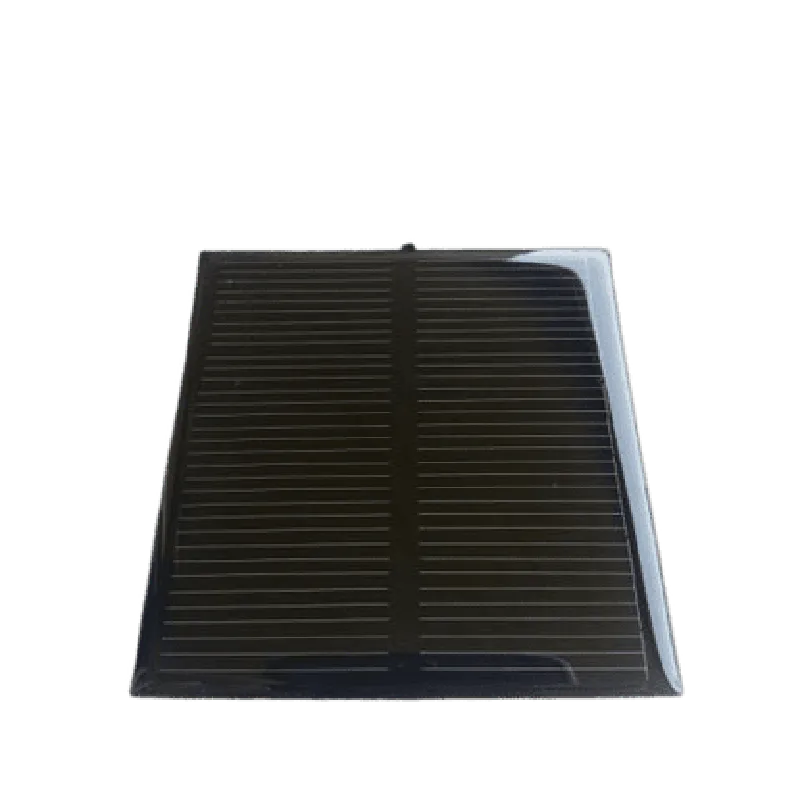
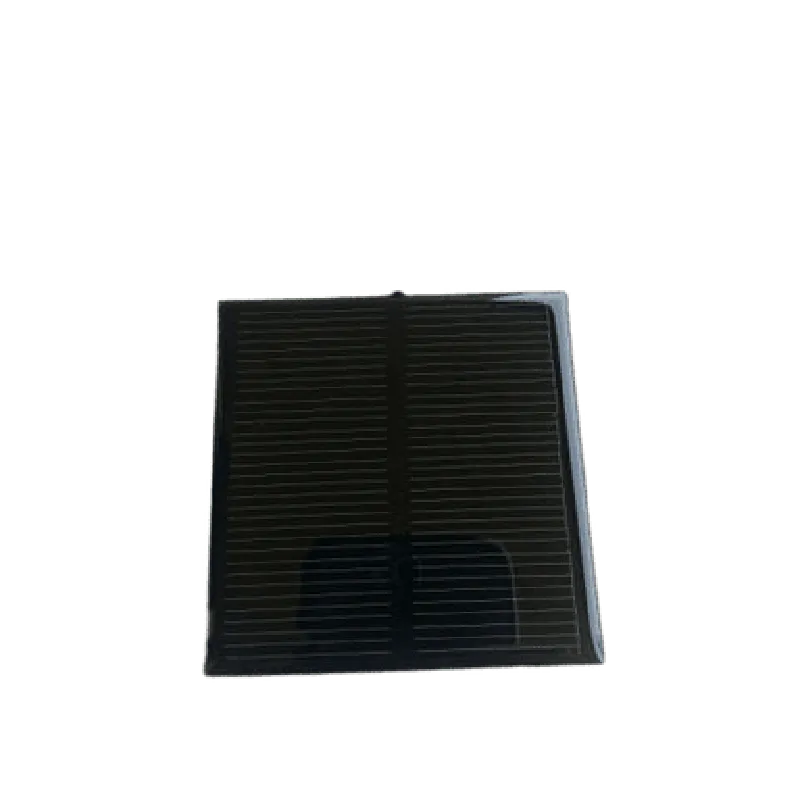
Mini Epoxy Solar Panel 70X70 mm

Buy Now on Stufin

Component Description

Mini Epoxy Solar Panel 70x70 mm

Overview

The Mini Epoxy Solar Panel 70x70 mm is a compact, high-efficiency solar panel designed for small-scale IoT applications, robotics, and DIY projects. This mini solar panel is encapsulated in epoxy resin, providing enhanced durability and weather resistance. With its compact size and lightweight design, it is ideal for powering small devices, sensors, and microcontrollers in a variety of environments.

Functionality

The Mini Epoxy Solar Panel 70x70 mm converts sunlight into electrical energy, providing a sustainable and renewable power source for IoT devices. The solar panel is designed to generate a stable output voltage, making it suitable for direct powering of small devices or for charging rechargeable batteries.

Key Features

  • Compact Size: The solar panel measures 70x70 mm (2.75x2.75 inches), making it an ideal choice for small-scale IoT projects where space is limited.
  • High-Efficiency: The solar panel boasts a high conversion efficiency, ensuring maximum energy harvesting from available sunlight.
  • Epoxy Encapsulation: The solar panel is encapsulated in a clear epoxy resin, providing protection from environmental factors such as moisture, dust, and UV light.
  • Waterproof: The epoxy resin coating ensures the solar panel is fully waterproof, allowing it to operate in harsh outdoor environments.
  • Low Weight: The solar panel is lightweight, making it easy to integrate into mobile or wearable IoT devices.
  • Flexible Input: The solar panel can be connected directly to a rechargeable battery or a power management system (PMS) for optimized energy harvesting.
  • Operating Temperature: The solar panel operates efficiently across a wide temperature range of -20C to +60C (-4F to +140F).
  • Voltage and Current Output: The solar panel provides a nominal output voltage of 5.5V and a maximum output current of 250mA.

Technical Specifications

Peak Power (Pmax)1.5W
Open-Circuit Voltage (Voc)6.5V
Short-Circuit Current (Isc)300mA
Maximum Power Point (MPP) Voltage5.5V
Maximum Power Point (MPP) Current250mA
Fill Factor (FF)0.75

Conversion Efficiency

22%

Applications

The Mini Epoxy Solar Panel 70x70 mm is suitable for a variety of IoT applications, including

Environmental monitoring systems

Wireless sensor networks

Robotics and automation

Wearable devices

DIY projects

Small-scale renewable energy systems

Conclusion

The Mini Epoxy Solar Panel 70x70 mm is a compact, high-efficiency solar panel designed for small-scale IoT applications. Its compact size, high conversion efficiency, and epoxy encapsulation make it an ideal choice for powering small devices and sensors in harsh outdoor environments.

Pin Configuration

  • Mini Epoxy Solar Panel 70X70 mm Documentation
  • Introduction
  • The Mini Epoxy Solar Panel 70X70 mm is a compact and efficient solar panel designed for IoT and DIY projects. This documentation provides a detailed explanation of the solar panel's pins and how to connect them.
  • Pinout Description
  • The Mini Epoxy Solar Panel 70X70 mm has two terminals, Positive (+) and Negative (-), which are labeled as follows:
  • Positive Terminal (+)
  • Pin 1: VCC (+)
  • + Function: Output voltage from the solar panel
  • + Voltage: 5.5V (open-circuit voltage), 4.5V (maximum power point voltage)
  • + Current: Up to 200mA (dependent on sunlight intensity and panel efficiency)
  • Negative Terminal (-)
  • Pin 2: GND (-)
  • + Function: Ground connection for the solar panel
  • + Voltage: 0V (ground reference)
  • Connection Structure
  • To connect the Mini Epoxy Solar Panel 70X70 mm to your project, follow these steps:
  • 1. Connect the Positive Terminal (+)
  • Connect Pin 1 (VCC) to the positive input of your device, such as a microcontroller, battery charger, or voltage regulator.
  • Ensure the device can handle the maximum output voltage of 5.5V and maximum current of 200mA.
  • 2. Connect the Negative Terminal (-)
  • Connect Pin 2 (GND) to the negative input of your device, such as the ground pin of a microcontroller or the negative terminal of a battery.
  • Important Notes
  • Polarity: Make sure to connect the solar panel with the correct polarity to avoid damage to the panel or your device.
  • Voltage Regulation: If your device requires a specific voltage, use a voltage regulator to step down the output voltage from the solar panel.
  • Current Limitation: Be aware of the maximum current output of the solar panel and ensure your device can handle it. If necessary, use a current limiting resistor or component to prevent overcurrent.
  • Reverse Voltage Protection: If your device does not have built-in reverse voltage protection, consider adding a diode or other protection component to prevent damage from reverse voltage.
  • Typical Applications
  • The Mini Epoxy Solar Panel 70X70 mm is suitable for various IoT and DIY projects, such as:
  • Powering small sensors and microcontrollers
  • Charging batteries for low-power devices
  • Driving small DC motors or LEDs
  • Building solar-powered weather stations or environmental monitoring systems
  • By following these guidelines, you can safely and efficiently connect the Mini Epoxy Solar Panel 70X70 mm to your project and harness the power of sunlight.

Code Examples

Mini Epoxy Solar Panel 70x70 mm Documentation
Overview
The Mini Epoxy Solar Panel 70x70 mm is a compact and efficient solar panel designed for small-scale IoT projects and devices. With a physical size of 70x70 mm, it is ideal for applications where space is limited. This solar panel is made with high-quality epoxy material, ensuring durability and resistance to environmental factors.
Technical Specifications
Peak Power: 2.5V, 40mA
 Open Circuit Voltage (Voc): 3.2V
 Short Circuit Current (Isc): 45mA
 Power Tolerance: 5%
 Dimensions: 70x70 mm
 Material: Epoxy
 Operating Temperature: -20C to 60C
Connecting the Solar Panel
To use the Mini Epoxy Solar Panel, you'll need to connect it to a device or a charging circuit. Here are some examples of how to do so:
### Example 1: Connecting to an Arduino Board
In this example, we'll connect the solar panel to an Arduino board to power a small IoT device.
Components:
Mini Epoxy Solar Panel 70x70 mm
 Arduino Board (e.g., Arduino Uno)
 Jumper Wires
 Breadboard
Code:
```cpp
const int solarPanelPin = A0; // Analog input pin for solar panel voltage measurement
void setup() {
  Serial.begin(9600);
}
void loop() {
  int solarPanelVoltage = analogRead(solarPanelPin);
  float voltage = solarPanelVoltage  (3.2 / 1023.0); // Convert analog value to voltage
  Serial.print("Solar Panel Voltage: ");
  Serial.print(voltage);
  Serial.println(" V");
  delay(1000);
}
```
Connection Diagram:
Connect the positive terminal of the solar panel to the A0 analog input pin on the Arduino board.
 Connect the negative terminal of the solar panel to the GND pin on the Arduino board.
### Example 2: Charging a Lithium-Ion Battery with a TP4056 Charging Module
In this example, we'll use the solar panel to charge a Lithium-Ion battery with a TP4056 charging module.
Components:
Mini Epoxy Solar Panel 70x70 mm
 TP4056 Lithium-Ion Battery Charging Module
 Lithium-Ion Battery (e.g., 1S 3.7V 1000mAh)
 Jumper Wires
Code: Not applicable (this example uses a dedicated charging module)
Connection Diagram:
Connect the positive terminal of the solar panel to the VIN pin on the TP4056 charging module.
 Connect the negative terminal of the solar panel to the GND pin on the TP4056 charging module.
 Connect the Lithium-Ion battery to the B+ and B- pins on the TP4056 charging module.
Important Notes:
Always connect the solar panel to a device or charging circuit with a suitable voltage and current rating to avoid damage.
 Ensure the solar panel is installed in a well-ventilated area, away from shading and obstructions, to optimize its performance.
 For more complex IoT projects, consider using a dedicated power management IC (PMIC) to handle power conversion and charging.