Stufin
Home Quick Cart Profile

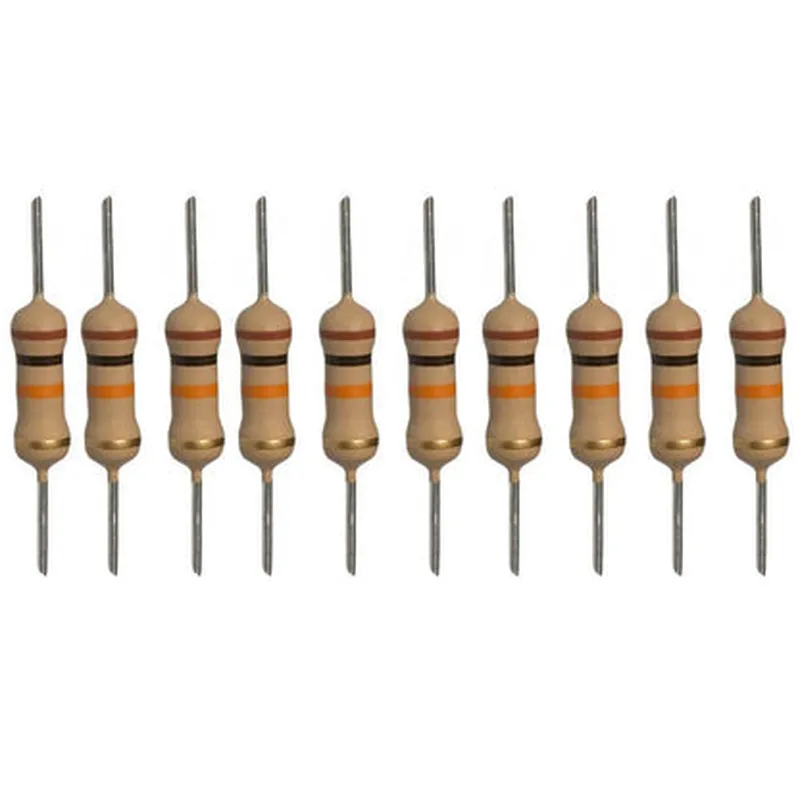
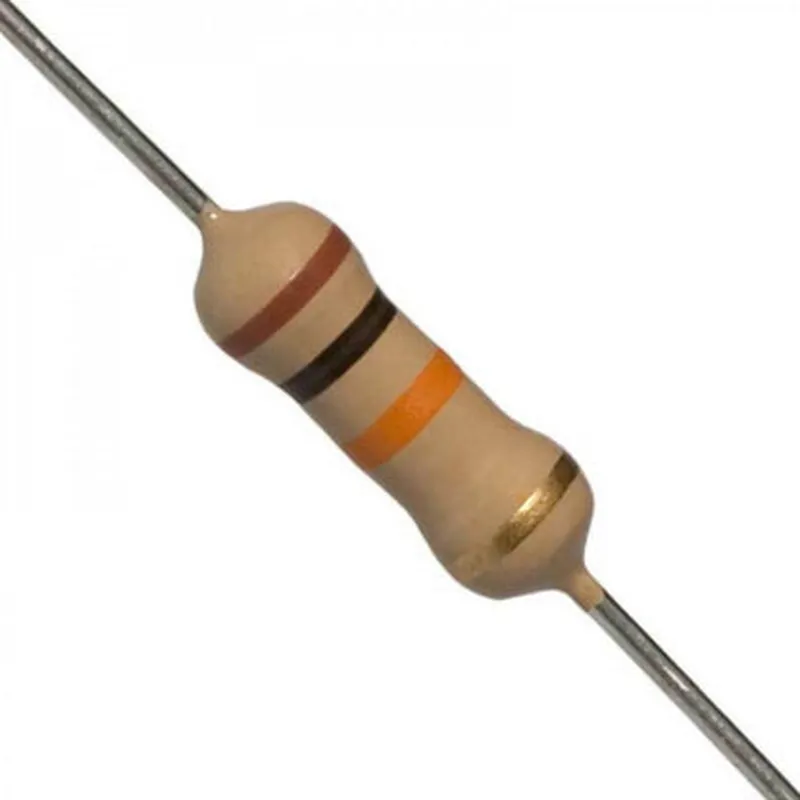
470 Ohm Resistor - (Pack of 10)

Buy Now on Stufin

Component Name

470 Ohm Resistor (Pack of 10)


Description

The 470 Ohm Resistor is a pack of 10 axial-lead resistors, each with a resistance value of 470 ohms. Resistors are passive electronic components that oppose the flow of electric current in a circuit. They are commonly used to regulate voltage, current, and signal levels in a wide range of applications, including electronic circuits, microcontrollers, and IoT devices.

Functionality

The primary function of the 470 Ohm Resistor is to reduce the voltage or current in an electrical circuit. When connected in series with other components, the resistor absorbs or dissipates excess energy, preventing damage to sensitive components or circuits. The resistor's resistance value determines the amount of voltage or current it can handle, making it an essential component in many electronic designs.

Key Features

  • Resistance Value: 470 ohms (1% tolerance)
  • Power Rating: 1/4 watt (0.25W)
  • Operating Temperature: -55C to 155C
  • Package Type: Axial-lead
  • Dimensions: 3.2mm (diameter) x 6.5mm (length)
  • Material: Metal film resistive element with a ceramic core
  • Termination: Tin-plated copper wire leads
  • Packaging: 10 resistors per pack
  • Compliance: RoHS (Restriction of Hazardous Substances) compliant
  • Applications: Suitable for use in various electronic circuits, including IoT devices, microcontrollers, audio equipment, and power supplies.

Technical Specifications

| Specification | Value |

| --- | --- |

| Resistance Value | 470 ohms 1% |

| Power Rating | 1/4 watt (0.25W) |

| Operating Temperature | -55C to 155C |

| Temperature Coefficient | 100 ppm/C |

| Noise Level | Less than 1 V/V |

Use Cases

  • Voltage dividers: To reduce voltage levels in a circuit.
  • Current limiting: To prevent excessive current draw from a power source.
  • Signal attenuation: To reduce signal amplitude in audio or radio frequency circuits.
  • Impedance matching: To match the impedance of a circuit to prevent signal reflections.
The 470 Ohm Resistor is commonly used in various IoT applications, including

Tips and Precautions

  • Always handle resistors by the body to prevent damage to the leads.
  • Use a soldering iron with a temperature of 250C to 300C to avoid damaging the component.
  • Ensure the resistor is properly seated on the printed circuit board (PCB) to prevent thermal stress.
  • Avoid exposure to moisture, as it can affect the resistor's performance and lifespan.

By following proper usage guidelines and technical specifications, the 470 Ohm Resistor can provide reliable and long-lasting performance in a wide range of IoT applications.

Pin Configuration

  • Component Documentation: 470 Ohm Resistor - (Pack of 10)
  • Overview
  • The 470 Ohm Resistor is a passive electronic component used to control the flow of electrical current in a circuit. It is a type of fixed resistor, meaning its resistance value is fixed at 470 Ohms. This pack includes 10 individual resistors, making it a convenient option for various IoT projects.
  • Pinout and Connection Guide
  • The 470 Ohm Resistor has two terminals or pins, which are identical and interchangeable. There is no distinction between the positive and negative terminals, as the resistor is a passive device that does not have polarity.
  • Pin 1: Terminal 1
  • Function: One end of the resistor
  • Connection: Connect to a circuit node or component that requires a resistance of 470 Ohms
  • Note: This terminal is identical to Terminal 2 and can be used interchangeably
  • Pin 2: Terminal 2
  • Function: The other end of the resistor
  • Connection: Connect to a circuit node or component that requires a resistance of 470 Ohms
  • Note: This terminal is identical to Terminal 1 and can be used interchangeably
  • Connection Structure:
  • When connecting the 470 Ohm Resistor in a circuit:
  • 1. Identify the circuit node or component that requires a resistance of 470 Ohms.
  • 2. Connect one terminal (either Pin 1 or Pin 2) to the identified circuit node or component.
  • 3. Connect the other terminal (either Pin 1 or Pin 2) to another circuit node or component that completes the circuit.
  • 4. Ensure the resistor is properly seated and secured in the circuit to prevent damage or electrical shorts.
  • Example Connection Scenario:
  • Suppose you want to connect the 470 Ohm Resistor in a simple LED circuit to limit the current flowing through the LED. You can connect one terminal of the resistor to the positive leg of the LED and the other terminal to the output of a voltage source (e.g., a battery or a microcontroller's output pin).
  • In this example, the 470 Ohm Resistor would be connected as follows:
  • Pin 1 (Terminal 1): Connect to the positive leg of the LED
  • Pin 2 (Terminal 2): Connect to the output of the voltage source (e.g., a battery or a microcontroller's output pin)
  • By following these connection guidelines, you can effectively use the 470 Ohm Resistor in your IoT projects to control current flow and ensure the reliability of your circuits.

Code Examples

470 Ohm Resistor - (Pack of 10) Documentation
Overview
The 470 Ohm Resistor is a pack of 10 resistors with a resistance value of 470 ohms. Resistors are passive components that reduce the voltage or current in a circuit and are commonly used to limit the flow of electrical current, divide voltage, and regulate signal levels. They are an essential component in a wide range of electronic circuits and devices.
Specifications
Resistance Value: 470 Ohm
 Power Rating: 1/4 Watt
 Tolerance: 5%
 Package: Pack of 10
-pin Configuration
The 470 Ohm Resistor has two terminals, one at each end of the resistor body.
Usage Examples
### Example 1: Voltage Divider Circuit
In this example, we will use the 470 Ohm Resistor to create a voltage divider circuit to reduce the input voltage to a desired level.
Circuit Diagram
```
Vin ---|--- R1 (470 Ohm) ---|--- R2 (1k Ohm) ---|--- GND
               |
               |
               Vout
```
Code Example (Arduino)
```c++
const int vin = 5; // input voltage
const int r1 = 470; // resistance value of R1
const int r2 = 1000; // resistance value of R2
void setup() {
  pinMode(vin, INPUT);
  pinMode(Vout, OUTPUT);
}
void loop() {
  int voltageInput = analogRead(vin);
  int voltageOutput = (voltageInput  r2) / (r1 + r2);
  analogWrite(Vout, voltageOutput);
  delay(100);
}
```
### Example 2: LED Circuit with Current Limiting
In this example, we will use the 470 Ohm Resistor to limit the current flowing through an LED.
Circuit Diagram
```
Vcc ---|--- R (470 Ohm) ---|--- LED ---|--- GND
```
Code Example (Python - Raspberry Pi)
```python
import RPi.GPIO as GPIO
import time
GPIO.setmode(GPIO.BCM)
# Set up GPIO pins
 GPIO.setup(17, GPIO.OUT) # LED pin
 GPIO.setup(23, GPIO.OUT) # Resistor pin
# Set initial state of LED
GPIO.output(17, GPIO.LOW)
try:
    while True:
        # Turn on LED
        GPIO.output(17, GPIO.HIGH)
        time.sleep(1)
        # Turn off LED
        GPIO.output(17, GPIO.LOW)
        time.sleep(1)
except KeyboardInterrupt:
    GPIO.cleanup()
```
Note: The code examples provided are for illustrative purposes only and may require modifications to work with specific hardware and software configurations.