Aluminium Alloy (6063-T5 or 6061-T6)


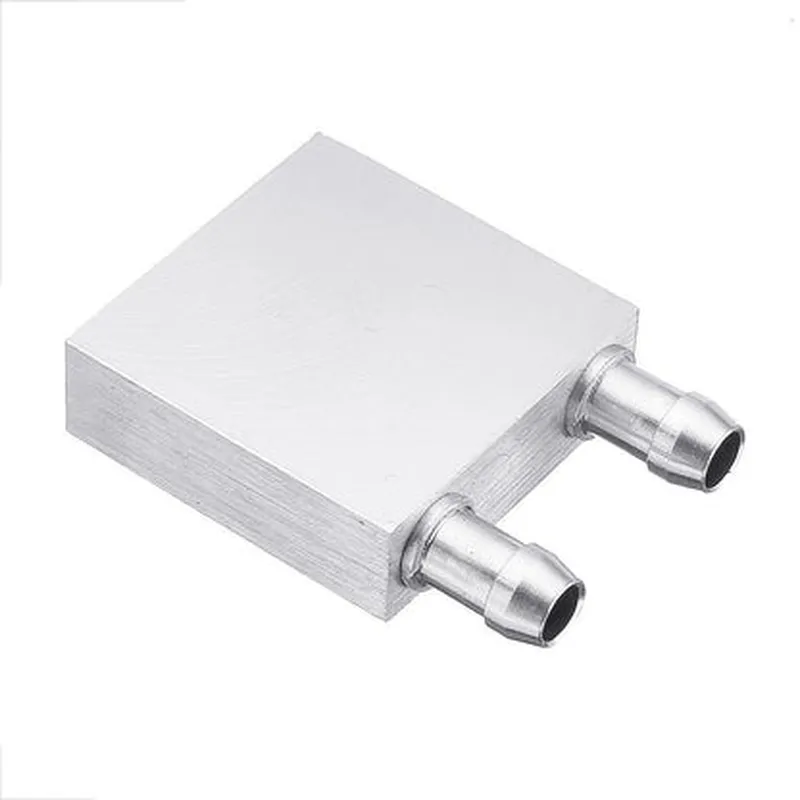
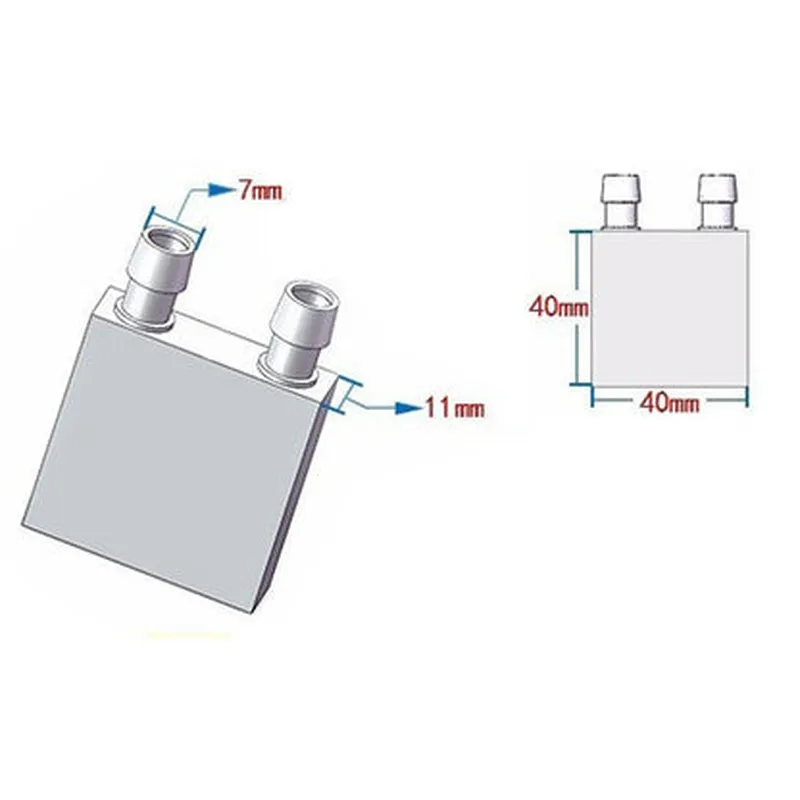
Aluminium Alloy (6063-T5 or 6061-T6)
40mm (diameter) x 10mm (height)
G 1/4" or M10x1.0
-20C to 100C
10 bar (145 psi)
Up to 2 liters per minute (LPM)
Applications
| The 40mm Aluminium Alloy Water Cooling Block is suitable for various IoT applications, including |
Industrial control systems
Embedded systems
Small form factor PCs
Medical devices
Aerospace and defense systems
High-performance computing systems
By providing efficient heat dissipation and reliable performance, the 40mm Aluminium Alloy Water Cooling Block is an essential component for IoT devices and systems that require optimal thermal management.
Component Documentation: 40mm Aluminium Alloy Water Cooling BlockOverviewThe 40mm Aluminium Alloy Water Cooling Block is a high-performance heat exchanger designed for efficient cooling of electronic components in various IoT applications. This water cooling block is made of high-quality aluminium alloy, providing excellent heat dissipation and corrosion resistance.Technical SpecificationsMaterial: Aluminium Alloy
Size: 40mm (length) x 40mm (width) x 10mm (height)
Thread: G 1/4" (compatible with standard water cooling fittings)
Thermal Resistance: 0.15C/W (max)
Maximum Operating Pressure: 3.5 bar
Operating Temperature Range: -20C to 120CExample UsageThe following examples demonstrate how to use the 40mm Aluminium Alloy Water Cooling Block in various IoT contexts:### Example 1: Raspberry Pi Water Cooling SystemIn this example, we'll use the water cooling block to cool a Raspberry Pi single-board computer in a custom-built IoT project.Hardware RequirementsRaspberry Pi 4
40mm Aluminium Alloy Water Cooling Block
Water pump (e.g., DC 3V 1.2W Micro Water Pump)
Water reservoir (e.g., 100ml plastic container)
Tubing and fittings (e.g., G 1/4" barb fittings and 1/2" ID tubing)
Power supply (e.g., 5V 2A wall adapter)Software RequirementsRaspbian OS (latest version)
Python 3.xCode Example (Python)
```python
import time
import RPi.GPIO as GPIO# Set up GPIO pins for pump control
GPIO.setmode(GPIO.BCM)
pump_pin = 17
GPIO.setup(pump_pin, GPIO.OUT)# Set up pump speed (50% duty cycle)
pwm_frequency = 50
GPIO.PWM(pump_pin, pwm_frequency)try:
while True:
# Monitor temperature and adjust pump speed accordingly
temp = get_cpu_temperature()
if temp > 60:
GPIO.PWM(pump_pin, 75) # Increase pump speed to 75%
elif temp < 50:
GPIO.PWM(pump_pin, 25) # Decrease pump speed to 25%
time.sleep(1)
except KeyboardInterrupt:
GPIO.cleanup()
```
### Example 2: Industrial Automation Cooling SystemIn this example, we'll use the water cooling block to cool a high-power industrial automation controller in a IoT-based industrial automation system.Hardware RequirementsIndustrial automation controller (e.g., Siemens SIMATIC IOT2040)
40mm Aluminium Alloy Water Cooling Block
Water pump (e.g., Grundfos TPED 3/4 HP)
Water reservoir (e.g., 500ml stainless steel tank)
Tubing and fittings (e.g., G 1/4" barb fittings and 1/2" ID tubing)
Power supply (e.g., 24V 5A industrial power supply)Software RequirementsSiemens SIMATIC IOT2040 firmware (latest version)
C/C++ programming environmentCode Example (C)
```c
#include <iot2040.h>// Define pump control pin
#define PUMP_PIN 13int main() {
// Initialize pump control pin as output
iot2040_pinMode(PUMP_PIN, OUTPUT);while (1) {
// Monitor temperature and adjust pump speed accordingly
float temp = iot2040_getTemperature();
if (temp > 70) {
iot2040_analogWrite(PUMP_PIN, 128); // Increase pump speed to 50%
} else if (temp < 60) {
iot2040_analogWrite(PUMP_PIN, 64); // Decrease pump speed to 25%
}
iot2040_delay(1000); // Wait 1 second before checking again
}
return 0;
}
```
Note: The code examples provided are for illustrative purposes only and may require modifications to suit specific project requirements. Additionally, ensure proper installation, testing, and maintenance of the water cooling system to prevent damage or injury.