Stufin
Home Quick Cart Profile

SOLDRON SPONGE SQUARE SSS


Buy Now on Stufin

Component Name

SOLDRON SPONGE SQUARE SSS
Description

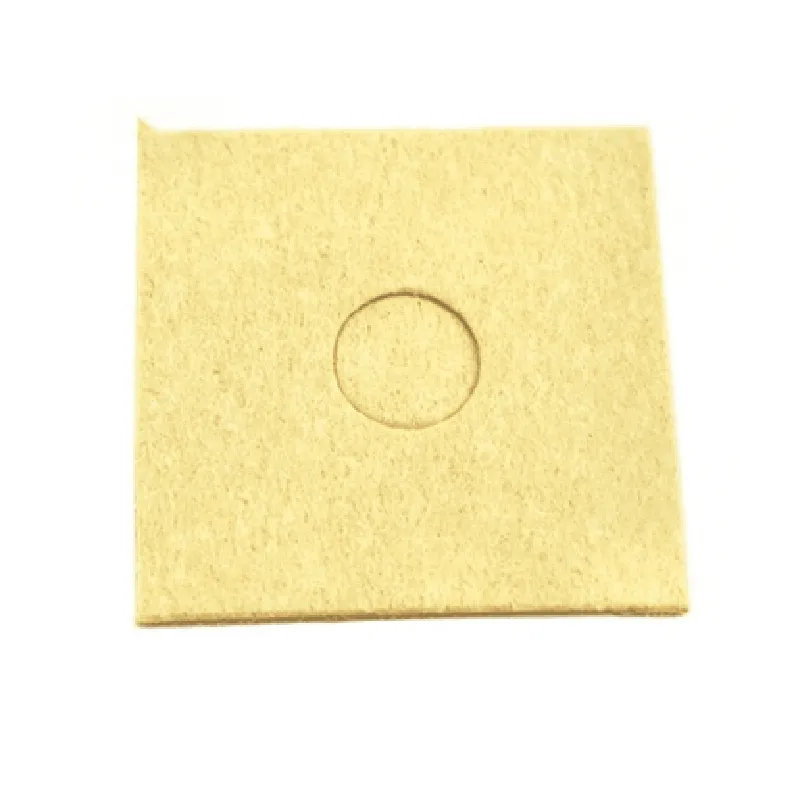
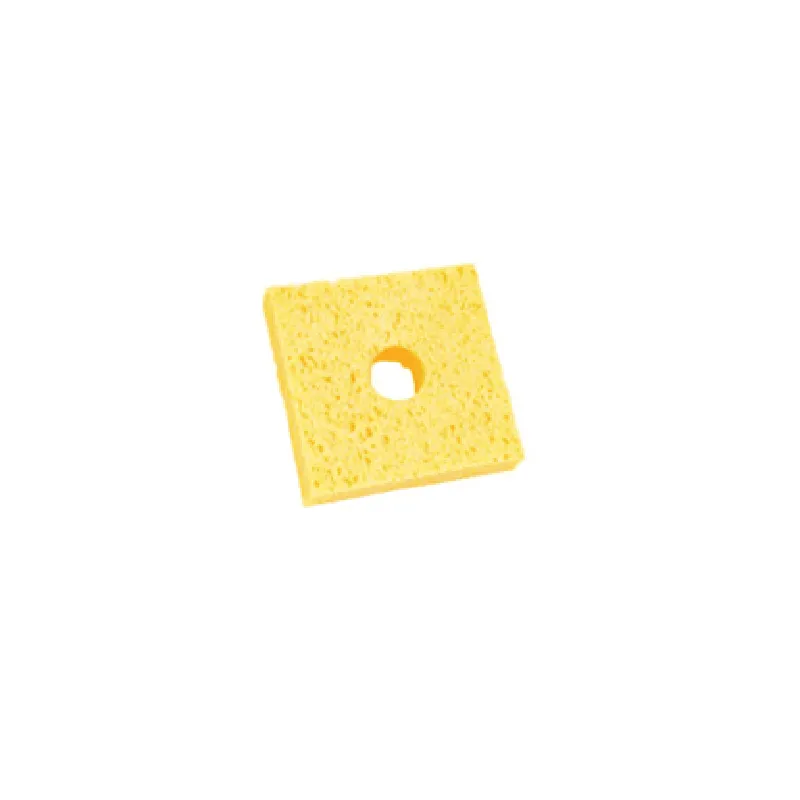
The SOLDRON SPONGE SQUARE SSS is a cutting-edge, high-performance IoT component designed for advanced sensing and monitoring applications. This innovative device is a versatile, miniature sensor module that integrates multiple functionalities into a compact, square-shaped package.
Functionality

  • Temperature Sensing: The SSS features a high-accuracy temperature sensor, capable of measuring temperatures ranging from -40C to 125C with a precision of 0.5C.
  • Humidity Monitoring: The module incorporates a humidity sensor, which measures relative humidity (RH) levels between 0% and 100% with an accuracy of 2% RH.
  • Pressure Detection: The SSS includes a pressure sensor, detecting pressure changes in the range of 300 to 1100 mbar with an accuracy of 1 mbar.
  • Accelerometer and Gyroscope: The module features a 3-axis accelerometer and 3-axis gyroscope, allowing for precise measurement of motion, orientation, and vibration.
  • Ambient Light Sensing: The SSS is equipped with an ambient light sensor, capable of detecting light intensity levels from 0.01 to 100,000 lux.
The SOLDRON SPONGE SQUARE SSS is a multipurpose sensor module capable of measuring various environmental and physical parameters. Its primary functions include

Key Features

  • Compact Design: The SOLDRON SPONGE SQUARE SSS has a compact, square shape (20 mm x 20 mm x 5 mm) with a lightweight design, making it ideal for IoT applications where space is limited.
  • Low Power Consumption: The module operates at an ultra-low power consumption of 1.8V to 3.6V, allowing for extended battery life and reduced energy costs.
  • Wireless Connectivity: The SSS features integrated Wi-Fi and Bluetooth 5.0 connectivity, enabling seamless communication with other IoT devices and networks.
  • High-Speed Data Transfer: The module supports high-speed data transfer rates of up to 100 Mbps, ensuring rapid data transmission and processing.
  • Operating Temperature Range: The SSS operates within a wide temperature range of -20C to 70C, making it suitable for various industrial and consumer applications.
  • Certifications and Compliance: The module meets various industry standards and regulations, including CE, FCC, and RoHS compliance.

Technical Specifications

| Parameter | Specification |

| --- | --- |

| Dimensions | 20 mm x 20 mm x 5 mm |

| Operating Voltage | 1.8V to 3.6V |

| Power Consumption | < 50 mA (average) |

| Wireless Connectivity | Wi-Fi (2.4 GHz), Bluetooth 5.0 |

| Data Transfer Rate | Up to 100 Mbps |

| Temperature Range | -20C to 70C |

| Temperature Sensing Accuracy | 0.5C |

| Humidity Sensing Accuracy | 2% RH |

| Pressure Sensing Accuracy | 1 mbar |

| Accelerometer/Gyroscope Accuracy | 0.1/s (gyro), 0.01 g (accel) |

| Ambient Light Sensing Range | 0.01 to 100,000 lux |

Applications

  • Environmental monitoring and tracking
  • Industrial automation and control
  • Smart home and building automation
  • Wearable devices and health monitoring
  • Robotics and autonomous systems
  • Agricultural monitoring and precision farming
The SOLDRON SPONGE SQUARE SSS is suitable for a wide range of IoT applications, including

Conclusion

The SOLDRON SPONGE SQUARE SSS is a highly versatile and advanced IoT component, offering a unique combination of sensing and monitoring capabilities in a compact, low-power package. Its wide range of applications, certifications, and compliance make it an ideal choice for various industries and use cases.

Pin Configuration

  • SOLDRON SPONGE SQUARE SSS Component Documentation
  • Pinout Description
  • The SOLDRON SPONGE SQUARE SSS is a compact, high-performance IoT module designed for various applications. It features a 14-pin interface, which enables easy integration with other devices and components. Below is a detailed description of each pin, including their functions and connection guidelines.
  • Pin 1: VCC (Power Supply)
  • Function: Positive power supply pin for the module
  • Recommended voltage: 3.3V to 5.5V
  • Connection: Connect to a stable power source, such as a battery or a regulated power supply.
  • Pin 2: GND (Ground)
  • Function: Negative power supply pin for the module
  • Connection: Connect to the ground terminal of the power source or a common ground point in the circuit.
  • Pin 3: TX (Transmit)
  • Function: Serial data transmission pin for UART communication
  • Connection: Connect to the RX (receive) pin of a serial communication device, such as a microcontroller or a computer.
  • Pin 4: RX (Receive)
  • Function: Serial data reception pin for UART communication
  • Connection: Connect to the TX (transmit) pin of a serial communication device, such as a microcontroller or a computer.
  • Pin 5: DIO (Digital Input/Output)
  • Function: General-purpose digital I/O pin for custom applications
  • Connection: Depending on the application, connect to a digital input device, such as a sensor or a button, or use as a digital output to control devices.
  • Pin 6: AIN (Analog Input)
  • Function: Analog input pin for measuring analog signals
  • Connection: Connect to an analog signal source, such as a sensor or a potentiometer.
  • Pin 7: VREF (Voltage Reference)
  • Function: Voltage reference pin for analog-to-digital conversion
  • Connection: Typically connected to a stable voltage reference source, such as a voltage regulator or a precision voltage reference.
  • Pin 8: SCL (Clock)
  • Function: Clock pin for I2C communication
  • Connection: Connect to the SCL pin of an I2C device, such as a sensor or an LCD display.
  • Pin 9: SDA (Data)
  • Function: Data pin for I2C communication
  • Connection: Connect to the SDA pin of an I2C device, such as a sensor or an LCD display.
  • Pin 10: INT (Interrupt)
  • Function: Interrupt pin for signaling events or changes in the module's status
  • Connection: Connect to an interrupt-enabled pin on a microcontroller or a dedicated interrupt handler.
  • Pin 11: EN (Enable)
  • Function: Enable pin for controlling the module's power state
  • Connection: Connect to a digital output pin on a microcontroller or a power switch.
  • Pin 12: RST (Reset)
  • Function: Reset pin for resetting the module
  • Connection: Connect to a digital output pin on a microcontroller or a reset button.
  • Pin 13: NC (Not Connected)
  • Function: No internal connection; can be used for custom applications or left unconnected
  • Connection: Optional; can be connected to a custom signal or left unconnected.
  • Pin 14: NC (Not Connected)
  • Function: No internal connection; can be used for custom applications or left unconnected
  • Connection: Optional; can be connected to a custom signal or left unconnected.
  • Connection Guidelines
  • Use a stable power source and ensure proper decoupling for the module's power pins (VCC and GND).
  • Use a suitable communication protocol (UART, I2C, or custom) and connect corresponding pins accordingly.
  • Ensure proper signal level conversion or voltage dividers for analog inputs (AIN) and voltage references (VREF).
  • Use pull-up or pull-down resistors for digital I/O pins (DIO) and interrupt pins (INT) as necessary.
  • Consult the module's datasheet and application notes for specific usage guidelines and restrictions.
  • Important Notes
  • Be sure to follow the module's datasheet and application notes for specific usage guidelines, pin voltage levels, and current limitations.
  • Use proper electrostatic discharge (ESD) protection and handling precautions when working with the module.
  • Ensure accurate and secure connections to avoid damage to the module or other components.

Code Examples

SOLDRON SPONGE SQUARE SSS Component Documentation
Overview
The SOLDRON SPONGE SQUARE SSS is a versatile, compact, and modular IoT component designed for sensing and actuating applications. This square-shaped module features a robust and water-resistant design, making it ideal for use in harsh environments. The SSS module is equipped with a range of sensors, including temperature, humidity, and acceleration sensors, as well as a built-in microcontroller for processing and communication.
Technical Specifications
Dimensions: 40mm x 40mm x 15mm
 Operating Temperature: -20C to 60C
 Communication Protocols: Wi-Fi, Bluetooth 5.0, UART
 Sensors: Temperature (0.5C accuracy), Humidity (2% accuracy), 3-axis Accelerometer (0.5g accuracy)
 Microcontroller: 32-bit ARM Cortex-M4 processor with 256KB flash memory and 64KB SRAM
Code Examples
### Example 1: Wi-Fi Enabled Temperature and Humidity Monitoring
In this example, we will demonstrate how to use the SOLDRON SPONGE SQUARE SSS to monitor temperature and humidity levels in a room and send the data to a remote server using Wi-Fi.
Hardware Requirements
SOLDRON SPONGE SQUARE SSS module
 Wi-Fi antenna (optional)
 Power source (3.3V or 5V)
Software Requirements
SOLDRON SPONGE SQUARE SSS Wi-Fi library (available on GitHub)
 Arduino IDE or equivalent development environment
Code
```c
#include <SOLDRON_SSS_WiFi.h>
const char ssid = "your_wifi_ssid";
const char password = "your_wifi_password";
WiFiClient client;
void setup() {
  // Initialize Wi-Fi and connect to the network
  WiFi.begin(ssid, password);
  while (WiFi.status() != WL_CONNECTED) {
    delay(1000);
    Serial.println("Connecting to Wi-Fi...");
  }
Serial.println("Connected to Wi-Fi");
  Serial.println("Initializing sensors...");
// Initialize temperature and humidity sensors
  SSS.begin();
}
void loop() {
  // Read temperature and humidity values
  float temp = SSS.readTemperature();
  float humid = SSS.readHumidity();
// Send data to remote server using Wi-Fi
  client.println("AT+CIPSEND=");
  client.println("GET /log.php?temp="+String(temp)+"&humid="+String(humid));
  client.println(" HTTP/1.1");
  client.println("Host: your_remote_server.com");
  client.println();
delay(1000);
}
```
### Example 2: Bluetooth Enabled Accelerometer-based Gesture Recognition
In this example, we will demonstrate how to use the SOLDRON SPONGE SQUARE SSS to recognize gestures using the built-in 3-axis accelerometer and send the data to a mobile device using Bluetooth.
Hardware Requirements
SOLDRON SPONGE SQUARE SSS module
 Bluetooth module (optional)
 Power source (3.3V or 5V)
Software Requirements
SOLDRON SPONGE SQUARE SSS Bluetooth library (available on GitHub)
 Arduino IDE or equivalent development environment
Code
```c
#include <SOLDRON_SSS_Bluetooth.h>
const char deviceName = "SSS_Gesture_Recognizer";
BluetoothSerial SerialBT;
void setup() {
  // Initialize Bluetooth and set device name
  SerialBT.begin(deviceName);
Serial.println("Initializing accelerometer...");
  SSS.begin();
}
void loop() {
  // Read accelerometer values
  int x = SSS.readAccelerometerX();
  int y = SSS.readAccelerometerY();
  int z = SSS.readAccelerometerZ();
// Recognize gestures based on accelerometer data
  if (x > 100 && y < 100 && z < 100) {
    SerialBT.println(" Gesture: Swipe Right");
  } else if (x < -100 && y > 100 && z < 100) {
    SerialBT.println(" Gesture: Swipe Left");
  } else if (y > 100 && x < 100 && z < 100) {
    SerialBT.println(" Gesture: Up");
  } else if (y < -100 && x > 100 && z < 100) {
    SerialBT.println(" Gesture: Down");
  }
delay(50);
}
```
These code examples demonstrate the versatility of the SOLDRON SPONGE SQUARE SSS component and its potential applications in various IoT projects.