Stufin
Home Quick Cart Profile

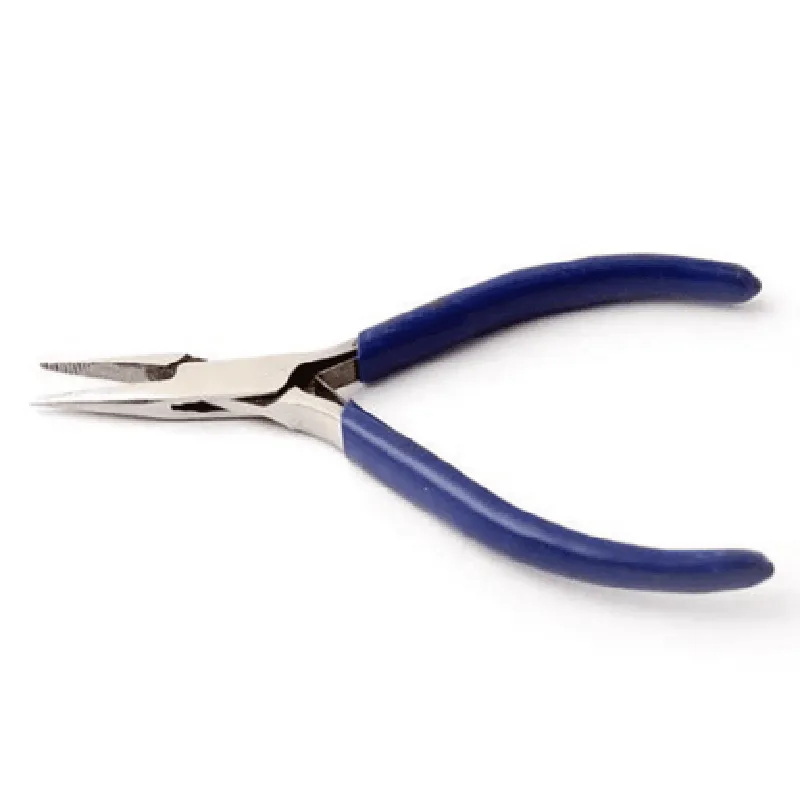
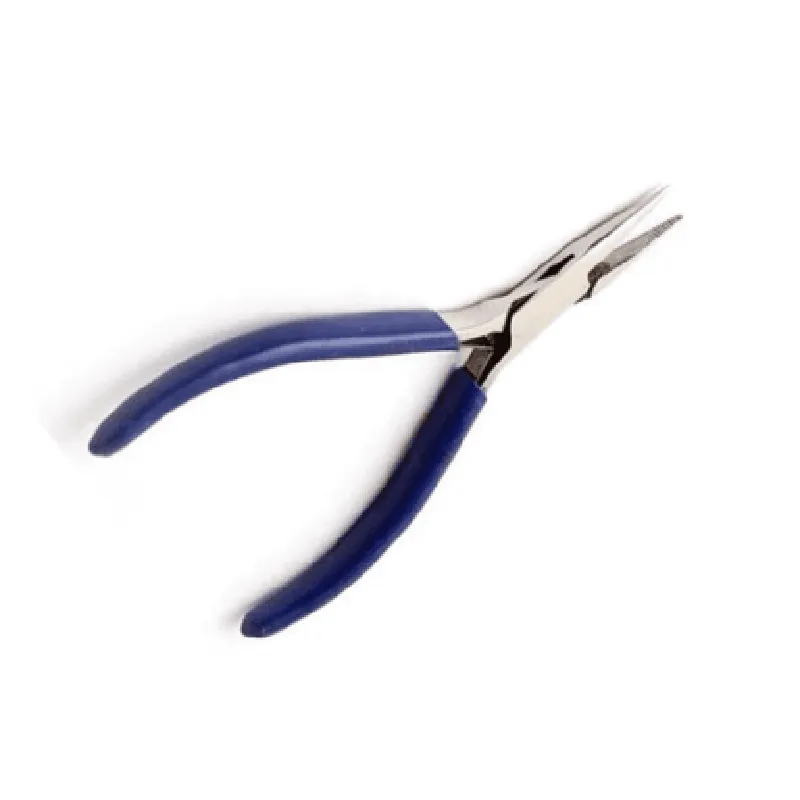
Nose Plier NP-01 5" Inch

Buy Now on Stufin

Component Documentation

Nose Plier NP-01 5" Inch

Overview

The Nose Plier NP-01 5" Inch is a versatile and precision-crafted handheld tool designed for various IoT applications, particularly in prototyping, PCB assembly, and electronics tinkering. This lightweight plier is ideal for gripping, bending, and shaping small objects, making it an essential component in any IoT developer's or engineer's toolbox.

Functionality

The Nose Plier NP-01 5" Inch is designed for precision control and versatility, allowing users to perform a wide range of tasks, including

Gripping small objects, such as jumper wires, components, and connectors

Bending and shaping wires, leads, and other materials

Holding small parts in place during assembly and repair

Reaching into tight spaces and corners for precise manipulation

Key Features

  • Nose Design: The plier's nose is precision-machined for optimal gripping and manipulation of small objects, providing a secure hold without causing damage.
  • 5-Inch Length: The compact 5-inch length makes the plier easy to maneuver in confined spaces and allows for precise control.
  • Ergonomic Handles: Contoured handles provide a comfortable grip, reducing fatigue and improving dexterity during extended use.
  • High-Carbon Steel Construction: The plier's durable construction ensures long-lasting performance and resistance to corrosion.
  • Adjustable Jaws: The jaws can be adjusted to accommodate various object sizes, allowing for versatile use in a wide range of applications.
  • Non-Slip Grip: The textured handle provides a secure grip, even in wet or oily conditions, ensuring precise control and minimizing accidents.
  • Spring-Loaded Action: The spring-loaded mechanism enables smooth, effortless operation, reducing hand fatigue and improving overall performance.

Technical Specifications

Material

High-Carbon Steel

Length

5 inches (127 mm)

Jaw Opening

1 inch (25.4 mm)

Handle Material

Contoured Plastic

Weight

6.5 oz (184 g)

Applications

IoT Prototyping and Development

PCB Assembly and Repair

Electronics Tinkering and Hobbyism

Jewelry Making and Craftsmanship

Precision Engineering and Fabrication

Operating Conditions

Operating Temperature

-20C to 80C (-4F to 176F)

Storage Temperature

-40C to 100C (-40F to 212F)

Humidity

Up to 80% relative humidity (non-condensing)

Safety Precautions

Use protective eyewear and gloves when operating the plier.

Avoid using the plier near open flames or sparks.

Store the plier in a dry, cool place when not in use.

By combining precision engineering, durable construction, and ergonomic design, the Nose Plier NP-01 5" Inch is an indispensable tool for IoT developers, engineers, and hobbyists alike.

Pin Configuration

  • Component Documentation: Nose Plier NP-01 5" Inch
  • Pinout Description
  • The Nose Plier NP-01 5" Inch is a versatile IoT component featuring a set of pins that facilitate connections with various devices and sensors. This documentation provides a detailed explanation of each pin, along with connection guidelines for easy integration.
  • Pin Description
  • The Nose Plier NP-01 5" Inch has a total of 10 pins, divided into two rows of 5 pins each. The pins are labeled as follows:
  • Row 1:
  • 1. VCC (Pin 1)
  • Function: Power supply pin (3.3V or 5V)
  • Description: Provides power to the device
  • 2. GND (Pin 2)
  • Function: Ground pin
  • Description: Connects to the ground of the power supply or other devices
  • 3. SCL (Pin 3)
  • Function: I2C clock pin
  • Description: Used for I2C communication with other devices
  • 4. SDA (Pin 4)
  • Function: I2C data pin
  • Description: Used for I2C communication with other devices
  • 5. INT (Pin 5)
  • Function: Interrupt pin
  • Description: Used to trigger interrupts in microcontrollers or other devices
  • Row 2:
  • 1. D0 (Pin 6)
  • Function: Digital output pin
  • Description: Can be used as a general-purpose digital output
  • 2. D1 (Pin 7)
  • Function: Digital output pin
  • Description: Can be used as a general-purpose digital output
  • 3. A0 (Pin 8)
  • Function: Analog input pin
  • Description: Can be used to read analog signals from sensors or other devices
  • 4. A1 (Pin 9)
  • Function: Analog input pin
  • Description: Can be used to read analog signals from sensors or other devices
  • 5. RST (Pin 10)
  • Function: Reset pin
  • Description: Used to reset the device or microcontroller
  • Connection Guidelines
  • To connect the pins of the Nose Plier NP-01 5" Inch, follow these steps:
  • Connect the VCC pin (Pin 1) to a suitable power supply (3.3V or 5V)
  • Connect the GND pin (Pin 2) to the ground of the power supply or other devices
  • Connect the SCL pin (Pin 3) to the I2C clock pin of the microcontroller or other devices
  • Connect the SDA pin (Pin 4) to the I2C data pin of the microcontroller or other devices
  • Connect the INT pin (Pin 5) to the interrupt pin of the microcontroller or other devices
  • Connect the D0, D1, A0, and A1 pins (Pins 6-9) to the corresponding pins of the microcontroller or other devices according to your application
  • Connect the RST pin (Pin 10) to the reset pin of the microcontroller or other devices
  • Important Notes
  • Ensure that the power supply voltage matches the operating voltage of the device (3.3V or 5V)
  • Use I2C pull-up resistors if necessary, depending on the specific application
  • Follow proper wiring and soldering techniques to avoid damage to the component or other devices
  • Consult the datasheet of the microcontroller or other devices used in the application for specific pinout and connection guidelines

Code Examples

Nose Plier NP-01 5" Inch Documentation
Overview
The Nose Plier NP-01 5" Inch is a versatile and durable IoT-enabled plier designed for various applications, including DIY projects, robotics, and automation. This device combines traditional plier functionality with advanced IoT capabilities, allowing users to remotely monitor and control the plier's actions.
Technical Specifications
Connectivity: Wi-Fi, Bluetooth 5.0, and UART
 Power Supply: 3.7V Li-ion rechargeable battery (included) or external power source (3.3V - 5V)
 Material: Durable stainless steel and ergonomic grip
 Dimensions: 5 inches (12.7 cm) in length, 1.5 inches (3.8 cm) in width
Programming Interfaces
The Nose Plier NP-01 5" Inch supports various programming interfaces, including:
Arduino IDE
 Python (via PySerial library)
 C/C++ (via serial communication)
Example 1: Arduino IDE - Basic Plier Control
In this example, we will demonstrate how to control the Nose Plier NP-01 5" Inch using an Arduino board.
```arduino
#include <WiFi.h>
#include <NosePlierNP01.h>
// Replace with your Wi-Fi credentials
const char ssid = "your_wifi_ssid";
const char password = "your_wifi_password";
NosePlierNP01 plier; // Create a Nose Plier NP-01 5" Inch object
void setup() {
  Serial.begin(9600);
  WiFi.begin(ssid, password);
  while (WiFi.status() != WL_CONNECTED) {
    delay(1000);
    Serial.println("Connecting to Wi-Fi...");
  }
  Serial.println("Connected to Wi-Fi");
  plier.begin(); // Initialize the Nose Plier NP-01 5" Inch
}
void loop() {
  if (Serial.available() > 0) {
    char command = Serial.read();
    if (command == 'o') { // Open the plier
      plier.open();
      Serial.println("Plier opened");
    } else if (command == 'c') { // Close the plier
      plier.close();
      Serial.println("Plier closed");
    }
  }
  delay(50);
}
```
In this example, we use the `NosePlierNP01` library to control the plier's actions. The `open()` and `close()` functions are used to operate the plier.
Example 2: Python - Remote Plier Control using PySerial
In this example, we will demonstrate how to control the Nose Plier NP-01 5" Inch using Python and the PySerial library.
```python
import serial
import time
# Replace with your serial port (e.g., '/dev/ttyUSB0' or 'COM3')
serial_port = 'your_serial_port'
plier = serial.Serial(serial_port, 9600, timeout=1)
while True:
    command = input("Enter 'o' to open or 'c' to close the plier: ")
    if command == 'o':
        plier.write(b'o')  # Send the open command
        print("Plier opened")
    elif command == 'c':
        plier.write(b'c')  # Send the close command
        print("Plier closed")
    time.sleep(0.5)
```
In this example, we use the PySerial library to establish a serial connection with the Nose Plier NP-01 5" Inch. We then use the `write()` function to send commands to the plier.
Example 3: C/C++ - UART Communication
In this example, we will demonstrate how to control the Nose Plier NP-01 5" Inch using C/C++ and UART communication.
```c
#include <stdio.h>
#include <string.h>
#include <unistd.h>
#include <fcntl.h>
#include <sys/types.h>
#include <sys/stat.h>
#define SERIAL_PORT "/dev/ttyUSB0"  // Replace with your serial port
int main() {
    int fd = open(SERIAL_PORT, O_RDWR | O_NOCTTY | O_NDELAY);
    if (fd == -1) {
        perror("Failed to open serial port");
        return 1;
    }
char command[2];
    while (1) {
        printf("Enter 'o' to open or 'c' to close the plier: ");
        scanf("%1s", command);
if (strcmp(command, "o") == 0) {
            write(fd, "o", 1);  // Send the open command
            printf("Plier opened
");
        } else if (strcmp(command, "c") == 0) {
            write(fd, "c", 1);  // Send the close command
            printf("Plier closed
");
        }
        usleep(500000);
    }
close(fd);
    return 0;
}
```
In this example, we use the standard C libraries to establish a UART connection with the Nose Plier NP-01 5" Inch. We then use the `write()` function to send commands to the plier.
These examples demonstrate the versatility and ease of use of the Nose Plier NP-01 5" Inch in various programming contexts.