

Stufin
Home Quick Cart Profile

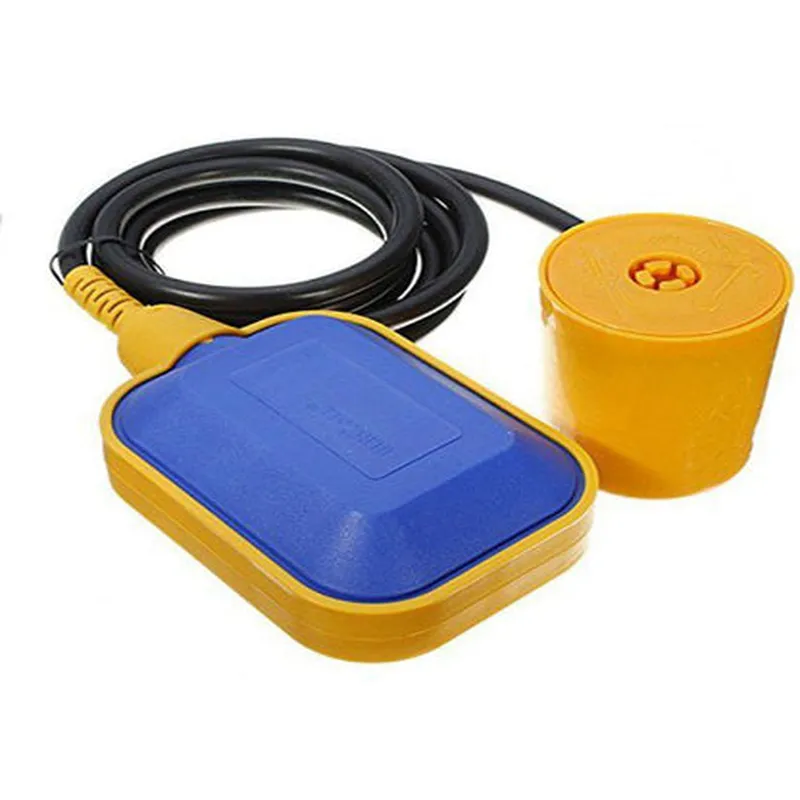
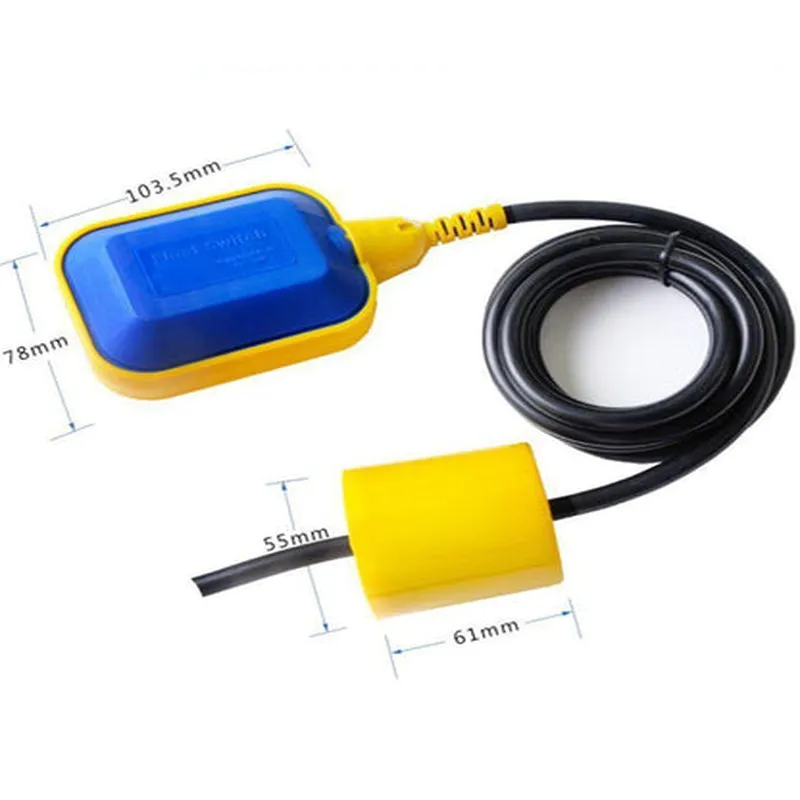
Float Switch Sensor For Water Level Controller With 2 Meter Wire

Buy Now on Stufin

Component Name

Float Switch Sensor For Water Level Controller With 2 Meter Wire

Overview

The Float Switch Sensor is a liquid-level sensing device designed to monitor and control water levels in various applications, including industrial, agricultural, and residential settings. This sensor comes with a 2-meter wire, providing a reliable and convenient solution for remote sensing and automation.

Functionality

The Float Switch Sensor works by detecting changes in the water level, triggering a corresponding electrical signal to control the connected device or system. The sensor consists of a cylindrical float attached to a pivot arm, which in turn is connected to a reed switch or normally open (NO) contact. When the water level reaches a predetermined point, the float rises or falls, causing the reed switch to open or close, respectively. This switch action triggers an electrical signal, enabling the connected controller or device to respond accordingly.

Key Features

  • High Accuracy: The Float Switch Sensor provides accurate and reliable water level detection, ensuring precise control over the connected device or system.
  • Adjustable Sensitivity: The sensor's sensitivity can be adjusted by modifying the float's pivot point, allowing for customized settings for various applications.
  • 2-Meter Wire: The included 2-meter wire enables remote sensing and easy installation, reducing the need for additional wiring or extensions.
  • Reed Switch or NO Contact: The sensor features a reliable reed switch or normally open (NO) contact, providing a secure and durable electrical connection.
  • Waterproof Design: The sensor's waterproof construction ensures reliable operation in humid or wet environments, making it suitable for outdoor or industrial applications.
  • Compact Size: The Float Switch Sensor's compact design allows for easy integration into tight spaces, making it ideal for a wide range of applications.
  • Easy Installation: The sensor's simple design and included wire facilitate quick and easy installation, reducing setup time and complexity.
  • Wide Operating Range: The Float Switch Sensor operates effectively across a wide range of temperatures (-20C to 80C) and is suitable for use with various types of liquids.

Specifications

Supply Voltage

5V to 24V DC

Output Type

Normally Open (NO) or Reed Switch

Sensitivity

Adjustable

Response Time

<1 second

Operating Temperature

-20C to 80C

Storage Temperature

-30C to 90C

Humidity

Up to 95%

Wire Length

2 meters

Material

Waterproof plastic housing and stainless steel pivot arm

Float Material

High-density polyethylene (HDPE)

Applications

The Float Switch Sensor is suitable for a wide range of applications, including

Water level control in tanks, reservoirs, and containers

Pump control and automation

Leak detection and alarm systems

Industrial process control and monitoring

Agricultural irrigation systems

Residential water supply management

Certifications and Compliance

The Float Switch Sensor meets or exceeds the following industry standards and certifications

CE (Conformit Europene) certified

RoHS (Restriction of Hazardous Substances) compliant

FCC (Federal Communications Commission) compliant

Warranty and Support

The Float Switch Sensor is backed by a [insert warranty period] warranty and is supported by [insert support resources, such as documentation, technical support, and FAQs].

Pin Configuration

  • Float Switch Sensor For Water Level Controller With 2 Meter Wire
  • Pin Description:
  • The Float Switch Sensor has 3 pins, which are used to connect the sensor to a microcontroller or other controlling devices. Here is a detailed description of each pin:
  • 1. VCC (Power Supply) Pin:
  • Function: Provides power to the float switch sensor
  • Description: This pin is used to connect the power source to the sensor. Typically, a voltage between 3.3V to 5V is used.
  • Connection: Connect to the positive terminal of the power source (e.g., a battery or a voltage regulator output).
  • 2. GND (Ground) Pin:
  • Function: Provides a ground reference for the sensor
  • Description: This pin is used to ground the sensor and completes the circuit.
  • Connection: Connect to the negative terminal of the power source (e.g., a battery negative terminal or a ground plane).
  • 3. OUT (Output) Pin:
  • Function: Provides an output signal indicating the state of the float switch
  • Description: This pin is used to connect the sensor to a microcontroller or other controlling devices. The output signal is typically an active-low signal, meaning it is pulled low (GND) when the float is in contact with the water and pulled high (VCC) when the float is not in contact with the water.
  • Connection: Connect to a digital input pin on a microcontroller or other controlling devices.
  • Connection Structure:
  • To connect the Float Switch Sensor to a microcontroller or other controlling devices, follow this structure:
  • 1. VCC Pin:
  • Connect one end of the 2-meter wire to the VCC pin on the sensor.
  • Connect the other end of the wire to the positive terminal of the power source (e.g., a battery or a voltage regulator output).
  • 2. GND Pin:
  • Connect one end of the 2-meter wire to the GND pin on the sensor.
  • Connect the other end of the wire to the negative terminal of the power source (e.g., a battery negative terminal or a ground plane).
  • 3. OUT Pin:
  • Connect one end of the 2-meter wire to the OUT pin on the sensor.
  • Connect the other end of the wire to a digital input pin on a microcontroller or other controlling devices.
  • Example Connection Diagram:
  • | Sensor Pin | Connection |
  • | --- | --- |
  • | VCC | Power Source (Positive Terminal) |
  • | GND | Power Source (Negative Terminal) |
  • | OUT | Microcontroller (Digital Input Pin) |
  • Note: Ensure proper voltage ratings and current handling capacities while making connections to avoid damage to the sensor or controlling devices.

Code Examples

Float Switch Sensor For Water Level Controller With 2 Meter Wire
Overview
The Float Switch Sensor is a device used to detect the level of a liquid (e.g., water) in a tank or container. This sensor is connected to a microcontroller or other control systems to provide real-time monitoring and control of the liquid level. The 2-meter wire allows for easy installation and connection to the control system.
Technical Specifications
Operating Voltage: 5V DC
 Output: Digital (High/Low)
 Sensitivity: Adjustable (via screw on the float)
 Response Time: <1 second
 Wire Length: 2 meters
 Connection: 3-pin connector (VCC, GND, OUT)
Code Examples
### Example 1: Basic Water Level Monitoring using Arduino
In this example, we will use the Float Switch Sensor to monitor the water level in a tank and display the status on an LCD screen using an Arduino board.
Hardware Requirements:
Float Switch Sensor
 Arduino Board (e.g., Arduino Uno)
 LCD Screen (e.g., 16x2 LCD)
 Breadboard and jumper wires
Code:
```c
const int floatSwitchPin = 2;  // Pin connected to Float Switch Sensor
const int lcdRs = 12;        // Pin connected to LCD RS
const int lcdEn = 11;        // Pin connected to LCD EN
const int lcdD4 = 5;        // Pin connected to LCD D4
const int lcdD5 = 4;        // Pin connected to LCD D5
const int lcdD6 = 3;        // Pin connected to LCD D6
const int lcdD7 = 2;        // Pin connected to LCD D7
#include <LiquidCrystal.h>
LiquidCrystal_I2C lcd(lcdRs, lcdEn, lcdD4, lcdD5, lcdD6, lcdD7);
void setup() {
  pinMode(floatSwitchPin, INPUT);
  lcd.begin(16, 2);
}
void loop() {
  int floatSwitchState = digitalRead(floatSwitchPin);
  if (floatSwitchState == HIGH) {
    lcd.setCursor(0, 0);
    lcd.print("Water Level: HIGH");
  } else {
    lcd.setCursor(0, 0);
    lcd.print("Water Level: LOW");
  }
  delay(1000);
}
```
### Example 2: Water Level Control using Raspberry Pi and Python
In this example, we will use the Float Switch Sensor to control a water pump connected to a Raspberry Pi using Python.
Hardware Requirements:
Float Switch Sensor
 Raspberry Pi (e.g., Raspberry Pi 4)
 Water Pump (e.g., DC Brushless Pump)
 Breadboard and jumper wires
Code:
```python
import RPi.GPIO as GPIO
import time
# Set up GPIO mode
GPIO.setmode(GPIO.BCM)
# Define pins
floatSwitchPin = 17
pumpPin = 23
# Set up pins as inputs/outputs
GPIO.setup(floatSwitchPin, GPIO.IN, pull_up_down=GPIO.PUD_UP)
GPIO.setup(pumpPin, GPIO.OUT)
while True:
    floatSwitchState = GPIO.input(floatSwitchPin)
    if floatSwitchState == GPIO.HIGH:
        print("Water Level: HIGH")
        GPIO.output(pumpPin, GPIO.LOW)  # Turn off pump
    else:
        print("Water Level: LOW")
        GPIO.output(pumpPin, GPIO.HIGH)  # Turn on pump
    time.sleep(1)
```
These examples demonstrate how to use the Float Switch Sensor in different contexts to monitor and control the water level in a tank or container. The sensor's digital output makes it easy to integrate with various microcontrollers and control systems.