Aluminum GT2 6mm Belt Width 60 teeth 5mm Bore Aluminium Timing Pulley


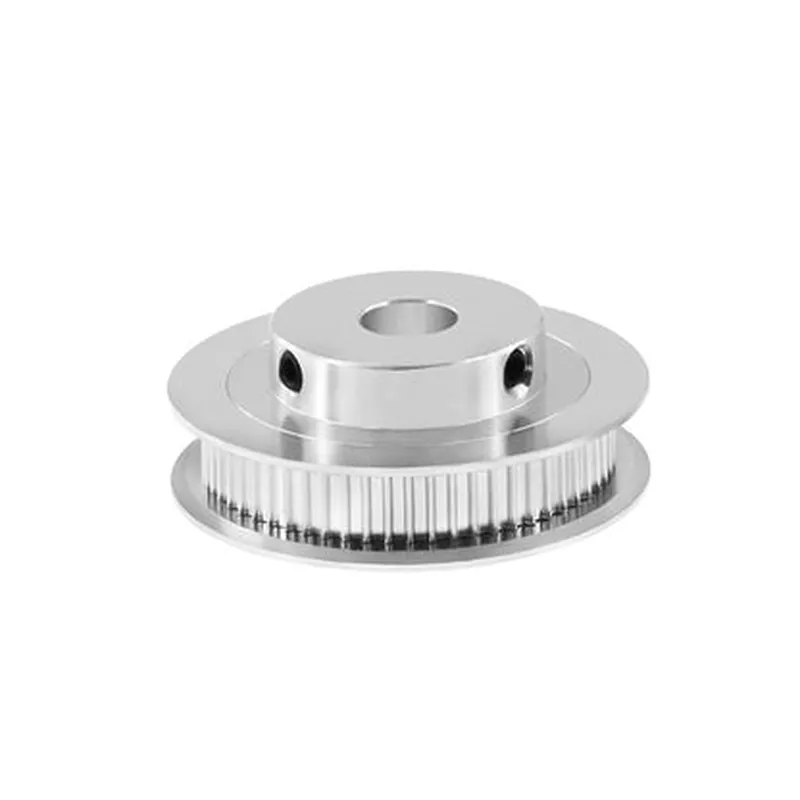
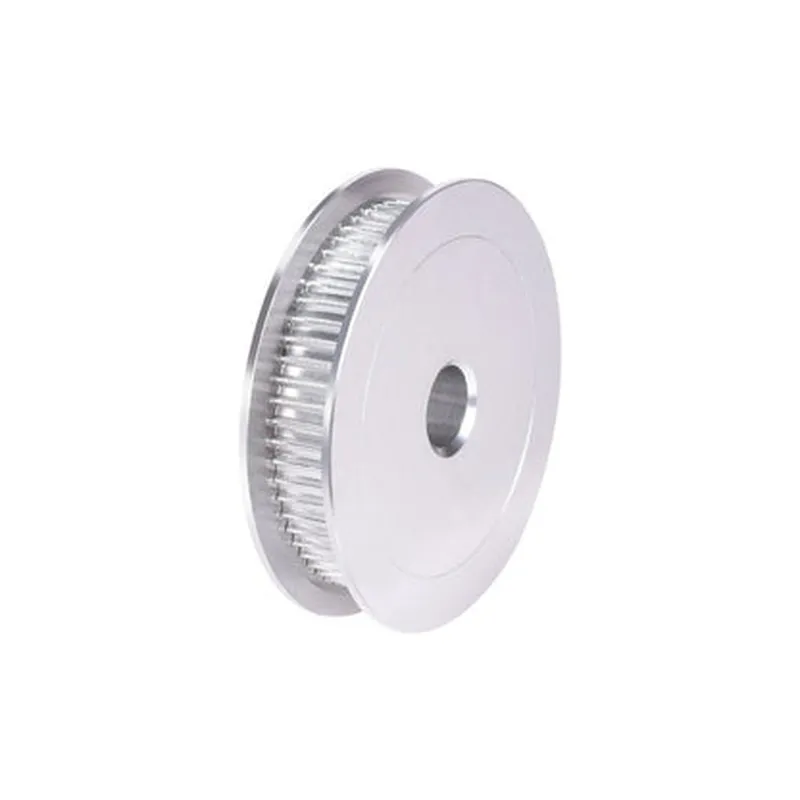
Aluminum GT2 6mm Belt Width 60 teeth 5mm Bore Aluminium Timing Pulley
The Aluminum GT2 6mm Belt Width 60 teeth 5mm Bore Aluminium Timing Pulley is a critical component in linear motion systems, particularly in 3D printing, CNC machines, and robotics. This timing pulley plays a vital role in transmitting power and motion between axes, ensuring precise and synchronized movement.
The primary function of this timing pulley is to engage with a matching GT2 belt, transmitting rotary motion into linear motion or vice versa. The pulley's teeth grip the belt, enabling the conversion of power from a rotating shaft to a linearly moving component, such as a carriage or gantry. This process allows for precise control over the movement of the connected components.
| ### Material and Construction |
Made from high-quality aluminum alloy, ensuring strength, durability, and resistance to corrosion.
The pulley's body is precision-machined to provide a smooth, even surface, reducing friction and wear.
| ### Dimensions and Specifications |
6mm
60
5mm (compatible with 5mm shafts or rods)
[Insert diameter]
[Insert hub length]
[Insert material thickness]
| ### Performance Characteristics |
High-precision teeth design ensures consistent and accurate power transmission.
Low-friction surface reduces heat generation and wear on the belt and pulley.
High-torque capacity enables reliable operation under various load conditions.
| ### Mounting and Installation |
The 5mm bore allows for easy mounting on compatible shafts or rods.
Standard installation involves securing the pulley to the shaft using set screws or a keyway.
| ### Compatibility and Applications | |
| Designed for use with GT2 belts (6mm wide) in various linear motion systems, including |
+ 3D printing machines
+ CNC machines
+ Robotics and automation systems
+ Linear actuators and slides
Aluminum alloy
Anodized or powder-coated
-20C to 80C (-4F to 176F)
[Insert maximum rotational speed]
[Insert maximum torque transmission]
RoHS compliant
CE marked (where applicable)
Meets or exceeds industry standards for precision and performance
By integrating this Aluminum GT2 6mm Belt Width 60 teeth 5mm Bore Aluminium Timing Pulley into your linear motion system, you can ensure precise, reliable, and efficient power transmission, enabling high-performance operation in a variety of applications.
Aluminum GT2 6mm Belt Width 60 teeth 5mm Bore Aluminium Timing Pulley DocumentationOverviewThe Aluminum GT2 6mm Belt Width 60 teeth 5mm Bore Aluminium Timing Pulley is a high-quality, precision-made component designed for use in various IoT and robotics applications. This pulley is made from durable aluminum and features a GT2 belt width of 6mm, 60 teeth, and a 5mm bore. It is ideal for use in linear motion systems, 3D printers, CNC machines, and other applications requiring precise timing belt synchronization.Technical SpecificationsMaterial: Aluminum
Belt Width: 6mm
Teeth: 60
Bore: 5mm
Pitch: 2mm
Tooth Height: 1.5mm
Pulley Diameter: 35.5mm
Pulley Width: 12mm
Weight: 25gCode ExamplesHere are some code examples that demonstrate how to use this component in various contexts:Example 1: Arduino Stepper Motor ControlIn this example, we'll use the Aluminum GT2 6mm Belt Width 60 teeth 5mm Bore Aluminium Timing Pulley with an Arduino board and a stepper motor to control the movement of a linear motion system.```cpp
#include <Stepper.h>#define PULLEY_TEETH 60
#define STEPS_PER_REVOLUTION 200
#define PULLEY_PITCH 2Stepper myStepper(STEPS_PER_REVOLUTION, 8, 9, 10, 11);void setup() {
// Set the maximum speed of the stepper motor
myStepper.setSpeed(100);
}void loop() {
// Move the linear motion system 10mm to the right
int steps = (10 / (PULLEY_PITCH PULLEY_TEETH)) STEPS_PER_REVOLUTION;
myStepper.step(steps);
delay(1000);// Move the linear motion system 10mm to the left
steps = -((10 / (PULLEY_PITCH PULLEY_TEETH)) STEPS_PER_REVOLUTION);
myStepper.step(steps);
delay(1000);
}
```Example 2: Raspberry Pi Python Script for Linear Motion ControlIn this example, we'll use the Aluminum GT2 6mm Belt Width 60 teeth 5mm Bore Aluminium Timing Pulley with a Raspberry Pi and a Python script to control the movement of a linear motion system.```python
import RPi.GPIO as GPIO
import timeGPIO.setmode(GPIO.BCM)# Define the stepper motor pins
DIR_PIN = 17
STEP_PIN = 18# Set up the GPIO pins as output
GPIO.setup(DIR_PIN, GPIO.OUT)
GPIO.setup(STEP_PIN, GPIO.OUT)# Define the pulley specifications
PULLEY_TEETH = 60
PULLEY_PITCH = 2try:
while True:
# Move the linear motion system 10mm to the right
steps = int((10 / (PULLEY_PITCH PULLEY_TEETH)) 200)
GPIO.output(DIR_PIN, GPIO.HIGH)
for i in range(steps):
GPIO.output(STEP_PIN, GPIO.HIGH)
time.sleep(0.001)
GPIO.output(STEP_PIN, GPIO.LOW)
time.sleep(0.001)# Move the linear motion system 10mm to the left
steps = int(-((10 / (PULLEY_PITCH PULLEY_TEETH)) 200))
GPIO.output(DIR_PIN, GPIO.LOW)
for i in range(abs(steps)):
GPIO.output(STEP_PIN, GPIO.HIGH)
time.sleep(0.001)
GPIO.output(STEP_PIN, GPIO.LOW)
time.sleep(0.001)time.sleep(1)except KeyboardInterrupt:
GPIO.cleanup()
```These examples demonstrate how to use the Aluminum GT2 6mm Belt Width 60 teeth 5mm Bore Aluminium Timing Pulley in various IoT and robotics applications. By modifying the code to suit your specific requirements, you can use this pulley to achieve precise timing belt synchronization in your projects.