

Stufin
Home Quick Cart Profile

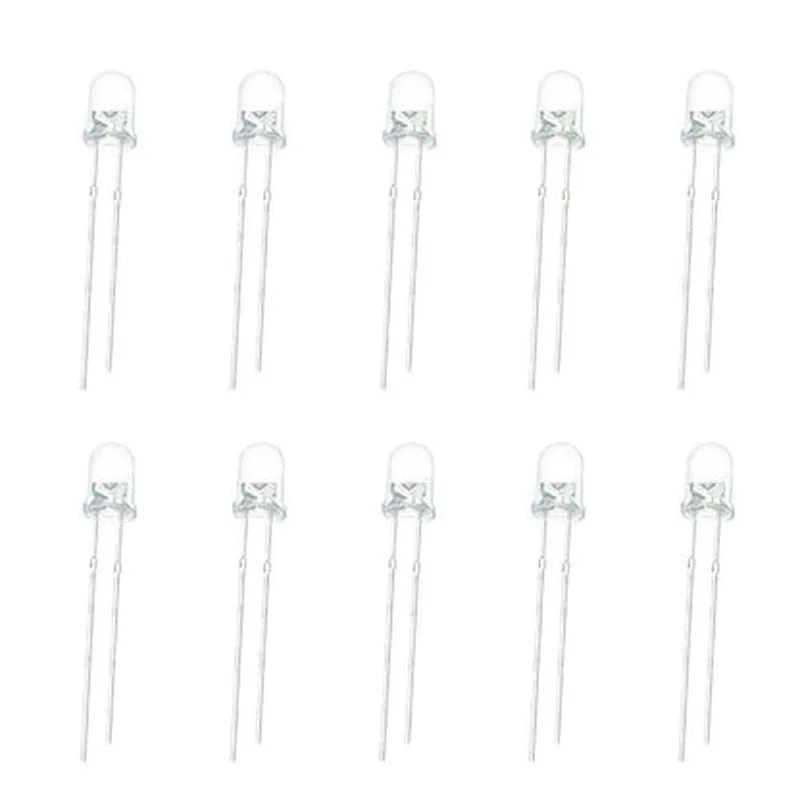
3mm White LED (Pack of 10)

Buy Now on Stufin

Component Description

3mm White LED (Pack of 10)

Overview

The 3mm White LED is a high-brightness, surface-mount light-emitting diode (LED) component designed for use in a wide range of applications, including IoT projects, DIY electronics, and industrial control systems. This pack of 10 LEDs provides a cost-effective solution for implementing lighting or indication functionality in various devices and systems.

Functionality

The 3mm White LED emits a bright, white light when an electric current passes through it. The LED is a semiconductor device that converts electrical energy into visible light, making it an essential component in many modern electronic systems. The LED's primary function is to provide visual feedback, indication, or illumination in various applications, such as

Indicators for power, status, or alarm conditions

Backlighting for LCD displays or keyboards

Lighting for interior or exterior spaces

Decorative lighting for ambiance or aesthetic purposes

Key Features

  • High Brightness: The 3mm White LED has a high luminous intensity, making it suitable for applications where a bright, attention-grabbing light is required.
  • Low Power Consumption: The LED has a low power consumption, typically in the range of 10-20mA, making it suitable for battery-powered devices or energy-efficient systems.
  • Small Form Factor: The 3mm diameter and low profile of the LED make it ideal for use in compact or space-constrained designs.
  • Surface Mount Technology: The LED is designed for surface-mount assembly, allowing for easy and efficient installation on printed circuit boards (PCBs) or other surfaces.
  • Long Lifespan: The LED has a long lifespan, typically exceeding 25,000 hours, reducing the need for frequent replacements.
  • Wide Viewing Angle: The LED has a wide viewing angle, typically 120, ensuring that the light is visible from various directions.

Electrical Characteristics

Forward Voltage (VF)3.2-3.8V
Forward Current (IF)10-20mA
Luminous Intensity (IV)800-1000mcd
Wavelength ()6000-6500K (white light)

Mechanical Characteristics

Package Type

Surface Mount Device (SMD)

Lead Frame Material

Copper-based or other conductive materials

Encapsulant Material

Epoxy or other transparent materials

Lens Shape

Hemisphere or rectangular

Dimensions

3mm diameter, 1.5mm height

Operating Conditions

Operating Temperature

-20C to 80C

Storage Temperature

-30C to 100C

Humidity

60% RH max.

Package Contents

The pack includes 10 pieces of 3mm White LEDs.

Applications

The 3mm White LED is suitable for a wide range of applications, including

IoT devices and sensors

DIY electronics projects

Industrial control systems

Automotive systems

Consumer electronics

Lighting systems

Precautions

Handle the LEDs with care to avoid damage or electrostatic discharge.

Use appropriate soldering techniques and equipment to avoid overheating or damaging the LED.

Ensure the LED is operated within the recommended electrical and environmental specifications to maintain its performance and lifespan.

Pin Configuration

  • Component Documentation: 3mm White LED (Pack of 10)
  • Pinout Description:
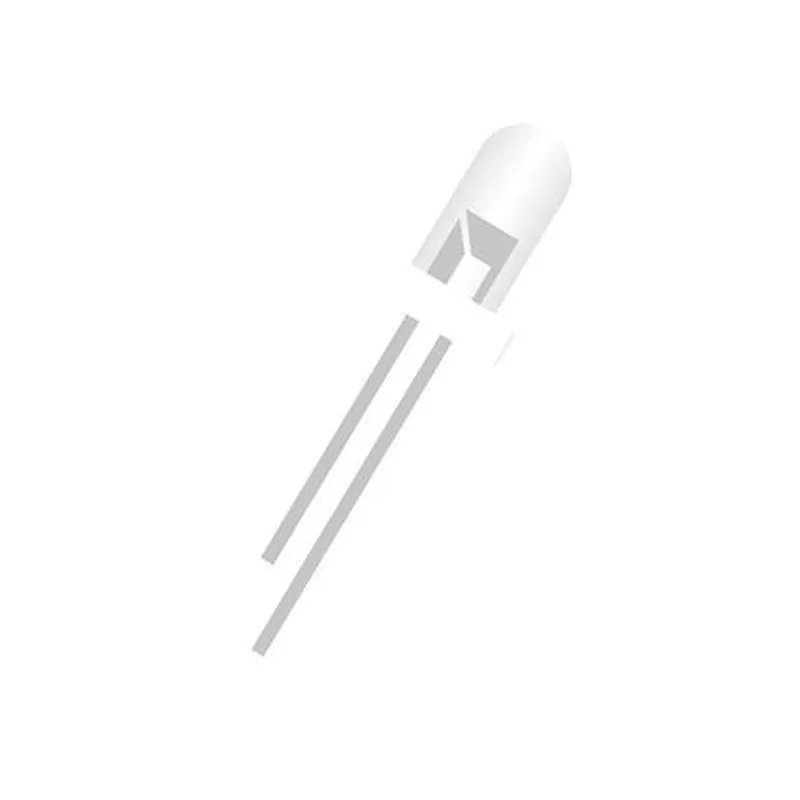
  • The 3mm White LED has two pins, which are used to connect the LED to a power source and control its operation.
  • Pin 1: Anode (Positive Leg)
  • Function: The anode is the positive leg of the LED, which connects to the positive voltage supply.
  • Color: The anode is typically longer than the cathode (negative leg) and may have a slight protrusion or a flat edge on the top.
  • Connection: Connect the anode to the positive terminal of the power source, such as a digital output of a microcontroller or a voltage regulator.
  • Pin 2: Cathode (Negative Leg)
  • Function: The cathode is the negative leg of the LED, which connects to the negative voltage supply or ground.
  • Color: The cathode is typically shorter than the anode and may have a beveled edge or a slight curvature on the top.
  • Connection: Connect the cathode to the negative terminal of the power source, such as ground or a digital ground of a microcontroller.
  • Connection Structure:
  • To connect the 3mm White LED, follow these steps:
  • 1. Identify the pins: Identify the anode (positive leg) and cathode (negative leg) of the LED.
  • 2. Connect the anode: Connect the anode to the positive terminal of the power source, such as a digital output of a microcontroller (e.g., Arduino's digital pin) or a voltage regulator (e.g., 3.3V or 5V).
  • 3. Connect the cathode: Connect the cathode to the negative terminal of the power source, such as ground or digital ground of a microcontroller.
  • 4. Add a current-limiting resistor (optional): If you're driving the LED directly from a microcontroller or a voltage source, consider adding a current-limiting resistor in series with the LED to prevent excessive current and potential damage. The recommended resistor value depends on the specific LED characteristics and the desired brightness.
  • Example Connection Diagram:
  • ```
  • +---------------+
  • | Microcontroller |
  • | (Digital Output) |
  • +---------------+
  • |
  • |
  • v
  • +---------------+
  • | Current-Limiting |
  • | Resistor (optional) |
  • +---------------+
  • |
  • |
  • v
  • +---------------+
  • | 3mm White LED |
  • | (Anode) |
  • +---------------+
  • |
  • |
  • v
  • +---------------+
  • | Ground |
  • | (Cathode) |
  • +---------------+
  • ```
  • Important Notes:
  • Always handle LEDs with care to avoid static electricity damage.
  • Ensure the correct polarity when connecting the LED to prevent damage or incorrect operation.
  • The recommended operating voltage and current for the 3mm White LED may vary depending on the specific manufacturer and type. Consult the datasheet or manufacturer's documentation for specific details.
  • By following this documentation, you should be able to correctly connect and use the 3mm White LED in your IoT project.

Code Examples

Component Documentation: 3mm White LED (Pack of 10)
Overview
The 3mm White LED (Pack of 10) is a package of 10 white light-emitting diodes (LEDs) with a 3mm diameter. These LEDs are commonly used in various Internet of Things (IoT) projects, robotics, and electronic circuits to provide visual indicators, lighting, or status signals.
Pinout and Characteristics
Pinout:
	+ Anode (Positive Leg): Long leg
	+ Cathode (Negative Leg): Short leg
 Voltage: 1.8-2.5V
 Current: 15-20mA
 Luminous Intensity: 100-150mcd
 Wavelength: 6000-6500K (White light)
Code Examples
### Example 1: Basic LED Blinking using Arduino
This example demonstrates how to use the 3mm White LED with an Arduino board to create a simple blinking effect.
```c++
const int ledPin = 13;  // Choose any digital pin on your Arduino board
void setup() {
  pinMode(ledPin, OUTPUT);
}
void loop() {
  digitalWrite(ledPin, HIGH);  // Turn the LED on
  delay(1000);               // Wait for 1 second
  digitalWrite(ledPin, LOW);  // Turn the LED off
  delay(1000);               // Wait for 1 second
}
```
Connect the anode (long leg) of the LED to digital pin 13 on your Arduino board, and the cathode (short leg) to a 220 resistor, then to GND.
### Example 2: LED Dimming using Raspberry Pi (Python)
This example shows how to use the 3mm White LED with a Raspberry Pi to create a dimming effect using PWM (Pulse Width Modulation).
```python
import RPi.GPIO as GPIO
import time
# Set up GPIO mode
GPIO.setmode(GPIO.BCM)
# Set up the LED pin
led_pin = 17
GPIO.setup(led_pin, GPIO.OUT)
# Set up PWM
pwm = GPIO.PWM(led_pin, 50)  # 50Hz frequency
pwm.start(0)  # Initial duty cycle: 0%
try:
    while True:
        # Dimming cycle
        for dc in range(0, 101, 10):
            pwm.ChangeDutyCycle(dc)
            time.sleep(0.1)
        for dc in range(100, -1, -10):
            pwm.ChangeDutyCycle(dc)
            time.sleep(0.1)
except KeyboardInterrupt:
    pwm.stop()
    GPIO.cleanup()
```
Connect the anode (long leg) of the LED to GPIO pin 17 on your Raspberry Pi, and the cathode (short leg) to a 220 resistor, then to GND.
Note: Make sure to use a suitable resistor value for the LED according to the voltage and current rating of the microcontroller or board you are using. In these examples, a 220 resistor is assumed, but you may need to adjust the value depending on your specific setup.