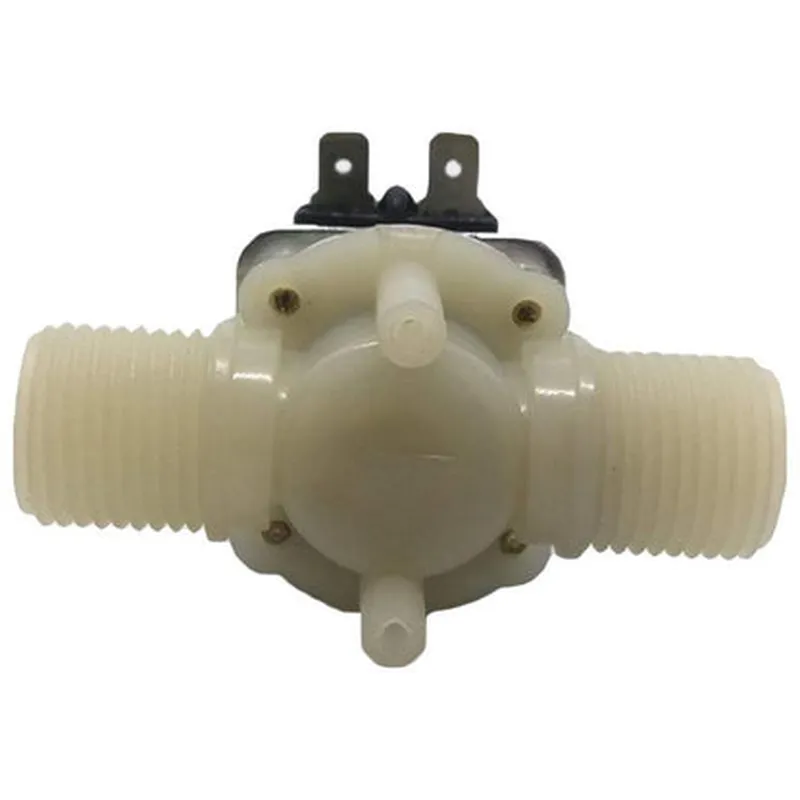
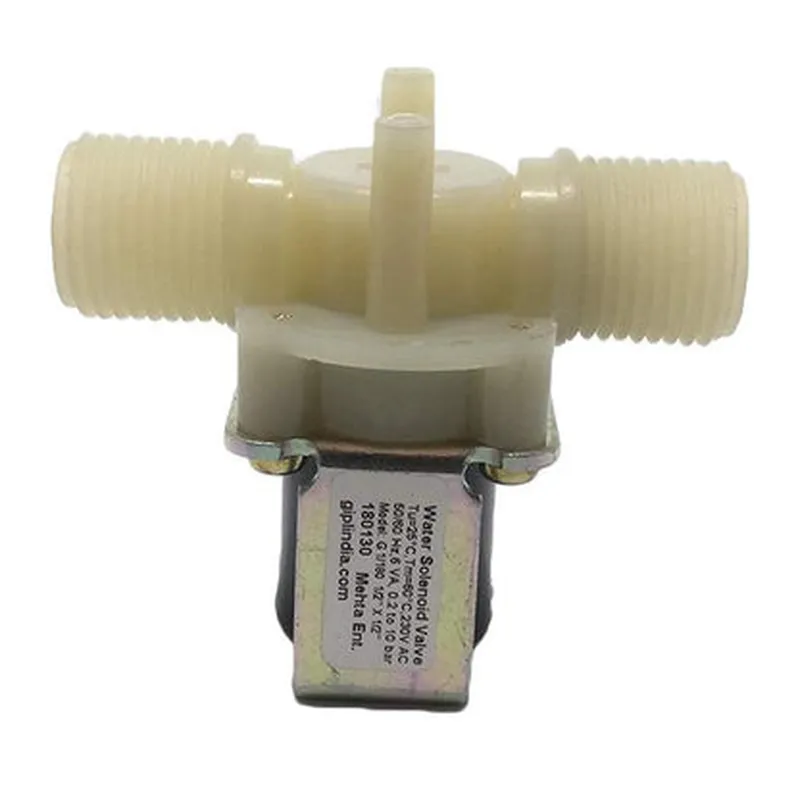
Solenoid Valve 230V 1/2 inch Documentation
The Solenoid Valve 230V 1/2 inch is an electrically operated valve that controls the flow of fluids (gases or liquids) in a pipeline. It is commonly used in industrial automation, HVAC, and irrigation systems. The valve consists of a solenoid coil, a plunger, and a valve body. When an electrical signal is applied to the coil, the plunger moves, opening or closing the valve.
Operating voltage: 230V AC
 Connection type: 1/2 inch thread
 Valve body material: Brass
 Coil resistance: 1000 ohms
 Maximum current: 1A
 Valve type: 2-way normally closed (NC)
 Pressure rating: 0-10 bar
The Solenoid Valve 230V 1/2 inch can be controlled using a microcontroller or a dedicated valve control board. The valve requires a 230V AC power supply and can be controlled using a digital output from a microcontroller.
### Example 1: Arduino Control using Relays
In this example, we will use an Arduino board to control the Solenoid Valve 230V 1/2 inch using a relay module.
```c++
const int relayPin = 2;  // Digital pin connected to the relay module
void setup() {
  pinMode(relayPin, OUTPUT);
}
void loop() {
  digitalWrite(relayPin, HIGH);  // Turn on the relay and open the valve
  delay(10000);  // Keep the valve open for 10 seconds
  digitalWrite(relayPin, LOW);  // Turn off the relay and close the valve
  delay(10000);  // Keep the valve closed for 10 seconds
}
```
### Example 2: Raspberry Pi Control using Python
In this example, we will use a Raspberry Pi to control the Solenoid Valve 230V 1/2 inch using a Python script.
```python
import RPi.GPIO as GPIO
import time
GPIO.setmode(GPIO.BCM)
relay_pin = 17  # GPIO pin connected to the relay module
GPIO.setup(relay_pin, GPIO.OUT)
while True:
    GPIO.output(relay_pin, GPIO.HIGH)  # Turn on the relay and open the valve
    time.sleep(10)  # Keep the valve open for 10 seconds
    GPIO.output(relay_pin, GPIO.LOW)  # Turn off the relay and close the valve
    time.sleep(10)  # Keep the valve closed for 10 seconds
```
Note: In both examples, ensure that the relay module is properly configured and rated for 230V AC operation. Also, make sure to add proper safety measures and fuses to prevent electrical shock and damage to the valve.
Ensure the valve is correctly wired and connected to the power supply.
 Use a suitable power supply that meets the valve's voltage and current requirements.
 Avoid touching the valve or electrical components when the system is in operation.
 Follow proper safety guidelines when working with electrical systems.
By following these examples and guidelines, you can successfully integrate the Solenoid Valve 230V 1/2 inch into your IoT project and control the flow of fluids in your system.