

Stufin
Home Quick Cart Profile

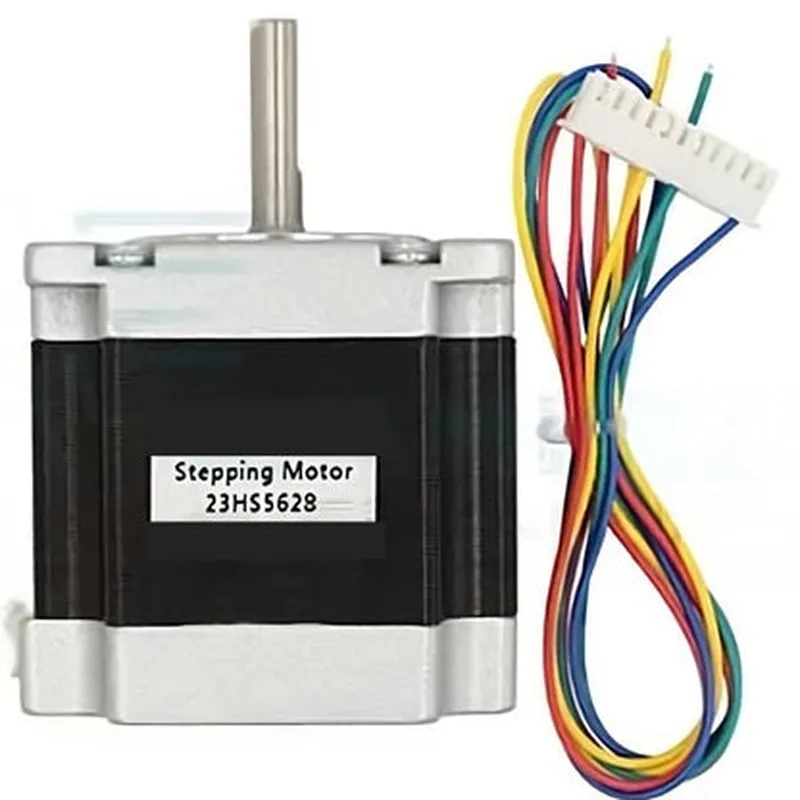
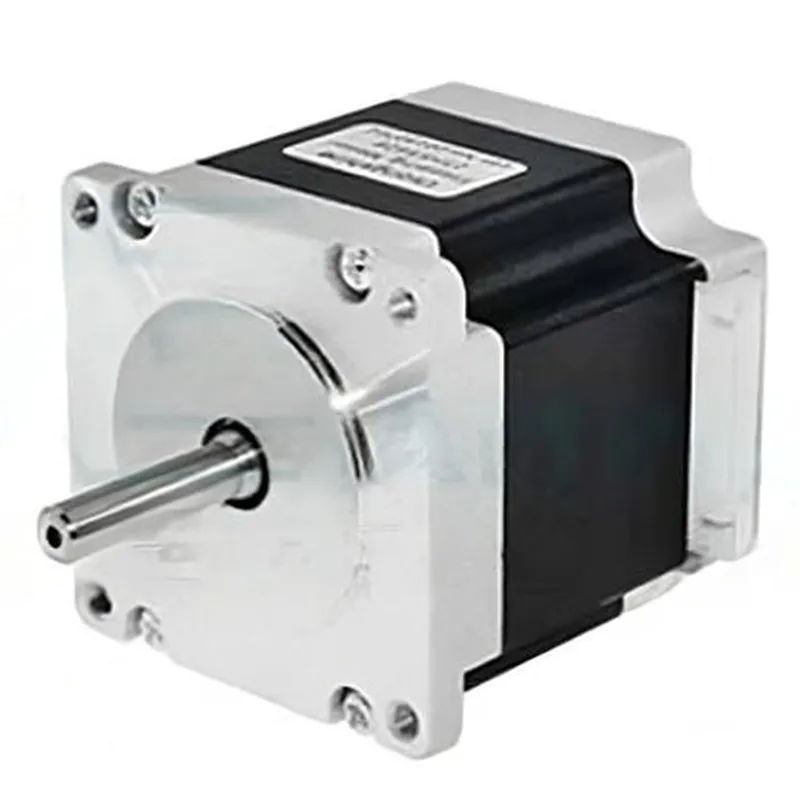
23HS5628 Nema23 Stepper Motor

Buy Now on Stufin

Component Name

23HS5628 Nema23 Stepper Motor

Overview

The 23HS5628 Nema23 Stepper Motor is a high-performance, hybrid stepper motor designed for applications requiring precise positioning, high torque, and reliability. This motor is part of the Nema23 family, which is a standard for stepper motors with a frame size of 57mm x 57mm.

Functionality

The 23HS5628 Nema23 Stepper Motor is designed to convert electrical pulses into precise mechanical movements. It uses a stepper motor driver to receive digital signals, which are then converted into rotational motion. The motor's rotor moves in small, precise steps, allowing for accurate control over the motor's position, speed, and direction.

The motor's hybrid design combines the benefits of permanent magnet and variable reluctance stepper motors, offering high torque, high accuracy, and low vibration. The 23HS5628 is suitable for a wide range of applications, including

CNC machines and 3D printers

Robotics and automation systems

Medical devices and equipment

Industrial control systems

Precision positioning systems

Key Features

  • High Torque: The 23HS5628 Nema23 Stepper Motor delivers high torque output, making it suitable for applications requiring precise control and smooth operation.
  • High Accuracy: The motor's hybrid design and precise stepping mechanism ensure high positional accuracy, allowing for precise control over the motor's movement.
  • Low Vibration: The motor's design minimizes vibration, making it suitable for applications where smooth operation is essential.
  • High Reliability: The 23HS5628 is built with high-quality components and has a rugged design, ensuring reliable operation in demanding environments.
  • Nema23 Frame Size: The motor's compact frame size (57mm x 57mm) makes it suitable for applications where space is limited.
  • Bipolar Configuration: The motor has a bipolar configuration, which allows for efficient use of power and precise control over the motor's movement.
  • 4-Lead Connection: The motor has a 4-lead connection, making it easy to connect to a stepper motor driver.
  • Operating Temperature Range: The motor operates within a temperature range of -20C to 50C, making it suitable for use in a variety of environments.

Technical Specifications

Step Angle

1.8

Holding Torque

2.8 Nm (280 oz-in)

Rated Current

2.8 A

Rated Voltage

3.5 V

Inductance

2.5 mH

Resistance

1.4

Rotor Inertia

340 gcm

Lead Wire Length

300 mm (11.8 in)

Weight

0.65 kg (1.43 lbs)

Conclusion

The 23HS5628 Nema23 Stepper Motor is a high-performance component suitable for a wide range of applications requiring precise positioning, high torque, and reliability. Its hybrid design, high accuracy, and low vibration make it an ideal choice for applications where smooth operation and precise control are essential.

Pin Configuration

  • 23HS5628 Nema23 Stepper Motor Pinout Explanation
  • The 23HS5628 Nema23 Stepper Motor has 6 pins, which are responsible for controlling the motor's movement and direction. Here's a detailed explanation of each pin and how to connect them:
  • Pinout:
  • 1. A+ (A Phase Positive)
  • Function: Positive terminal of the A phase winding
  • Connection: Connect to the positive output of the stepper motor driver's A phase channel
  • 2. A- (A Phase Negative)
  • Function: Negative terminal of the A phase winding
  • Connection: Connect to the negative output of the stepper motor driver's A phase channel
  • 3. B+ (B Phase Positive)
  • Function: Positive terminal of the B phase winding
  • Connection: Connect to the positive output of the stepper motor driver's B phase channel
  • 4. B- (B Phase Negative)
  • Function: Negative terminal of the B phase winding
  • Connection: Connect to the negative output of the stepper motor driver's B phase channel
  • 5. VCC (Power Supply)
  • Function: Power supply input for the motor's internal circuitry
  • Connection: Connect to a suitable power source (e.g., +5V or +12V, depending on the motor's specifications)
  • 6. GND (Ground)
  • Function: Ground connection for the motor's internal circuitry
  • Connection: Connect to a suitable ground point (e.g., GND pin of the microcontroller or power supply)
  • Step-by-Step Connection Guide:
  • To connect the 23HS5628 Nema23 Stepper Motor to a microcontroller or a dedicated stepper motor driver:
  • 1. Connect A+ (Pin 1) to the positive output of the A phase channel of the stepper motor driver.
  • 2. Connect A- (Pin 2) to the negative output of the A phase channel of the stepper motor driver.
  • 3. Connect B+ (Pin 3) to the positive output of the B phase channel of the stepper motor driver.
  • 4. Connect B- (Pin 4) to the negative output of the B phase channel of the stepper motor driver.
  • 5. Connect VCC (Pin 5) to a suitable power source (e.g., +5V or +12V, depending on the motor's specifications).
  • 6. Connect GND (Pin 6) to a suitable ground point (e.g., GND pin of the microcontroller or power supply).
  • Important Notes:
  • Ensure the stepper motor driver is compatible with the 23HS5628 Nema23 Stepper Motor and can provide the required current and voltage.
  • Consult the datasheet of the stepper motor driver and the microcontroller (if used) for specific connection requirements and guidelines.
  • Use suitable wiring and connectors to prevent damage to the motor or driver due to voltage drops, electromagnetic interference (EMI), or other environmental factors.
  • By following these guidelines, you can successfully connect and control the 23HS5628 Nema23 Stepper Motor using a microcontroller or a dedicated stepper motor driver.

Code Examples

23HS5628 Nema23 Stepper Motor Documentation
Overview
The 23HS5628 Nema23 Stepper Motor is a high-torque, high-precision stepper motor designed for various industrial and robotics applications. It features a Nema23 frame size, 2.8 degrees step angle, and 1.5A current per phase. This motor is suitable for applications requiring precise positioning, high torque, and quiet operation.
Technical Specifications
Frame Size: Nema23
 Step Angle: 2.8 degrees
 Holding Torque: 2.8 Nm
 RATED CURRENT: 1.5A per phase
 PHASE RESISTANCE: 2.5 Ohm per phase
 INDUCTANCE: 3.5 mH per phase
 DRIVER MATCHING: compatible with most stepper motor drivers
Code Examples
### Example 1: Arduino-based Stepper Motor Control using A4988 Driver
In this example, we will demonstrate how to control the 23HS5628 Nema23 Stepper Motor using an Arduino board and the A4988 stepper motor driver.
```cpp
#include <Stepper.h>
// Define the stepper motor pins
#define DIR_PIN 2
#define STEP_PIN 3
#define ENABLE_PIN 4
// Create a Stepper object
Stepper stepper(200, DIR_PIN, STEP_PIN);
void setup() {
  // Set the enable pin as an output
  pinMode(ENABLE_PIN, OUTPUT);
  digitalWrite(ENABLE_PIN, LOW); // Enable the motor
// Set the motor speed to 100 RPM
  stepper.setSpeed(100);
}
void loop() {
  // Move the motor 100 steps forward
  stepper.step(100);
  delay(500);
// Move the motor 50 steps backward
  stepper.step(-50);
  delay(500);
}
```
### Example 2: Raspberry Pi-based Stepper Motor Control using Python and RPi.GPIO
In this example, we will demonstrate how to control the 23HS5628 Nema23 Stepper Motor using a Raspberry Pi and Python with RPi.GPIO library.
```python
import RPi.GPIO as GPIO
import time
# Set up GPIO mode
GPIO.setmode(GPIO.BCM)
# Define the stepper motor pins
DIR_PIN = 17
STEP_PIN = 23
ENABLE_PIN = 24
# Set up the GPIO pins as outputs
GPIO.setup(DIR_PIN, GPIO.OUT)
GPIO.setup(STEP_PIN, GPIO.OUT)
GPIO.setup(ENABLE_PIN, GPIO.OUT)
GPIO.output(ENABLE_PIN, GPIO.LOW)  # Enable the motor
try:
    while True:
        # Move the motor 100 steps forward
        for i in range(100):
            GPIO.output(DIR_PIN, GPIO.HIGH)
            GPIO.output(STEP_PIN, GPIO.HIGH)
            time.sleep(0.01)
            GPIO.output(STEP_PIN, GPIO.LOW)
            time.sleep(0.01)
# Move the motor 50 steps backward
        for i in range(50):
            GPIO.output(DIR_PIN, GPIO.LOW)
            GPIO.output(STEP_PIN, GPIO.HIGH)
            time.sleep(0.01)
            GPIO.output(STEP_PIN, GPIO.LOW)
            time.sleep(0.01)
except KeyboardInterrupt:
    # Clean up GPIO on exit
    GPIO.cleanup()
```
Note: In both examples, ensure to adjust the motor speed, step angle, and current settings according to your specific application requirements and the specifications of the stepper motor driver used.