

Stufin
Home Quick Cart Profile

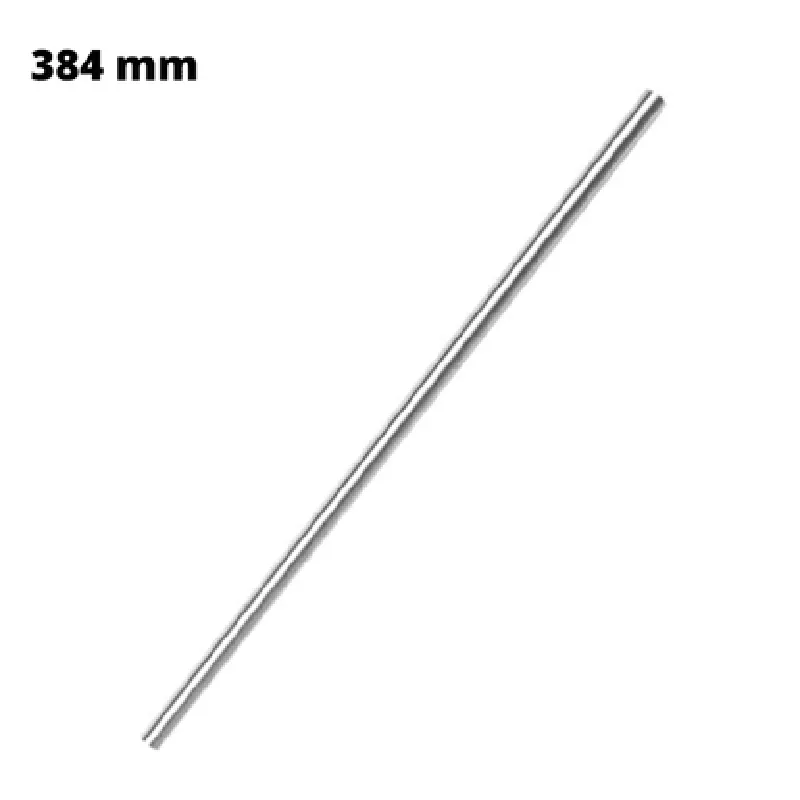
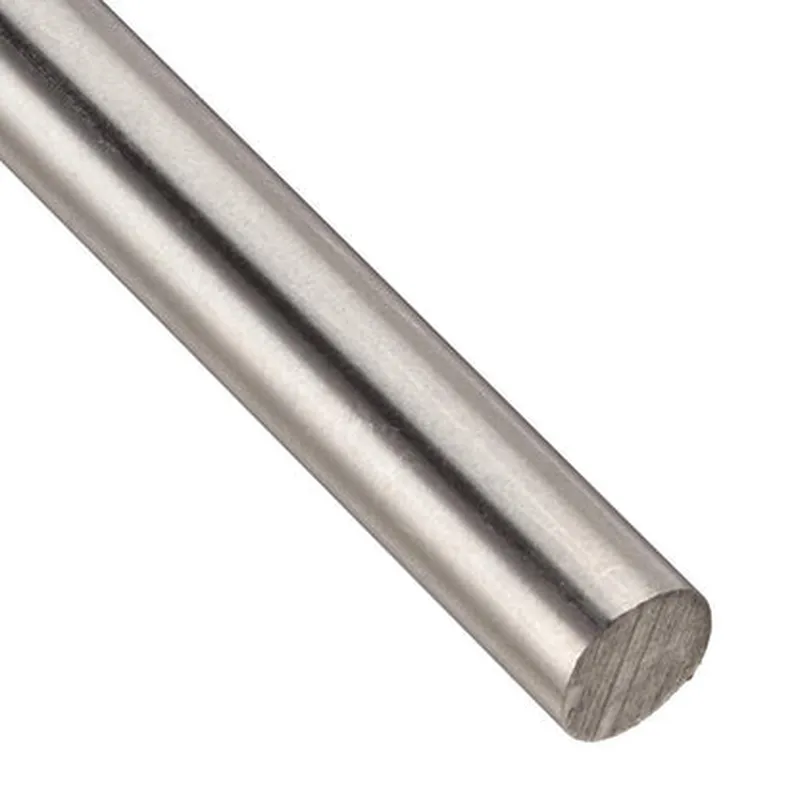
384mm Stainless Steel Rod with 8mm Diameter

Buy Now on Stufin

Component Description

384mm Stainless Steel Rod with 8mm Diameter

Overview

The 384mm Stainless Steel Rod with 8mm Diameter is a high-quality, corrosion-resistant linear component designed for use in various industrial, automation, and robotics applications. This component serves as a structural element, providing a sturdy framework for building and assembling complex systems.

Functionality

The primary function of the 384mm Stainless Steel Rod with 8mm Diameter is to provide a rigid, linear structure that can support various loads, mechanisms, and components. It can be used as a

Structural support for robotic arms, gantries, or other moving components

Linear guide for bearings, bushings, or other sliding components

Mounting platform for sensors, actuators, or other devices

Frame component for building custom enclosures or chassis

Key Features

  • Material: The rod is constructed from high-quality, corrosion-resistant stainless steel (AISI 304 or equivalent), ensuring durability and resistance to environmental factors.
  • Length: The rod has a length of 384mm (15.12 inches), providing a generous working distance for various applications.
  • Diameter: The rod has a diameter of 8mm (0.315 inches), offering a sturdy, compact profile suitable for confined spaces or precision applications.
  • Surface Finish: The rod features a smooth, precision-machined surface finish, ensuring reduced friction and wear when used with bearings or other sliding components.
  • Tolerance: The rod's diameter and length tolerances are tightly controlled, ensuring accurate and reliable performance in critical applications.
  • Threadability: The rod can be threaded at one or both ends, allowing for easy integration with other components, such as nuts, bolts, or bearings.
  • High-Strength: The stainless steel material provides high tensile strength, ensuring the rod can withstand significant loads and stresses without compromising its integrity.

Physical Characteristics

Weight

approximately 450g (15.9 oz)

Density

approximately 8.0 g/cm

Thermal Expansion Coefficient

approximately 17.3 m/mC

Applications

The 384mm Stainless Steel Rod with 8mm Diameter is suitable for a wide range of applications, including

Robotics and automation systems

Industrial machinery and equipment

Medical devices and instrumentation

Aerospace and defense systems

Custom fabrication and prototyping

Certifications and Compliance

The 384mm Stainless Steel Rod with 8mm Diameter complies with relevant industry standards and regulations, including

RoHS (Restriction of Hazardous Substances) compliant

CE (Conformit Europene) marked

Material meets ASTM A276/A276M-17a standards

Ordering Information

When ordering the 384mm Stainless Steel Rod with 8mm Diameter, please specify

Quantity required

Any specific threading or machining requirements

Surface finish or treatment requirements (e.g., passivation, electroplating)

By combining high-quality materials, precise manufacturing, and versatile design, the 384mm Stainless Steel Rod with 8mm Diameter offers a reliable and adaptable solution for a wide range of IoT and industrial applications.

Pin Configuration

  • Component Documentation: 384mm Stainless Steel Rod with 8mm Diameter
  • Overview
  • The 384mm Stainless Steel Rod with 8mm Diameter is a mechanical component designed for use in various IoT applications, such as robotics, automation, and mechanical assemblies. This rod is made of corrosion-resistant stainless steel, ensuring durability and longevity in harsh environments.
  • Pinout
  • The 384mm Stainless Steel Rod does not have pins in the classical sense, as it is a mechanical component rather than an electronic one. However, it has several features that can be used to connect and integrate it with other IoT components. Here's a breakdown of the rod's features:
  • Feature 1: Threaded Ends
  • Description: Both ends of the rod have threads, allowing for easy attachment of mechanical components, such as nuts, bearings, or other rods.
  • Thread Type: The thread type is not specified, but it is compatible with standard metric threads (e.g., M8x1.25).
  • Connection Method: Simply screw the desired component onto the threaded end of the rod.
  • Feature 2: Smooth Rod Surface
  • Description: The rod has a smooth, polished surface, allowing for easy integration with linear bearings, bushings, or other mechanical components.
  • Connection Method: The rod can be inserted into a linear bearing or bushing, or attached to a mechanical component using a collar or clamp.
  • Feature 3: 8mm Diameter
  • Description: The rod has a consistent 8mm diameter throughout its length, ensuring easy compatibility with standard mechanical components.
  • Connection Method: The rod can be used with components designed for 8mm rods, such as bearings, couplers, or adapters.
  • Structural Connection Methods
  • Here are some common structural connection methods for the 384mm Stainless Steel Rod:
  • Threaded Connection: Use a nut or bolt to secure the rod to a mechanical component.
  • Clamping: Use a clamp or collar to attach the rod to a mechanical component.
  • Bearing or Bushing: Insert the rod into a linear bearing or bushing to enable smooth movement.
  • Tips and Considerations
  • When using the rod with threads, ensure that the threads are clean and free of debris to prevent damage or stripping.
  • Apply lubricant to the rod's surface to reduce friction and wear when using it with moving components.
  • Always follow proper safety procedures when handling and assembling mechanical components.
  • By following these guidelines, you can effectively integrate the 384mm Stainless Steel Rod with 8mm Diameter into your IoT project, ensuring a strong, reliable, and durable mechanical connection.

Code Examples

Component Documentation: 384mm Stainless Steel Rod with 8mm Diameter
Overview
The 384mm Stainless Steel Rod with 8mm Diameter is a high-quality, corrosion-resistant rod ideal for various IoT projects, robotics, and automation applications. Its stainless steel material ensures durability and resistance to harsh environments.
Technical Specifications
Material: Stainless Steel ( AISI 304 or equivalent)
 Length: 384 mm
 Diameter: 8 mm
 Tolerance: 0.1 mm
 Surface Finish: Brushed or Polished (optional)
Code Examples
### Example 1: Linear Actuator using Arduino and Stepper Motor
In this example, we will use the 384mm Stainless Steel Rod as a linear guide for a stepper motor-based linear actuator. We will control the actuator using an Arduino board.
Hardware Requirements
384mm Stainless Steel Rod with 8mm Diameter
 Stepper Motor (e.g., NEMA 17)
 Stepper Motor Driver (e.g., A4988)
 Arduino Board (e.g., Arduino Uno)
 Breadboard and jumper wires
Code
```c++
#include <Stepper.h>
// Define stepper motor pins
#define STEPPER_DIR_PIN 2
#define STEPPER_STEP_PIN 3
// Create a stepper motor object
Stepper stepper(200, STEPPER_DIR_PIN, STEPPER_STEP_PIN);
void setup() {
  // Initialize stepper motor
  stepper.setSpeed(50);
}
void loop() {
  // Move the actuator forward
  stepper.step(100);
  delay(500);
  
  // Move the actuator backward
  stepper.step(-100);
  delay(500);
}
```
In this example, we use the Arduino Stepper library to control the stepper motor. The 384mm Stainless Steel Rod serves as a linear guide, allowing the actuator to move smoothly and precisely.
### Example 2: Robot Arm using Raspberry Pi and Python
In this example, we will use the 384mm Stainless Steel Rod as a link in a robot arm, controlled by a Raspberry Pi using Python.
Hardware Requirements
384mm Stainless Steel Rod with 8mm Diameter
 Raspberry Pi Board (e.g., Raspberry Pi 4)
Servo Motor (e.g., SG90)
 Breadboard and jumper wires
Code
```python
import RPi.GPIO as GPIO
import time
# Define servo motor pin
Servo_PIN = 17
# Set up GPIO mode
GPIO.setmode(GPIO.BCM)
# Set up servo motor pin as output
GPIO.setup(Servo_PIN, GPIO.OUT)
# Create a servo motor object
servo = GPIO.PWM(Servo_PIN, 50)
# Set initial position
servo.start(0)
try:
    while True:
        # Move the arm up
        servo.ChangeDutyCycle(5)
        time.sleep(1)
        
        # Move the arm down
        servo.ChangeDutyCycle(10)
        time.sleep(1)
except KeyboardInterrupt:
    # Clean up
    servo.stop()
    GPIO.cleanup()
```
In this example, we use the RPi.GPIO library to control the servo motor. The 384mm Stainless Steel Rod serves as a link in the robot arm, allowing it to move and perform tasks.