Vending Machine Coin Acceptor Documentation
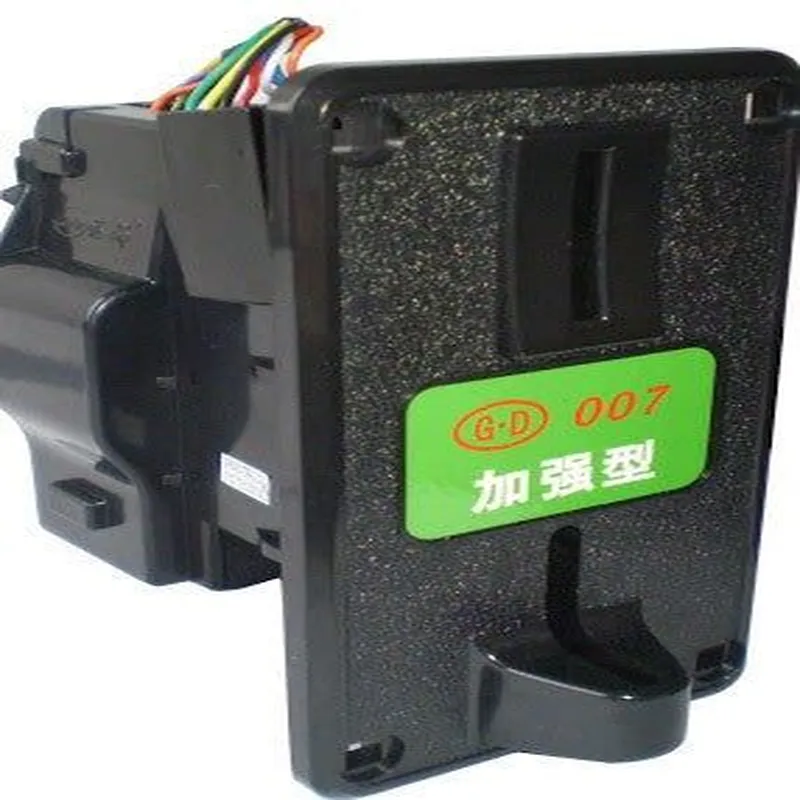
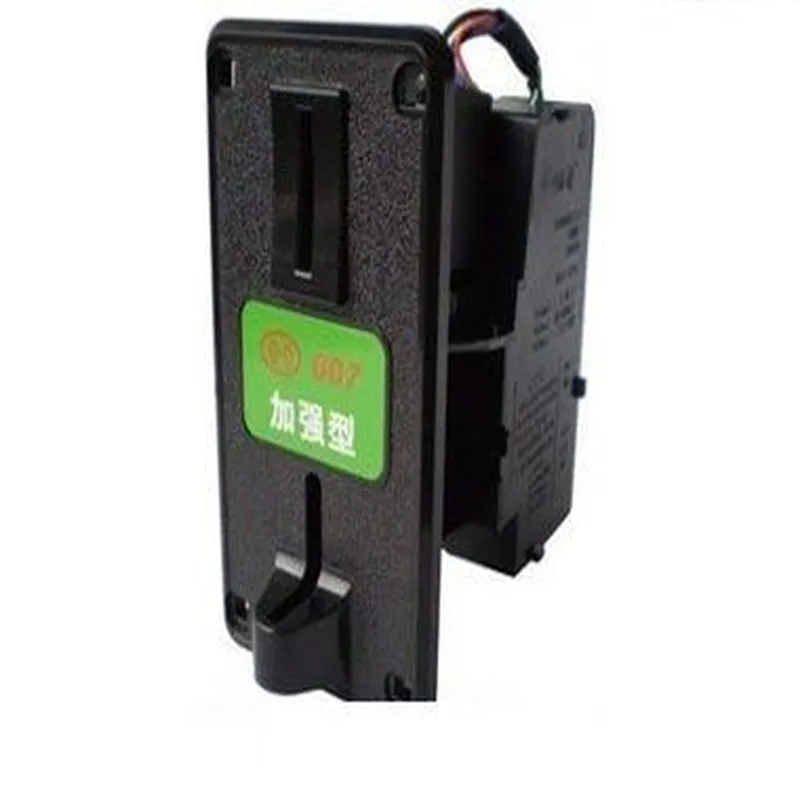
The Vending Machine Coin Acceptor is a compact, high-reliability coin recognition and validation module designed for vending machines, amusement devices, and other coin-operated applications. This module accurately identifies and validates coins, providing a digital output signal upon successful coin recognition.
Coin Recognition: Supports various coin types and denominations
 Accuracy: >99.5% recognition rate
 Response Time: <500ms
 Interface: Digital output (TTL logic level)
 Power Supply: 5V DC 10%
 Operating Temperature: 0C to 40C
The Vending Machine Coin Acceptor module has the following connections:
VCC: 5V DC power supply
 GND: Ground connection
 OUT: Digital output signal (TTL logic level)
 COIN-IN: Coin insertion slot
The Vending Machine Coin Acceptor module can be easily integrated into various microcontroller-based systems using digital input/output operations. Here are some code examples to demonstrate its use:
Example 1: Arduino-based Vending Machine Controller
In this example, we'll use an Arduino Uno board to read the digital output signal from the Vending Machine Coin Acceptor module and control a vending machine's dispensing mechanism.
```c++
const int coinAcceptorOut = 2; // Digital output pin from coin acceptor
const int vendingMachineControl = 3; // Control pin for vending machine's dispensing mechanism
void setup() {
  pinMode(coinAcceptorOut, INPUT);
  pinMode(vendingMachineControl, OUTPUT);
}
void loop() {
  if (digitalRead(coinAcceptorOut) == HIGH) { // Coin accepted and validated
    digitalWrite(vendingMachineControl, HIGH); // Dispense product
    delay(500); // Wait for dispensing mechanism to complete
    digitalWrite(vendingMachineControl, LOW); // Reset dispensing mechanism
  }
}
```
Example 2: Raspberry Pi-based IoT Vending Machine
In this example, we'll use a Raspberry Pi board to read the digital output signal from the Vending Machine Coin Acceptor module and interact with a cloud-based service to monitor and control the vending machine remotely.
```python
import RPi.GPIO as GPIO
import requests
GPIO.setmode(GPIO.BCM)
coinAcceptorOut = 17
GPIO.setup(coinAcceptorOut, GPIO.IN)
def dispense_product():
  # Send request to cloud service to update vending machine status
  requests.post('https://example.com/vending-machine-update', data={'machine_id': '123', 'product_dispensed': 'True'})
while True:
  if GPIO.input(coinAcceptorOut) == GPIO.HIGH: # Coin accepted and validated
    dispense_product()
    print("Product dispensed!")
    time.sleep(1)
```
Example 3: ESP32-based Wi-Fi-enabled Vending Machine
In this example, we'll use an ESP32 board to read the digital output signal from the Vending Machine Coin Acceptor module and send notifications to a remote server using Wi-Fi.
```c++
#include <WiFi.h>
const char ssid = "your_wifi_ssid";
const char password = "your_wifi_password";
const char serverUrl = "https://example.com/vending-machine-notification";
void setup() {
  Serial.begin(115200);
  WiFi.begin(ssid, password);
  while (WiFi.status() != WL_CONNECTED) {
    delay(1000);
    Serial.println("Connecting to WiFi...");
  }
  Serial.println("Connected to WiFi");
}
void loop() {
  if (digitalRead(coinAcceptorOut) == HIGH) { // Coin accepted and validated
    client.setServer(serverUrl, 80);
    client.print(String("GET ") + serverUrl + "?machine_id=123&product_dispensed=True HTTP/1.1
" +
                 "Host: " + String(serverUrl) + "
" +
                 "Connection: close

");
    client.println();
    delay(1000);
    Serial.println("Notification sent to server!");
  }
}
```
These code examples demonstrate how to integrate the Vending Machine Coin Acceptor module with various microcontroller-based systems, showcasing its versatility and ease of use in different IoT applications.