220V AC, 50/60 Hz


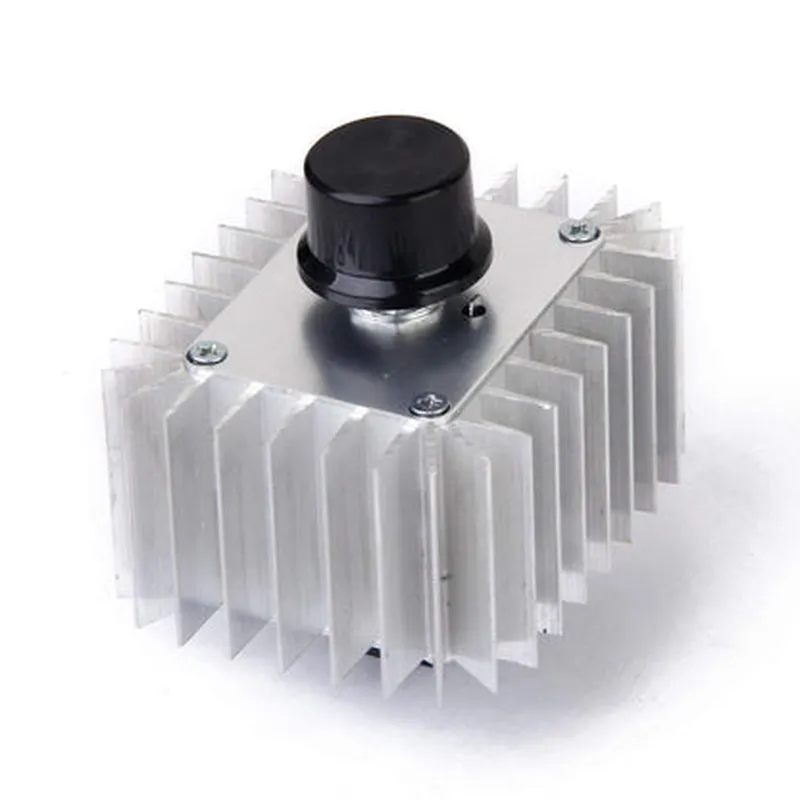
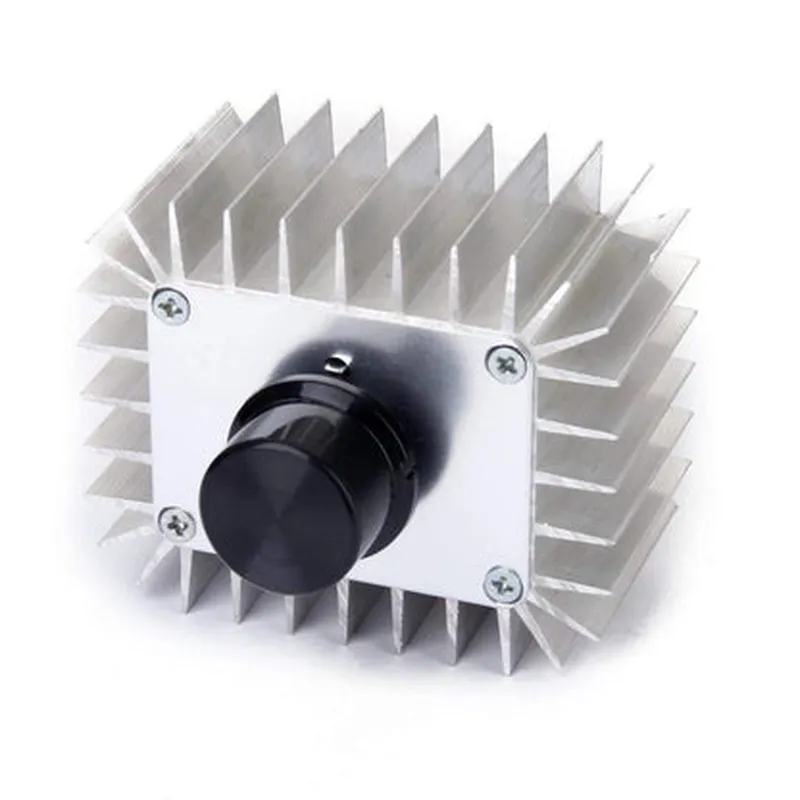
220V AC, 50/60 Hz
Adjustable, up to 220V AC
5000W
< 1 ms
> 95%
-40C to +85C
-40C to +125C
Package and Dimensions
| The 220V 5000W SCR Voltage Regulator is available in a compact, heat-sinkable package with the following dimensions |
60 mm
40 mm
30 mm
Applications
| The 220V 5000W SCR Voltage Regulator is suitable for use in a wide range of applications, including |
Industrial power supplies
Motor control systems
Lighting control systems
Renewable energy systems
Medical equipment
Telecommunication equipment
Precautions and Handling
Handle the component with care to avoid damage or electrical shock.
Ensure proper heat sinking to prevent overheating.
Follow proper safety procedures when working with high-voltage electrical circuits.
Certifications and Compliance
| The 220V 5000W SCR Voltage Regulator complies with relevant international standards and regulations, including |
UL (Underwriters Laboratories)
CE (Conformit Europene)
RoHS (Restriction of Hazardous Substances)
REACH (Registration, Evaluation, Authorization, and Restriction of Chemicals)
220V 5000W SCR Voltage Regulator DocumentationOverviewThe 220V 5000W SCR Voltage Regulator is a high-power SCR (Silicon-Controlled Rectifier) based voltage regulator module designed for industrial and commercial applications. It can regulate input voltages ranging from 180V to 240V AC and provide a stable output voltage of 220V AC at 5000W maximum power. This module is ideal for power conditioning, voltage stabilization, and supply voltage regulation in high-power systems.FeaturesInput voltage range: 180V - 240V AC
Output voltage: 220V AC 5%
Maximum power: 5000W
SCR-based voltage regulation for high accuracy and stability
Overvoltage protection (OVP) and undervoltage protection (UVP)
Short-circuit protection (SCP) and overcurrent protection (OCP)
Isolated heat sink for efficient thermal managementPinoutThe 220V 5000W SCR Voltage Regulator module has the following pinout:Input: AC_IN (L, N, PE) - 3-pin terminal block for input voltage connection
Output: AC_OUT (L, N, PE) - 3-pin terminal block for output voltage connection
Control: CTRL - single-pin terminal for external control signal (optional)Code Examples### Example 1: Basic Voltage Regulation using ArduinoIn this example, we will use an Arduino board to control the 220V 5000W SCR Voltage Regulator module to regulate the output voltage.```c
const int ctrlPin = 2; // Control pin connected to Arduino digital pin 2void setup() {
pinMode(ctrlPin, OUTPUT);
}void loop() {
// Set the output voltage to 210V AC
analogWrite(ctrlPin, 128);
delay(1000);// Set the output voltage to 230V AC
analogWrite(ctrlPin, 192);
delay(1000);
}
```In this example, the Arduino board generates a PWM signal on digital pin 2, which is connected to the CTRL pin of the voltage regulator module. The PWM signal is used to control the output voltage of the module.### Example 2: Voltage Regulation with Overvoltage Protection using Raspberry PiIn this example, we will use a Raspberry Pi board to control the 220V 5000W SCR Voltage Regulator module and implement overvoltage protection.```python
import RPi.GPIO as GPIO
import time# Set up GPIO mode
GPIO.setmode(GPIO.BCM)# Define the control pin
ctrlPin = 17# Set up the control pin as an output
GPIO.setup(ctrlPin, GPIO.OUT)try:
while True:
# Set the output voltage to 220V AC
GPIO.output(ctrlPin, GPIO.HIGH)
time.sleep(1)# Check for overvoltage condition (e.g., using a voltage sensor)
if voltage_sensor_reading > 230:
# Trigger overvoltage protection by setting the control pin low
GPIO.output(ctrlPin, GPIO.LOW)
print("Overvoltage protection triggered!")
time.sleep(10)except KeyboardInterrupt:
GPIO.cleanup()
```In this example, the Raspberry Pi board generates a digital signal on GPIO pin 17, which is connected to the CTRL pin of the voltage regulator module. The script monitors the output voltage using a voltage sensor and triggers overvoltage protection by setting the control pin low when the voltage exceeds 230V AC.Note: These examples are for illustration purposes only and may require modifications to suit specific application requirements. Ensure proper safety precautions and follow safety guidelines when working with high-voltage and high-power systems.