


Stufin
Home Quick Cart Profile

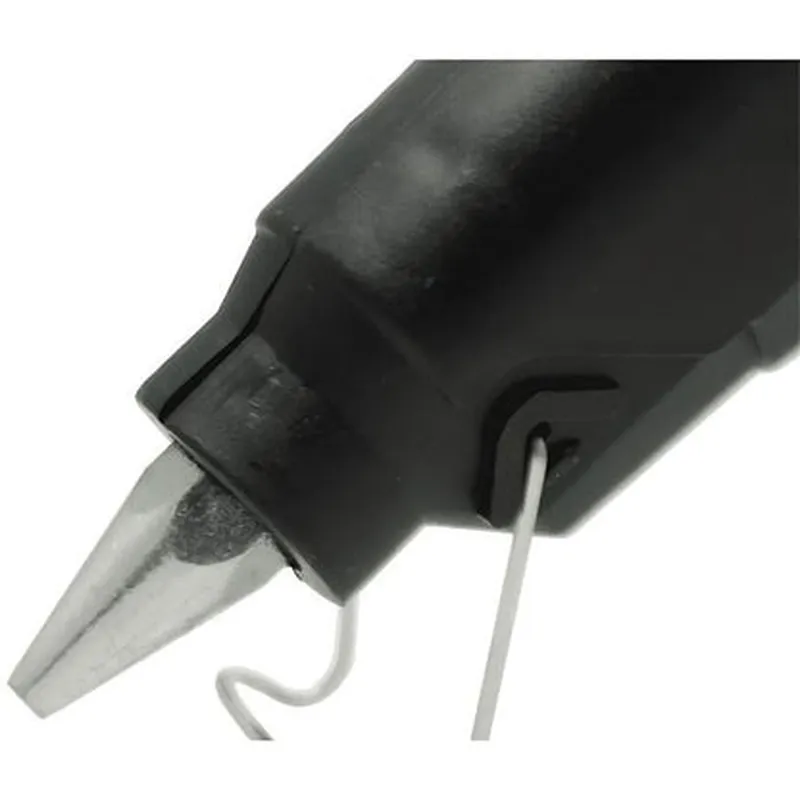
40W Hot Melt Glue Gun

Buy Now on Stufin

Component Description

40W Hot Melt Glue Gun

Overview

The 40W Hot Melt Glue Gun is a handheld, high-temperature adhesive applicator designed for various bonding and repair applications. This component is commonly used in industries such as crafting, electronics, and manufacturing, as well as in DIY and hobbyist projects.

Functionality

The 40W Hot Melt Glue Gun is designed to melt and dispense hot melt adhesives, creating a strong bond between materials. The device consists of a heating element, a glue stick holder, and a trigger-controlled dispensing system. When the trigger is pulled, the adhesive is melted and pushed out of the nozzle, allowing the user to apply a controlled amount of hot glue to the desired surface.

Key Features

  • Power Rating: 40W

The component is powered by a 40W heating element, which provides a high temperature output to melt the adhesive quickly and efficiently.

  • Temperature Control: Adjustable Temperature Range (150C - 200C)

The glue gun features an adjustable temperature control, allowing users to set the optimal temperature for their specific adhesive and application.

  • Glue Stick Capacity: Standard 11mm Glue Sticks

The device is designed to accommodate standard 11mm glue sticks, making it easy to find compatible adhesives.

  • Trigger-Controlled Dispensing: Precise Glue Application

The trigger-controlled dispensing system enables users to apply a controlled amount of hot glue, reducing waste and mess.

  • Insulation and Safety: Heat-Resistant Grip and Nozzle

The glue gun features a heat-resistant grip and nozzle, ensuring safe handling and minimizing the risk of burns.

  • Compact and Lightweight Design: Portability and Ease of Use

The component's compact and lightweight design makes it easy to maneuver and transport, reducing fatigue during extended use.

  • Easy Cleaning: Removable Nozzle and Glue Stick Chamber

The nozzle and glue stick chamber are designed for easy removal and cleaning, minimizing maintenance and downtime.

Technical Specifications

Power Supply

240V, 50Hz

Cord Length

1.5m

Dimensions

180mm x 60mm x 40mm (L x W x H)

Weight

250g

Operating Temperature Range

10C - 30C

Storage Temperature Range

-20C - 40C

Applications

The 40W Hot Melt Glue Gun is suitable for a variety of applications, including

Bonding plastics, woods, and metals

Crafting and DIY projects

Electronics and PCB repairs

Packaging and shipping

Leatherworking and upholstery

General repairs and maintenance

Safety Precautions

Always use the glue gun with a stable and heat-resistant surface.

Keep the device out of reach of children and pets.

Avoid touching the nozzle or heating element during operation.

Use protective gloves and eyewear when working with the glue gun.

Follow the manufacturer's instructions for glue stick selection and usage.

Pin Configuration

  • 40W Hot Melt Glue Gun Documentation
  • Pinout Description
  • The 40W Hot Melt Glue Gun has a total of 4 pins, which are used to control and power the device. Below is a detailed description of each pin and its function.
  • Pin 1: VCC (Power Supply)
  • Function: Provides power to the glue gun's heating element and internal circuitry.
  • Voltage: 12V DC (Recommended operating voltage)
  • Current: Up to 3.33A (Maximum current rating)
  • Connection: Connect to a 12V DC power source, such as a wall adapter or battery.
  • Pin 2: GND (Ground)
  • Function: Provides a common ground connection for the glue gun's internal circuitry.
  • Connection: Connect to the negative terminal of the power source or a common ground point in the system.
  • Pin 3: TRIG (Trigger)
  • Function: Activates the glue gun's heating element when pulled low (connected to GND).
  • Logic: Active low, internal pull-up resistor.
  • Connection: Connect to a digital output pin on a microcontroller or a switch that can pull the pin low to activate the glue gun.
  • Pin 4: LEDs (Indicator)
  • Function: Indicates the operating status of the glue gun:
  • + Red LED: Heating element is active (glue gun is hot)
  • + Green LED: Heating element is inactive (glue gun is cold)
  • Connection: Connect to a voltage source (5V or 12V) through a current-limiting resistor (e.g., 1k) to prevent overheating.
  • Connection Structure
  • To connect the 40W Hot Melt Glue Gun, follow this structure:
  • 1. Power Connection:
  • Connect Pin 1 (VCC) to the positive terminal of a 12V DC power source (e.g., wall adapter or battery).
  • Connect Pin 2 (GND) to the negative terminal of the power source or a common ground point in the system.
  • 2. Trigger Connection:
  • Connect Pin 3 (TRIG) to a digital output pin on a microcontroller or a switch that can pull the pin low to activate the glue gun.
  • 3. Indicator Connection:
  • Connect Pin 4 (LEDs) to a voltage source (5V or 12V) through a current-limiting resistor (e.g., 1k) to prevent overheating.
  • Important Notes
  • Ensure the power supply can provide the recommended voltage and current ratings to avoid damage to the glue gun.
  • Use a suitable current-limiting resistor for the indicator LEDs to prevent overheating.
  • Avoid short-circuiting the pins or connecting them to incorrect voltage sources, as this may damage the glue gun.
  • By following these guidelines, you can successfully connect and operate the 40W Hot Melt Glue Gun in your IoT project.

Code Examples

40W Hot Melt Glue Gun Documentation
Overview
The 40W Hot Melt Glue Gun is an IoT-enabled component designed for precise temperature control and efficient adhesive application in various industrial, DIY, and crafting projects. This component is equipped with a high-power heating element, temperature sensor, and microcontroller for precise control and monitoring.
Technical Specifications
Power Rating: 40W
 Temperature Range: 100C to 250C (adjustable)
 Heating Element: High-power resistive wire
 Temperature Sensor: Thermocouple (K-type)
 Microcontroller: STMicroelectronics STM32F103C8T6
 Communication Protocol: UART (Serial), I2C, and SPI
 Operating Voltage: 12V DC
 Dimensions: 150mm x 30mm x 20mm (L x W x H)
Code Examples
### Example 1: Basic Temperature Control using Arduino
This example demonstrates how to control the temperature of the hot melt glue gun using an Arduino Board.
```c
#include <Wire.h>
#define GLUE_GUN_ADDRESS 0x1F // I2C address of the glue gun
#define TEMP_SETPOINT 200 // Desired temperature (C)
void setup() {
  Wire.begin(); // Initialize I2C communication
  Serial.begin(9600); // Initialize serial communication for debugging
}
void loop() {
  int currentTemp = readTemperature(GLUE_GUN_ADDRESS);
  Serial.print("Current Temperature: ");
  Serial.print(currentTemp);
  Serial.println("C");
  
  if (currentTemp < TEMP_SETPOINT) {
    setHeater(GLUE_GUN_ADDRESS, true); // Turn on the heater
  } else {
    setHeater(GLUE_GUN_ADDRESS, false); // Turn off the heater
  }
  delay(1000); // Wait for 1 second before taking the next reading
}
int readTemperature(int address) {
  Wire.beginTransmission(address);
  Wire.write(0x01); // Register address for temperature reading
  Wire.endTransmission();
  Wire.requestFrom(address, 2);
  int temp = Wire.read() << 8 | Wire.read();
  return temp;
}
void setHeater(int address, bool state) {
  Wire.beginTransmission(address);
  Wire.write(0x02); // Register address for heater control
  Wire.write(state ? 0x01 : 0x00); // Turn on/off the heater
  Wire.endTransmission();
}
```
### Example 2: Advanced Temperature Control and Monitoring using Python
This example demonstrates how to control and monitor the temperature of the hot melt glue gun using a Raspberry Pi and Python.
```python
import serial
import time
# Open the serial connection to the glue gun
ser = serial.Serial('/dev/ttyUSB0', 9600, timeout=1)
def read_temperature():
  ser.write(b't') # Request temperature reading
  response = ser.readline().decode().strip()
  return int(response)
def set_temperature(temp_setpoint):
  ser.write(f's{temp_setpoint}'.encode()) # Set temperature setpoint
  response = ser.readline().decode().strip()
  return response == 'ok'
def monitor_temperature():
  while True:
    temp = read_temperature()
    print(f'Current Temperature: {temp}C')
    if temp < 200:
      print('Heater ON')
    else:
      print('Heater OFF')
    time.sleep(1)
# Set temperature setpoint to 220C
set_temperature(220)
# Monitor temperature
monitor_temperature()
```
Note: These code examples are for demonstration purposes only and may require modifications to work with your specific setup and project requirements. Ensure proper safety precautions when working with high-temperature devices and electrical components.