-55C to 150C


-55C to 150C
-55C to 150C
Packaging and Ordering Information
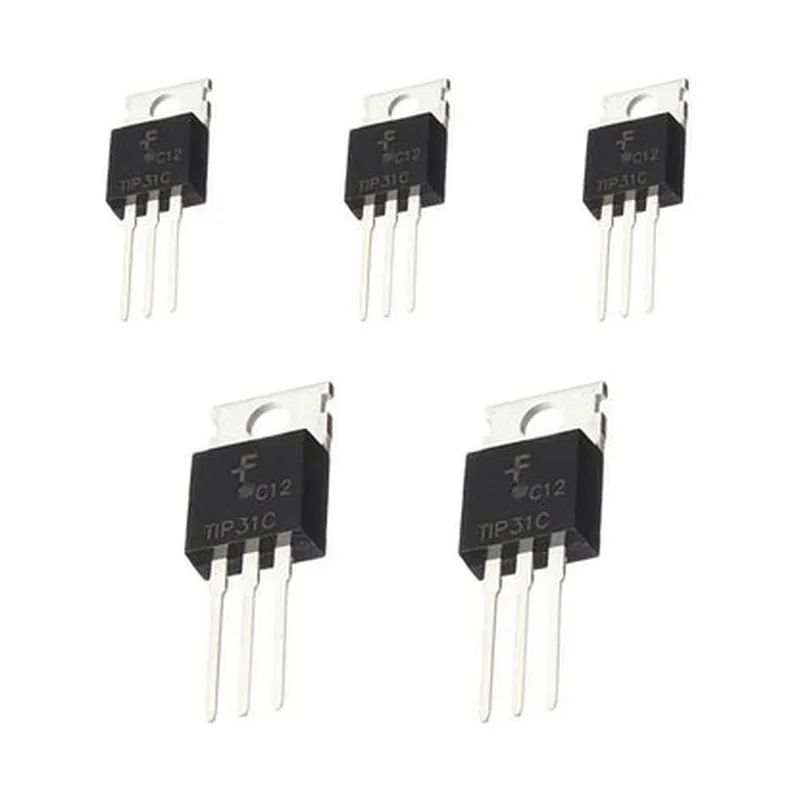
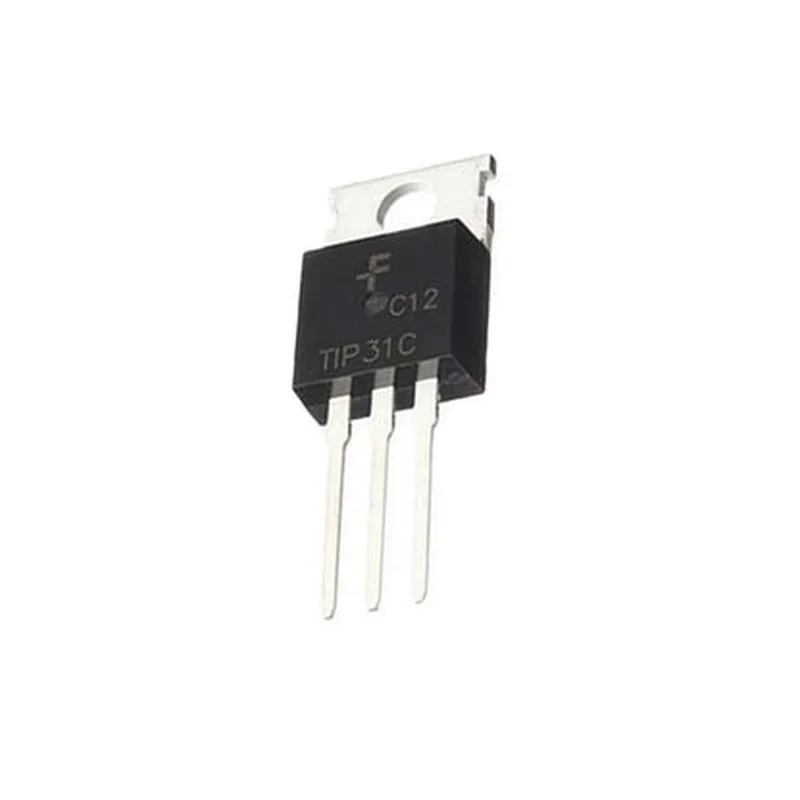
The TIP31C NPN power transistor is available in a pack of 5, making it a convenient and cost-effective solution for projects that require multiple transistors. Each transistor is packaged in a TO-220 case and is suitable for use in a variety of electronic circuits.
TIP31C NPN Power Transistor DocumentationOverviewThe TIP31C is a high-power NPN transistor designed for use in a wide range of applications, including motor control, power switching, and amplification. This documentation provides a comprehensive guide to using the TIP31C NPN power transistor, including its features, specifications, and example code snippets for various contexts.Features and SpecificationsNPN transistor type
High current rating: 3 A continuous, 5 A peak
High voltage rating: 40 V
Low saturation voltage: 1.2 V
High gain: 20-40
TO-220 package
Industry standard pinoutExample Code Snippets### Example 1: Basic Switching Circuit (Arduino)In this example, we'll use the TIP31C to control an LED using an Arduino board.```c
const int ledPin = 9; // Choose a digital pin on the Arduino board
const int transistorPin = 10; // Choose a digital pin on the Arduino boardvoid setup() {
pinMode(ledPin, OUTPUT);
pinMode(transistorPin, OUTPUT);
}void loop() {
digitalWrite(transistorPin, HIGH); // Turn the transistor ON
digitalWrite(ledPin, HIGH); // Turn the LED ON
delay(1000);digitalWrite(transistorPin, LOW); // Turn the transistor OFF
digitalWrite(ledPin, LOW); // Turn the LED OFF
delay(1000);
}
```Circuit Diagram:Connect the TIP31C transistor to the Arduino board as follows:
+ Base (B) to digital pin 10
+ Collector (C) to the positive leg of the LED
+ Emitter (E) to GND
Connect the LED to the Arduino board as follows:
+ Positive leg to the collector of the transistor
+ Negative leg to GND### Example 2: Motor Control (Raspberry Pi)In this example, we'll use the TIP31C to control a DC motor using a Raspberry Pi board.```python
import RPi.GPIO as GPIO
import time# Set up GPIO mode
GPIO.setmode(GPIO.BCM)# Define the transistor pin and motor pin
transistor_pin = 18
motor_pin = 23# Set up the transistor pin as an output
GPIO.setup(transistor_pin, GPIO.OUT)# Set up the motor pin as an output
GPIO.setup(motor_pin, GPIO.OUT)try:
while True:
# Turn the transistor ON and the motor ON
GPIO.output(transistor_pin, GPIO.HIGH)
GPIO.output(motor_pin, GPIO.HIGH)
time.sleep(2)# Turn the transistor OFF and the motor OFF
GPIO.output(transistor_pin, GPIO.LOW)
GPIO.output(motor_pin, GPIO.LOW)
time.sleep(2)except KeyboardInterrupt:
# Clean up GPIO on exit
GPIO.cleanup()
```Circuit Diagram:Connect the TIP31C transistor to the Raspberry Pi board as follows:
+ Base (B) to GPIO pin 18
+ Collector (C) to the positive terminal of the DC motor
+ Emitter (E) to GND
Connect the DC motor to the Raspberry Pi board as follows:
+ Positive terminal to the collector of the transistor
+ Negative terminal to GNDNote: These examples are for demonstration purposes only and may require additional components, such as resistors, capacitors, and diodes, to ensure proper operation and protection of the transistor and other components. Please consult the datasheet and relevant application notes for more information.