3.7V Coreless Motor With Propeller (7x16)


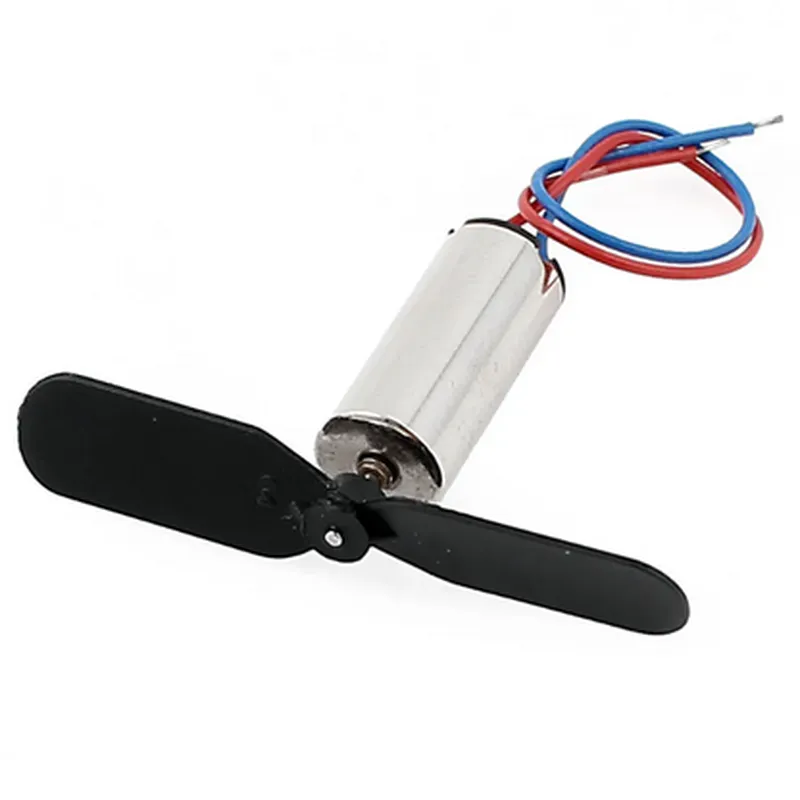
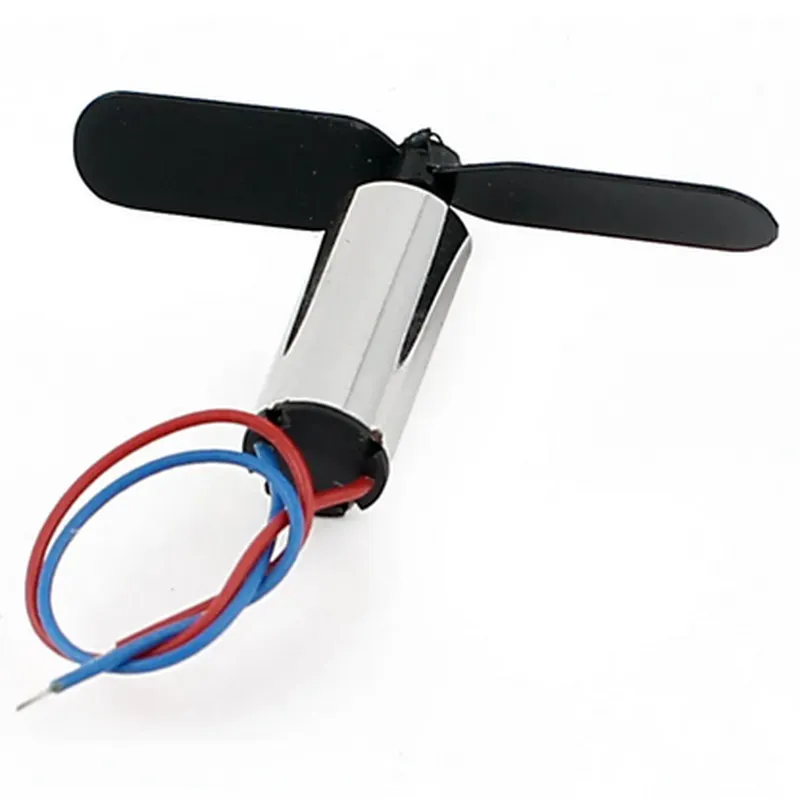
3.7V Coreless Motor With Propeller (7x16)
The 3.7V Coreless Motor With Propeller (7x16) is a compact and efficient motor designed for use in IoT projects, robotics, and drones. This motor is specifically designed for applications that require high power-to-weight ratios, low noise, and high reliability. The motor comes equipped with a propeller, making it an ideal solution for propulsion systems in aerial vehicles, robotic arms, and other devices.
The 3.7V Coreless Motor With Propeller (7x16) is designed to convert electrical energy into mechanical energy. When a voltage is applied to the motor, the electromagnetic forces generated by the windings interact with the permanent magnet, causing the motor to rotate. The propeller attached to the motor shaft converts the rotational energy into thrust, making it suitable for propulsion systems.
| ### Physical Characteristics |
7mm (diameter) x 16mm (length)
7 inches (diameter)
10 grams (approximately)
| ### Electrical Characteristics |
3.7V
| No-Load Current | 20mA (approximately) |
1A (approximately)
10 ohms (approximately)
1mH (approximately)
| ### Performance Characteristics | |
| No-Load Speed | 12,000 RPM (approximately) |
2.5g.cm (approximately)
70% (approximately)
15g (approximately)
| ### Other Features |
The motor features a coreless design, which provides higher efficiency, lower weight, and reduced motor vibration.
The motor operates without brushes, reducing wear and tear, and increasing its lifespan.
| High-Quality Bearings | The motor features high-quality bearings that provide smooth operation and reduce friction. |
| The 3.7V Coreless Motor With Propeller (7x16) is suitable for a wide range of applications, including |
Aerial vehicles (drones, quadcopters, etc.)
Robotic arms and grippers
IoT projects requiring compact and efficient motors
Small-scale automation systems
The motor should be operated within the recommended voltage and current ratings to ensure reliable performance and prevent damage.
Proper thermal management is essential to prevent overheating and ensure the motor's longevity.
The motor's performance may vary depending on the operating conditions, such as temperature, humidity, and air pressure.
Component Documentation: 3.7V Coreless Motor With Propeller (7x16)OverviewThe 3.7V Coreless Motor With Propeller (7x16) is a compact, high-efficiency motor designed for IoT and robotics applications. It features a coreless design, which provides a high power-to-weight ratio, making it ideal for use in battery-powered devices. The motor comes with a pre-installed 7x16 propeller, making it suitable for UAV, drone, and robotics projects.Pinout and ConnectionsThe motor has two connection leads:VCC (Red wire): Positive power supply (3.7V)
GND (Black wire): Negative power supply (Ground)Code Examples### Example 1: Basic Motor Control using ArduinoIn this example, we will demonstrate how to control the motor speed using an Arduino board.Hardware Requirements:Arduino Board (e.g., Arduino Uno)
3.7V Coreless Motor With Propeller (7x16)
Breadboard
Jumper wiresSoftware Requirements:Arduino IDE (version 1.8.x or higher)Code:
```c++
const int motorPin = 9; // Pin 9 for PWM signalvoid setup() {
pinMode(motorPin, OUTPUT);
}void loop() {
// Set motor speed to 50% (128/255)
analogWrite(motorPin, 128);
delay(1000);// Set motor speed to 100% (255/255)
analogWrite(motorPin, 255);
delay(1000);// Stop the motor
analogWrite(motorPin, 0);
delay(1000);
}
```
Explanation:In this example, we use the `analogWrite()` function to set the motor speed by generating a PWM (Pulse Width Modulation) signal on Pin 9. The motor speed is controlled by varying the duty cycle of the PWM signal.### Example 2: Motor Control using Raspberry Pi (Python)In this example, we will demonstrate how to control the motor speed using a Raspberry Pi and Python.Hardware Requirements:Raspberry Pi (any model)
3.7V Coreless Motor With Propeller (7x16)
Breadboard
Jumper wiresSoftware Requirements:Raspbian OS (version 10 or higher)
Python 3.xCode:
```python
import RPi.GPIO as GPIO
import time# Set up GPIO mode
GPIO.setmode(GPIO.BCM)# Set up motor pin
motor_pin = 18
GPIO.setup(motor_pin, GPIO.OUT)# Set motor speed to 50% (50/100)
pwm = GPIO.PWM(motor_pin, 50)
pwm.start(50)
time.sleep(1)# Set motor speed to 100% (100/100)
pwm.ChangeDutyCycle(100)
time.sleep(1)# Stop the motor
pwm.stop()
GPIO.cleanup()
```
Explanation:In this example, we use the RPi.GPIO library to control the motor speed using PWM. We create a PWM object and set the duty cycle to control the motor speed.Note: Make sure to use a suitable power supply and regulate the voltage to 3.7V to ensure the motor's safe operation. Also, adjust the PWM frequency and duty cycle according to your specific application requirements.