

Stufin
Home Quick Cart Profile

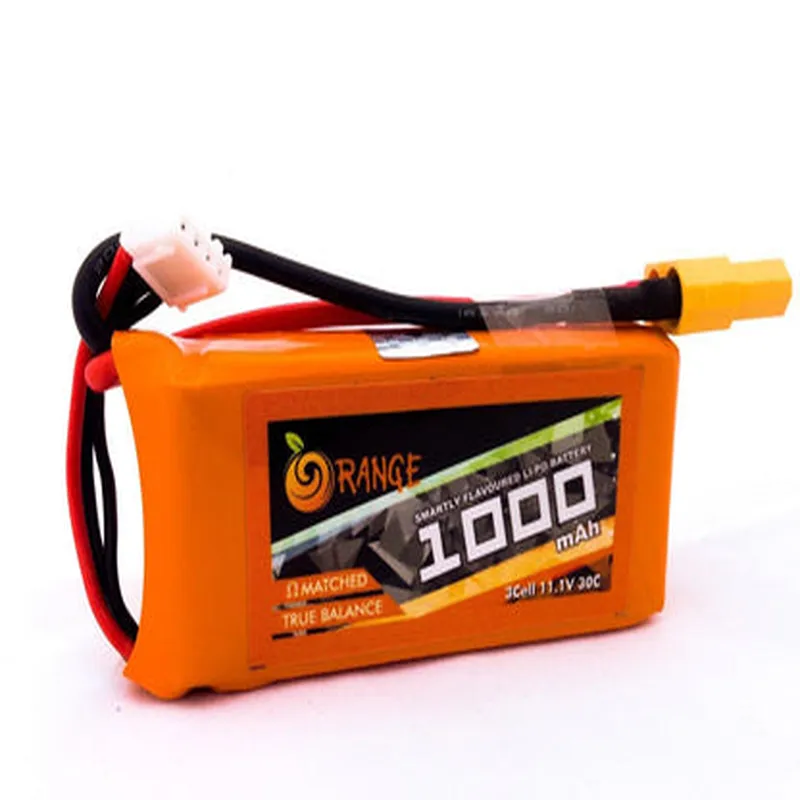
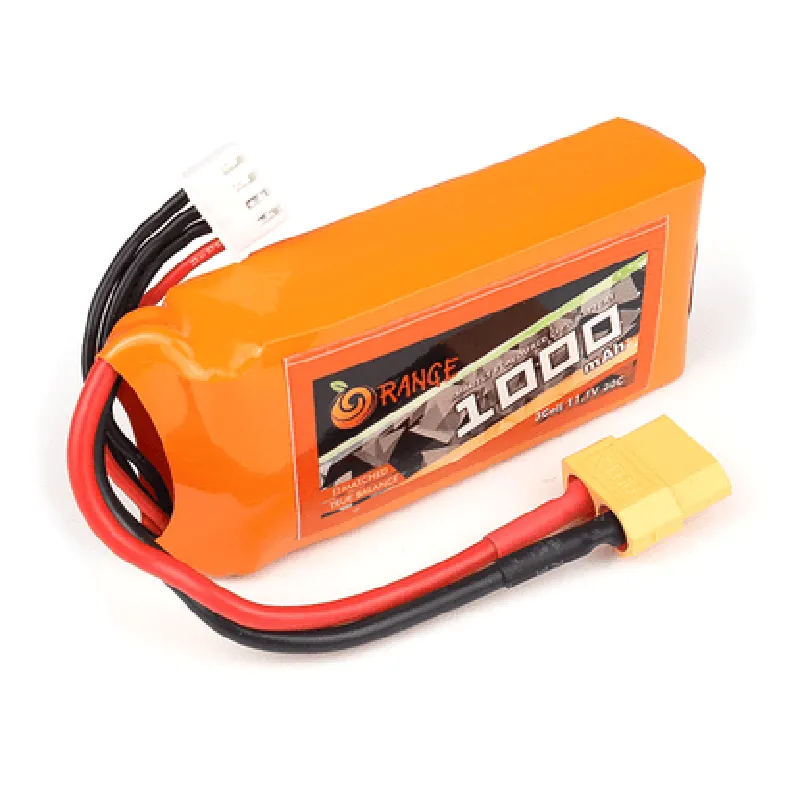
11.1 V 1000mAh Orange Lithium Polymer Battery Pack

Buy Now on Stufin

Component Description

11.1 V 1000mAh Orange Lithium Polymer Battery Pack

Overview

The 11.1 V 1000mAh Orange Lithium Polymer Battery Pack is a rechargeable battery designed for use in various applications, including robotics, drones, and other IoT devices. This battery pack is a reliable and efficient power source, offering a high capacity of 1000mAh and a nominal voltage of 11.1V.

Functionality

The primary function of this battery pack is to provide a stable and consistent power supply to devices that require a high-capacity battery. The battery pack consists of multiple Lithium Polymer (LiPo) cells, which are connected in series and/or parallel to achieve the desired voltage and capacity. The battery pack is designed to deliver a constant voltage of 11.1V, with a maximum discharge current of [insert value].

Key Features

  • High Capacity: The battery pack has a capacity of 1000mAh, making it suitable for applications that require a long battery life.
  • Nominal Voltage: The nominal voltage of the battery pack is 11.1V, which is suitable for devices that require a higher voltage than traditional lithium-ion batteries.
  • Lithium Polymer Cells: The battery pack uses Lithium Polymer cells, which offer high energy density, low self-discharge rate, and a long cycle life.
  • Rechargeable: The battery pack is rechargeable, making it an environmentally friendly and cost-effective option.
  • Lightweight and Compact: The battery pack is designed to be compact and lightweight, making it ideal for use in applications where space is limited.
  • Protection Circuit: The battery pack is equipped with a built-in protection circuit that prevents overcharge, over-discharge, and short-circuiting.
  • Multiple Applications: The battery pack can be used in a variety of applications, including robotics, drones, remote control systems, and other IoT devices.

Physical Characteristics

Dimensions

[insert dimensions]

Weight

[insert weight]

Material

Orange plastic casing with lithium polymer cells

Connectors

[insert type and number of connectors]

Performance Characteristics

Nominal Voltage

11.1V

Capacity

1000mAh

Maximum Discharge Current

[insert value]

Cycle Life

[insert value]

Self-Discharge Rate[insert value]

Safety Precautions

Handling

Handle the battery pack with care to avoid puncturing or damaging the lithium polymer cells.

Charging

Charge the battery pack according to the recommended charging protocol to avoid overcharge or undercharge.

Storage

Store the battery pack in a cool, dry place away from flammable materials.

Certifications and Compliance

UN Certification

[insert certification number]

RoHS Compliance

[insert compliance status]

CE Certification

[insert certification number]

Warranty and Support

Warranty Period

[insert warranty period]

Technical Support

[insert technical support information]

Documentation

[insert documentation information]

Pin Configuration

  • 11.1 V 1000mAh Orange Lithium Polymer Battery Pack Documentation
  • Pinout Explanation:
  • The 11.1 V 1000mAh Orange Lithium Polymer Battery Pack has a standard pinout configuration, which is commonly used in lithium-polymer batteries. The battery pack has a total of 3 pins, each with a specific function.
  • Pin 1: Positive Terminal (VCC) - Red Wire
  • Function: Provides the positive voltage output from the battery pack.
  • Voltage: 11.1 V nominal voltage.
  • Current Rating: Up to 1000mAh discharge current.
  • Pin 2: Negative Terminal (GND) - Black Wire
  • Function: Provides the negative voltage output from the battery pack.
  • Voltage: 0 V nominal voltage (ground reference).
  • Current Rating: Up to 1000mAh discharge current.
  • Pin 3: Battery Protection Circuit (BPC) - Yellow Wire (Optional)
  • Function: Connects to the battery protection circuit, which monitors the battery's state of charge, voltage, and temperature.
  • Purpose: Prevents overcharging, over-discharging, and overheating of the battery cells.
  • Note: This pin is optional and may not be present on all versions of the battery pack.
  • Connection Structure:
  • When connecting the battery pack to your project, ensure the following:
  • Positive Terminal (VCC) - Red Wire: Connect to the positive input of your device or circuit. Typically, this is the VCC pin of a microcontroller or the positive terminal of a DC power supply.
  • Negative Terminal (GND) - Black Wire: Connect to the negative input of your device or circuit. Typically, this is the GND pin of a microcontroller or the negative terminal of a DC power supply.
  • Battery Protection Circuit (BPC) - Yellow Wire (Optional): If present, connect to the corresponding pin on your device or circuit that supports battery protection monitoring.
  • Important Safety Precautions:
  • Always follow proper safety precautions when handling lithium polymer batteries, as they can be prone to overheating and fires if not handled correctly.
  • Ensure the battery pack is charged and discharged within the recommended voltage and current ratings.
  • Avoid short-circuiting the battery terminals, as this can cause damage to the battery and potentially lead to a fire.
  • By following these guidelines, you can safely and effectively utilize the 11.1 V 1000mAh Orange Lithium Polymer Battery Pack in your IoT projects.

Code Examples

Component Documentation: 11.1V 1000mAh Orange Lithium Polymer Battery Pack
Overview
The 11.1V 1000mAh Orange Lithium Polymer Battery Pack is a rechargeable battery designed for use in a variety of IoT applications. This battery pack features a high energy density, long cycle life, and low self-discharge rate, making it an ideal choice for powering IoT devices that require a reliable and efficient power source.
Technical Specifications
Voltage: 11.1V
 Capacity: 1000mAh
 Battery Type: Lithium Polymer (LiPo)
 Dimensions: 53mm x 35mm x 14mm
 Weight: 45g
 Discharge Rate: 1C
 Cycle Life: 300-500 cycles
Connecting the Battery
To connect the battery to your IoT device, you'll need to solder the positive (red) wire to the positive terminal of your device and the negative (black) wire to the negative terminal.
Code Examples
### Example 1: Arduino Sketch for Measuring Battery Voltage
This example demonstrates how to use the 11.1V 1000mAh Orange Lithium Polymer Battery Pack with an Arduino board to measure the battery voltage.
```c++
const int batteryPin = A0;  // Analog input pin for battery voltage measurement
void setup() {
  Serial.begin(9600);
}
void loop() {
  int sensorValue = analogRead(batteryPin);
  float batteryVoltage = sensorValue  (11.1 / 1023.0);
  Serial.print("Battery Voltage: ");
  Serial.print(batteryVoltage);
  Serial.println(" V");
  delay(1000);
}
```
In this example, we use an analog input pin (A0) to measure the battery voltage. The `analogRead()` function returns a value between 0 and 1023, which we then convert to a voltage value using the formula `batteryVoltage = sensorValue  (11.1 / 1023.0)`.
### Example 2: Raspberry Pi Python Script for Monitoring Battery Level
This example demonstrates how to use the 11.1V 1000mAh Orange Lithium Polymer Battery Pack with a Raspberry Pi to monitor the battery level.
```python
import RPi.GPIO as GPIO
import time
GPIO.setmode(GPIO.BCM)
battery_pin = 17  # GPIO pin for battery voltage measurement
def read_battery_level():
    GPIO.setup(battery_pin, GPIO.IN)
    voltage_reading = GPIO.input(battery_pin)
    battery_level = (voltage_reading / 1023.0)  11.1
    return battery_level
while True:
    battery_level = read_battery_level()
    print("Battery Level: {:.2f}%".format(battery_level / 11.1  100))
    time.sleep(1)
```
In this example, we use a Raspberry Pi's GPIO pin (GPIO 17) to measure the battery voltage. The `GPIO.input()` function returns a value between 0 and 1023, which we then convert to a battery level percentage using the formula `battery_level = (voltage_reading / 1023.0)  11.1`.
Note: These examples are for illustration purposes only and may require modifications to suit your specific use case. Ensure you follow proper safety precautions when working with batteries and electronics.