

Stufin
Home Quick Cart Profile

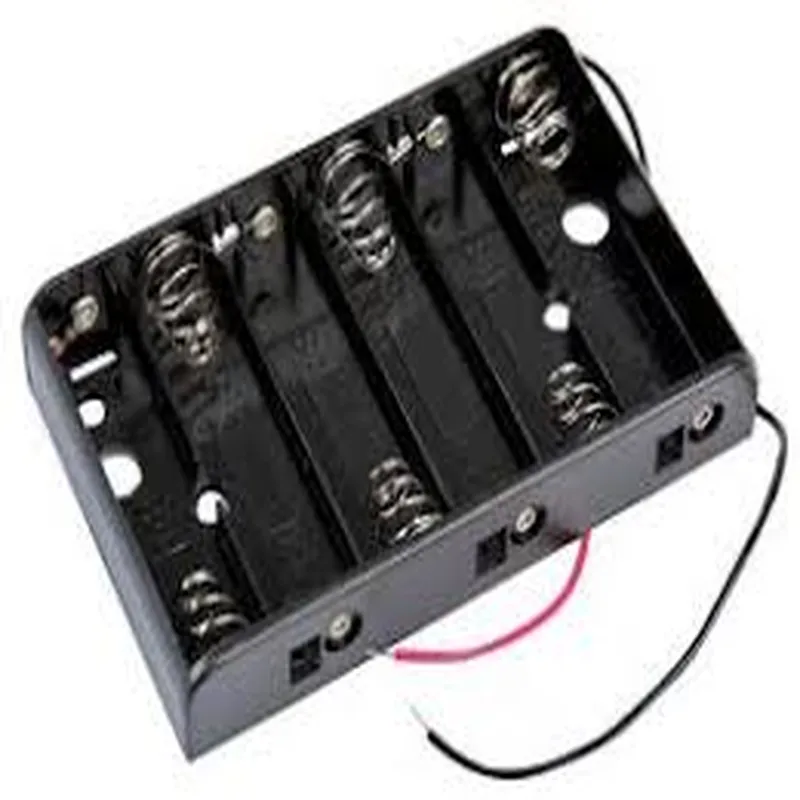
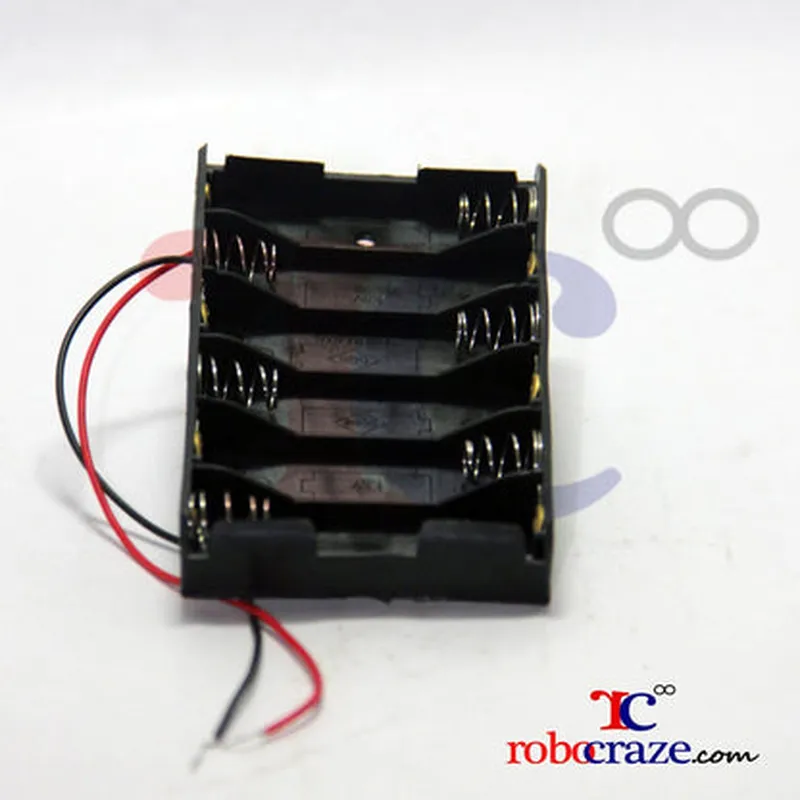
6 AA Battery Holder

Buy Now on Stufin

Component Name

6 AA Battery Holder

Overview

The 6 AA Battery Holder is a plastic or metal enclosure designed to hold six AA batteries in a single unit, providing a convenient and compact power solution for various IoT devices, robots, and electronic projects. This component is essential for powering devices that require a reliable and efficient power source.

Functionality

The primary function of the 6 AA Battery Holder is to store and connect six AA batteries in a series or parallel configuration, depending on the device's power requirements. The holder provides a secure and organized way to house the batteries, protecting them from damage and ensuring they are properly connected to the device.

Key Features

  • Battery Capacity: The holder is designed to accommodate six standard AA batteries, providing a total capacity of up to 12V (when connected in series) or 6V (when connected in parallel).
  • Material: The holder is typically made from plastic or metal, ensuring durability and resistance to corrosion.
  • Connection Options: The holder usually features two or four metal contacts (depending on the configuration) that allow for easy connection to the device's power input. These contacts are often marked with polarity indicators (+ or -) to ensure correct battery installation.
  • Battery Retention: The holder is designed to securely retain the batteries in place, preventing them from coming loose or falling out during operation.
  • Compact Design: The compact size of the holder makes it ideal for use in small devices, robots, or projects where space is limited.
  • Easy Battery Replacement: The holder allows for easy battery replacement, making it simple to swap out old or depleted batteries with new ones.
  • Mounting Options: Many 6 AA Battery Holders come with mounting holes or clips, allowing for easy attachment to devices, PCBs, or enclosures.

Material

Plastic or metal

Dimensions

Typically 60mm x 30mm x 20mm (L x W x H)

Weight

Approximately 20-50g

Battery Capacity

Up to 12V (series) or 6V (parallel)

Current Rating

Dependent on device specifications

Operating Temperature

-20C to +40C

Connectors

2 or 4 metal contacts with polarity indicators

Applications

The 6 AA Battery Holder is commonly used in various IoT devices, robots, and electronic projects, including

Remote control systems

Robotics and automation

IoT sensors and monitoring systems

Portable devices and gadgets

DIY electronics projects

Precautions and Considerations

Ensure correct battery installation to avoid damage to the holder or device.

Follow device-specific power requirements and voltage ratings.

Avoid overcharging or undercharging batteries to prolong their lifespan.

Store the holder and batteries in a cool, dry place when not in use.

By providing a convenient and reliable power solution, the 6 AA Battery Holder is an essential component for many IoT devices and electronic projects.

Pin Configuration

  • 6 AA Battery Holder Component Documentation
  • Overview
  • The 6 AA Battery Holder is a plastic or metal holder designed to accommodate six AA batteries, providing a convenient and compact way to power IoT devices, robots, and other projects. This component is widely used in various applications, including robotics, automation, and electronic prototypes.
  • Pinout Description
  • The 6 AA Battery Holder typically has four pins, which are used to connect the batteries to the device or circuit. The pins are usually labeled as follows:
  • Pin 1: Positive Terminal (VCC)
  • Function: Connects to the positive terminal of the battery pack
  • Description: This pin connects to the positive terminal of the battery pack, providing the positive voltage output (VCC) to the device or circuit.
  • Connection: Connect to the positive input of your device or circuit.
  • Pin 2: Negative Terminal (GND)
  • Function: Connects to the negative terminal of the battery pack
  • Description: This pin connects to the negative terminal of the battery pack, providing the negative voltage output (GND) to the device or circuit.
  • Connection: Connect to the negative input or ground of your device or circuit.
  • Pin 3: Battery Connection (BAT+)
  • Function: Connects to the positive terminal of the first battery
  • Description: This pin connects to the positive terminal of the first battery, allowing the battery voltage to be distributed to the other batteries in the pack.
  • Connection: Connect to the positive terminal of the first AA battery.
  • Pin 4: Battery Connection (BAT-)
  • Function: Connects to the negative terminal of the last battery
  • Description: This pin connects to the negative terminal of the last battery, completing the battery pack circuit.
  • Connection: Connect to the negative terminal of the last AA battery.
  • Connection Structure
  • To connect the batteries to the holder and the device or circuit, follow this structure:
  • 1. Insert the six AA batteries into the holder, making sure they are aligned correctly.
  • 2. Connect Pin 3 (BAT+) to the positive terminal of the first battery.
  • 3. Connect Pin 4 (BAT-) to the negative terminal of the last battery.
  • 4. Connect Pin 1 (VCC) to the positive input of your device or circuit.
  • 5. Connect Pin 2 (GND) to the negative input or ground of your device or circuit.
  • Important Notes
  • Ensure the batteries are correctly aligned and inserted into the holder to avoid any damage or short circuits.
  • Use the correct polarity when connecting the batteries to the holder and the device or circuit.
  • Make sure to follow the recommended voltage and current ratings for your device or circuit to avoid any damage or safety hazards.
  • By following this documentation, you should be able to correctly connect the 6 AA Battery Holder to your device or circuit, ensuring a reliable and efficient power supply.

Code Examples

6 AA Battery Holder Documentation
Overview
The 6 AA Battery Holder is a compact and versatile component designed to hold six AA batteries, providing a reliable power source for IoT projects and devices. This component is ideal for projects that require a substantial amount of power, such as robotics, automation systems, and remote sensing applications.
Specifications
Battery type: 6 x AA
 Battery holder type: Retainer clip
 Dimensions: 60mm x 35mm x 20mm (L x W x H)
 Weight: 20g
 Material: ABS plastic
 Connection type: 2mm pitch terminal
Code Examples
### Example 1: Arduino - Powering an Arduino Board with 6 AA Batteries
In this example, we will demonstrate how to use the 6 AA Battery Holder to power an Arduino board.
Hardware Requirements:
6 AA Battery Holder
 Arduino Board (e.g., Arduino Uno)
 Jumper wires
Code:
```c++
// No code is required, as the battery holder is used to power the Arduino board directly.
// Connect the positive terminal of the battery holder to the VIN pin on the Arduino board.
// Connect the negative terminal of the battery holder to the GND pin on the Arduino board.
```
### Example 2: Raspberry Pi - Powering a Raspberry Pi with 6 AA Batteries and Reading Battery Voltage
In this example, we will demonstrate how to use the 6 AA Battery Holder to power a Raspberry Pi and read the battery voltage using a voltage divider circuit.
Hardware Requirements:
6 AA Battery Holder
 Raspberry Pi (e.g., Raspberry Pi 4)
 Breadboard
 Jumper wires
 2 x 10k resistors
 1 x 20k resistor
Code:
```python
import RPi.GPIO as GPIO
import time
# Set up GPIO mode
GPIO.setmode(GPIO.BCM)
# Define the ADC pins for reading battery voltage
VOLTAGE_DIVIDER_PIN = 17
GND_PIN = 20
# Set up the voltage divider circuit
GPIO.setup(VOLTAGE_DIVIDER_PIN, GPIO.IN)
GPIO.setup(GND_PIN, GPIO.OUT)
# Read the battery voltage
def read_battery_voltage():
    voltage_divider_voltage = GPIO.input(VOLTAGE_DIVIDER_PIN)
    battery_voltage = (voltage_divider_voltage / 1023.0)  6.0
    return battery_voltage
# Print the battery voltage every 10 seconds
while True:
    battery_voltage = read_battery_voltage()
    print("Battery Voltage: {:.2f}V".format(battery_voltage))
    time.sleep(10)
```
Note: This code example assumes a voltage divider circuit with a ratio of 1:2 (10k:20k) to reduce the battery voltage to a level readable by the Raspberry Pi's ADC.