200mm Trapezoidal 4 Start Lead Screw 8mm Thread 2mm Pitch Lead Screw with Copper Nut


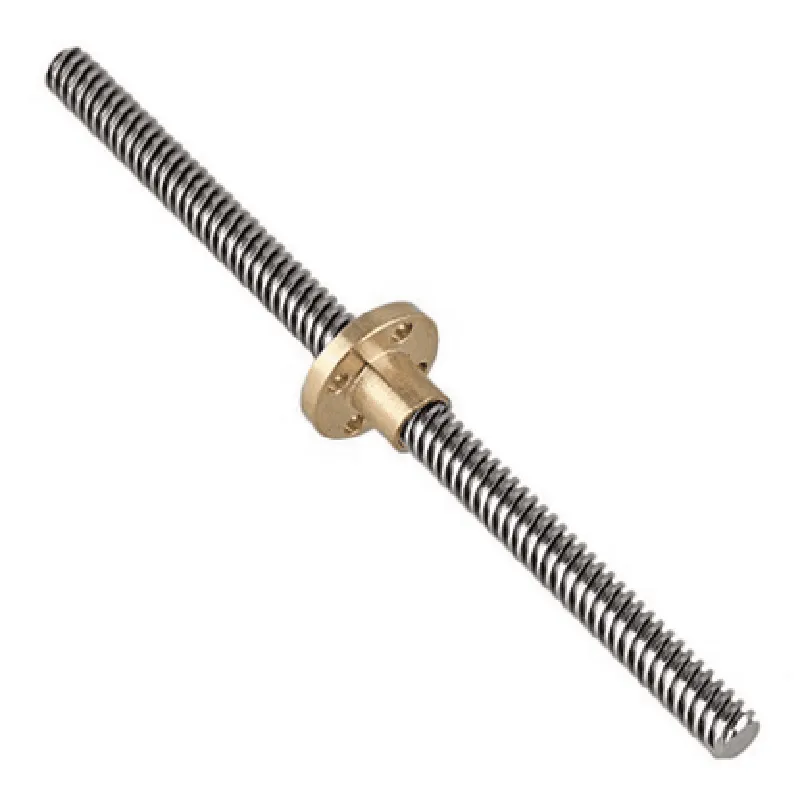
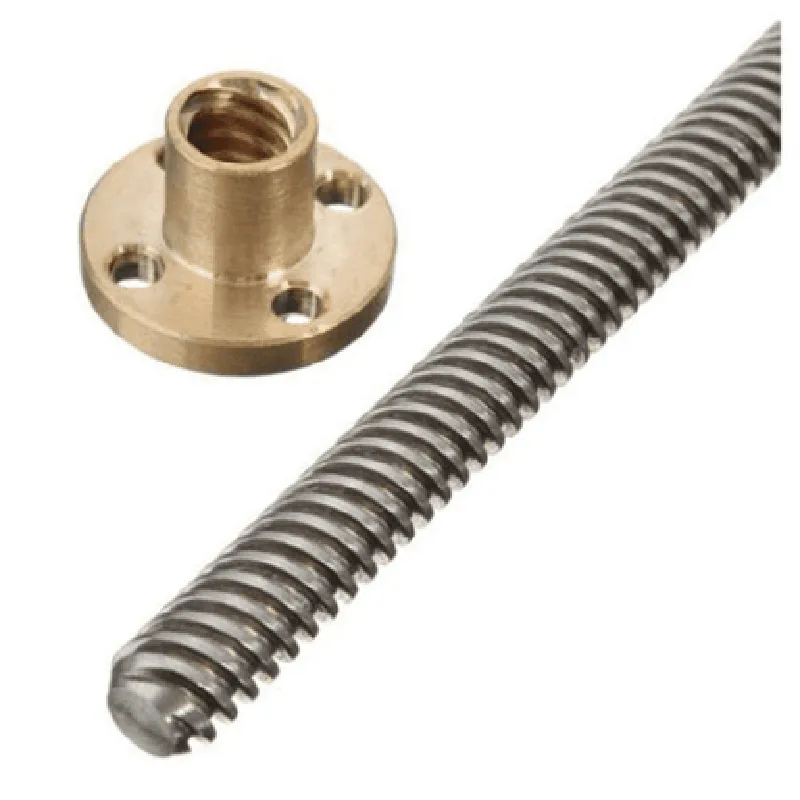
200mm Trapezoidal 4 Start Lead Screw 8mm Thread 2mm Pitch Lead Screw with Copper Nut
The 200mm Trapezoidal 4 Start Lead Screw 8mm Thread 2mm Pitch Lead Screw with Copper Nut is a type of linear actuator component used in various industrial and automation applications. This component is designed to provide precise linear motion and positioning, making it an essential element in mechanisms that require linear movement.
The primary function of this lead screw assembly is to convert rotary motion into linear motion. The trapezoidal thread design and 4-start configuration allow for efficient and smooth linear movement, making it suitable for applications that require high precision and accuracy.
30
8mm
5.8mm
7.1mm
8mm (4 starts x 2mm pitch)
By providing a detailed description of the 200mm Trapezoidal 4 Start Lead Screw 8mm Thread 2mm Pitch Lead Screw with Copper Nut, this documentation aims to assist technical professionals and informed hobbyists in selecting and integrating this component into their projects and applications.
Component Documentation: 200mm Trapezoidal 4 Start Lead Screw 8mm Thread 2mm Pitch Lead Screw with Copper NutOverviewThe 200mm trapezoidal 4-start lead screw with an 8mm thread and 2mm pitch is a high-precision linear motion component ideal for various IoT applications, including robotics, CNC machines, and automated systems. The included copper nut provides efficient and smooth linear movement.Technical SpecificationsLead screw length: 200mm
Thread diameter: 8mm
Pitch: 2mm
Starts: 4
Trapezoidal thread type
Copper nut includedCode Examples### Example 1: Arduino-Based Linear Actuator ControlIn this example, we'll demonstrate how to use the lead screw with an Arduino board to control a linear actuator.Hardware Requirements:200mm trapezoidal 4-start lead screw with copper nut
Arduino Board (e.g., Arduino Uno)
Stepper motor driver (e.g., A4988)
Stepper motor
Power supplyCode:
```c
#include <Stepper.h>// Define the stepper motor pins
const int dirPin = 2;
const int stepPin = 3;// Define the lead screw parameters
const int leadscrewPitch = 2; // mm
const int leadscrewLength = 200; // mmStepper stepper(dirPin, stepPin);void setup() {
stepper.setSpeed(100); // set the motor speed to 100 RPM
}void loop() {
// Move the lead screw 50mm forward
int steps = (50 / leadscrewPitch) 4; // calculate the number of steps
stepper.step(steps);delay(1000); // wait for 1 second// Move the lead screw 50mm backward
steps = (-50 / leadscrewPitch) 4; // calculate the number of steps
stepper.step(steps);delay(1000); // wait for 1 second
}
```
### Example 2: Python-Based CNC Machine Control using Raspberry PiIn this example, we'll demonstrate how to use the lead screw with a Raspberry Pi to control a CNC machine.Hardware Requirements:200mm trapezoidal 4-start lead screw with copper nut
Raspberry Pi
CNC machine
Motor drivers
Power supplyCode:
```python
import RPi.GPIO as GPIO
import time# Define the GPIO pins for the motor drivers
dir_pin_x = 17
step_pin_x = 23
dir_pin_y = 24
step_pin_y = 25# Define the lead screw parameters
leadscrew_pitch = 2 # mm
leadscrew_length = 200 # mm# Set up the GPIO pins
GPIO.setmode(GPIO.BCM)
GPIO.setup(dir_pin_x, GPIO.OUT)
GPIO.setup(step_pin_x, GPIO.OUT)
GPIO.setup(dir_pin_y, GPIO.OUT)
GPIO.setup(step_pin_y, GPIO.OUT)def move_xAxis(steps):
GPIO.output(dir_pin_x, GPIO.HIGH if steps > 0 else GPIO.LOW)
for _ in range(abs(steps)):
GPIO.output(step_pin_x, GPIO.HIGH)
time.sleep(0.001)
GPIO.output(step_pin_x, GPIO.LOW)
time.sleep(0.001)def move_yAxis(steps):
GPIO.output(dir_pin_y, GPIO.HIGH if steps > 0 else GPIO.LOW)
for _ in range(abs(steps)):
GPIO.output(step_pin_y, GPIO.HIGH)
time.sleep(0.001)
GPIO.output(step_pin_y, GPIO.LOW)
time.sleep(0.001)# Move the CNC machine's X-axis 50mm forward
steps = (50 / leadscrew_pitch) 4
move_xAxis(steps)# Move the CNC machine's Y-axis 25mm forward
steps = (25 / leadscrew_pitch) 4
move_yAxis(steps)
```
These examples demonstrate how to use the 200mm trapezoidal 4-start lead screw with copper nut in various IoT applications. The code examples can be modified and extended to suit specific project requirements.