Stufin
Home Quick Cart Profile

300 RPM Geared Motor


Buy Now on Stufin

Component Name

300 RPM Geared Motor
Overview

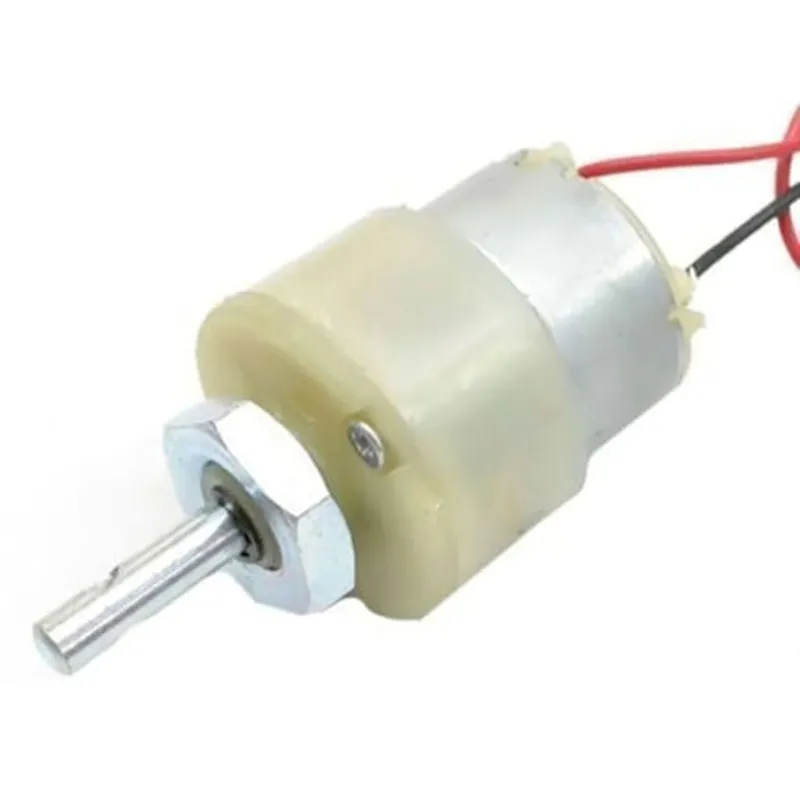
The 300 RPM Geared Motor is a compact, high-performance motor designed for applications requiring precise speed control and high torque. This motor is suitable for a wide range of IoT applications, including robotics, automation, and smart home devices.
Functionality

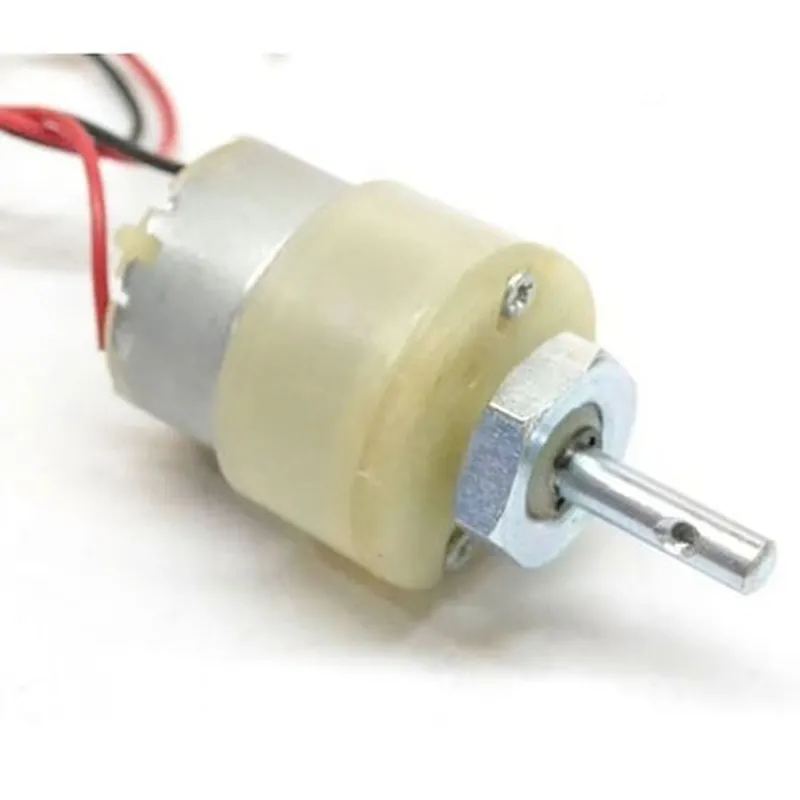
The 300 RPM Geared Motor is a type of DC motor that uses a gearbox to reduce the motor's output speed while increasing its torque. This allows the motor to provide a precise and controlled movement, making it ideal for applications that require slow and deliberate motion.

Key Features

  • Speed: The motor operates at a nominal speed of 300 RPM, making it suitable for applications that require a slow and controlled movement.
  • Gear Ratio: The motor features a built-in gearbox with a high gear ratio, allowing it to provide high torque and precise speed control.
  • High-Torque Output: The motor is capable of producing a high torque output, making it suitable for applications that require heavy loads or high stall torque.
  • Compact Design: The motor features a compact design, making it ideal for use in space-constrained applications.
  • Low Power Consumption: The motor has a low power consumption, making it suitable for battery-powered applications or applications where power efficiency is crucial.
  • Reversible: The motor is reversible, allowing it to rotate in both clockwise and counterclockwise directions.
  • Quiet Operation: The motor operates quietly, making it suitable for applications where noise needs to be minimized.

Motor Type

DC Geared Motor

Voltage

6V-12V DC

Current

100mA-500mA

Speed

300 RPM 10%

Gear Ratio

150

Torque

10 kg-cm 10%

Shaft Diameter

4mm

Shaft Length

10mm

Motor Body Diameter

20mm

Motor Body Length

30mm

Weight

50g

Temperature

-20C to 80C

Humidity

20% to 80% RH

Vibration

10G ( sinusoidal vibration, 10-2000 Hz)

Applications

The 300 RPM Geared Motor is suitable for a wide range of IoT applications, including

Robotics

The motor's high torque output and precise speed control make it ideal for robotic applications, such as robotic arms or grippers.

Automation

The motor's compact design and low power consumption make it suitable for automation applications, such as conveyor systems or packaging machines.

Smart Home Devices

The motor's quiet operation and high torque output make it suitable for smart home devices, such as smart door locks or smart window openers.

Certifications

The 300 RPM Geared Motor meets the following certifications

CE

RoHS

REACH

Warranty

The 300 RPM Geared Motor comes with a 1-year limited warranty.

Pin Configuration

  • 300 RPM Geared Motor Documentation
  • Pinout Explanation
  • The 300 RPM Geared Motor has a total of 4 pins, each serving a specific purpose in controlling and powering the motor. Below is a detailed explanation of each pin:
  • Pin 1: VCC (Positive Power Supply)
  • Function: Provides positive power supply to the motor
  • Voltage: Typically 3-6V DC (dependent on motor specifications)
  • Description: Connect this pin to a power source, such as a battery or a power supply unit, to provide the necessary voltage for the motor to operate.
  • Pin 2: GND (Ground)
  • Function: Provides a common ground reference for the motor
  • Description: Connect this pin to a ground point on your circuit board or breadboard to complete the power supply circuit.
  • Pin 3: IN1 (Motor Control Input 1)
  • Function: Controls the direction of motor rotation (clockwise or counterclockwise)
  • Logic Level: Digital signal (HIGH or LOW)
  • Description: Connect this pin to a digital output from your microcontroller or other control device to control the motor's direction. A HIGH signal typically indicates clockwise rotation, while a LOW signal indicates counterclockwise rotation.
  • Pin 4: IN2 (Motor Control Input 2)
  • Function: Controls the motor's speed (forward or backward)
  • Logic Level: Digital signal (HIGH or LOW)
  • Description: Connect this pin to a digital output from your microcontroller or other control device to control the motor's speed. A HIGH signal typically indicates forward motion, while a LOW signal indicates backward motion.
  • Connection Structure
  • To connect the 300 RPM Geared Motor to your circuit, follow the steps below:
  • 1. Power Supply Connection:
  • Connect Pin 1 (VCC) to a positive power supply terminal (e.g., a battery or a power supply unit).
  • Connect Pin 2 (GND) to a ground point on your circuit board or breadboard.
  • 2. Motor Control Connection:
  • Connect Pin 3 (IN1) to a digital output pin on your microcontroller or other control device (e.g., Arduino, Raspberry Pi, or a dedicated motor driver IC).
  • Connect Pin 4 (IN2) to another digital output pin on your microcontroller or other control device.
  • Example Connection Diagram
  • Here's an example connection diagram using an Arduino Uno microcontroller:
  • VCC (Pin 1) 5V pin on Arduino Uno
  • GND (Pin 2) GND pin on Arduino Uno
  • IN1 (Pin 3) Digital Pin 2 on Arduino Uno (Motor Direction Control)
  • IN2 (Pin 4) Digital Pin 3 on Arduino Uno (Motor Speed Control)
  • Note: Make sure to consult the datasheet for your specific 300 RPM Geared Motor and microcontroller or control device for specific connection guidelines and voltage requirements. Additionally, ensure that your power supply can handle the motor's power requirements to avoid damage or overheating.

Code Examples

300 RPM Geared Motor Documentation
Overview
The 300 RPM Geared Motor is a high-torque, low-speed motor suitable for various IoT applications that require precise control and movement. This documentation provides an overview of the motor's specifications, pinouts, and code examples to help you integrate it into your projects.
Specifications
Rated Speed: 300 RPM
 Gear Ratio: 1:100
 Voltage: 6V - 12V DC
 Current: 100mA - 500mA
 Torque: 10 kg-cm
 Shaft Diameter: 6mm
 Length: 45mm
 Weight: 120g
Pinouts
The 300 RPM Geared Motor has a 3-pin JST connector with the following pinout:
Pin 1: VCC (Positive Power Supply)
 Pin 2: GND (Ground)
 Pin 3: SIGNAL (Motor Control Signal)
Code Examples
### Example 1: Basic Motor Control using Arduino
In this example, we'll demonstrate how to control the 300 RPM Geared Motor using an Arduino board.
```c++
const int motorPin = 3;  // SIGNAL pin connected to digital pin 3
void setup() {
  pinMode(motorPin, OUTPUT);
}
void loop() {
  // Rotate the motor clockwise at 50% speed
  analogWrite(motorPin, 128);
  delay(2000);
// Rotate the motor counterclockwise at 25% speed
  analogWrite(motorPin, 64);
  delay(2000);
// Stop the motor
  analogWrite(motorPin, 0);
  delay(2000);
}
```
### Example 2: PWM Control using Raspberry Pi (Python)
In this example, we'll demonstrate how to control the 300 RPM Geared Motor using a Raspberry Pi and Python.
```python
import RPi.GPIO as GPIO
import time
# Set up GPIO mode
GPIO.setmode(GPIO.BCM)
# Set up motor control pin
motor_pin = 18
GPIO.setup(motor_pin, GPIO.OUT)
# Set up PWM frequency
pwm_frequency = 50
pwm = GPIO.PWM(motor_pin, pwm_frequency)
try:
    while True:
        # Rotate the motor at 50% speed
        pwm.start(50)
        time.sleep(2)
# Rotate the motor at 25% speed
        pwm.start(25)
        time.sleep(2)
# Stop the motor
        pwm.stop()
        time.sleep(2)
except KeyboardInterrupt:
    GPIO.cleanup()
```
Note: Make sure to adjust the motor control pin and PWM frequency according to your specific setup and requirements.
These code examples demonstrate the basic usage of the 300 RPM Geared Motor in different contexts. You can modify and extend these examples to suit your specific IoT project needs.