5K ohm 16mm Rotatory Variable Potentiometer (Pack of 5)


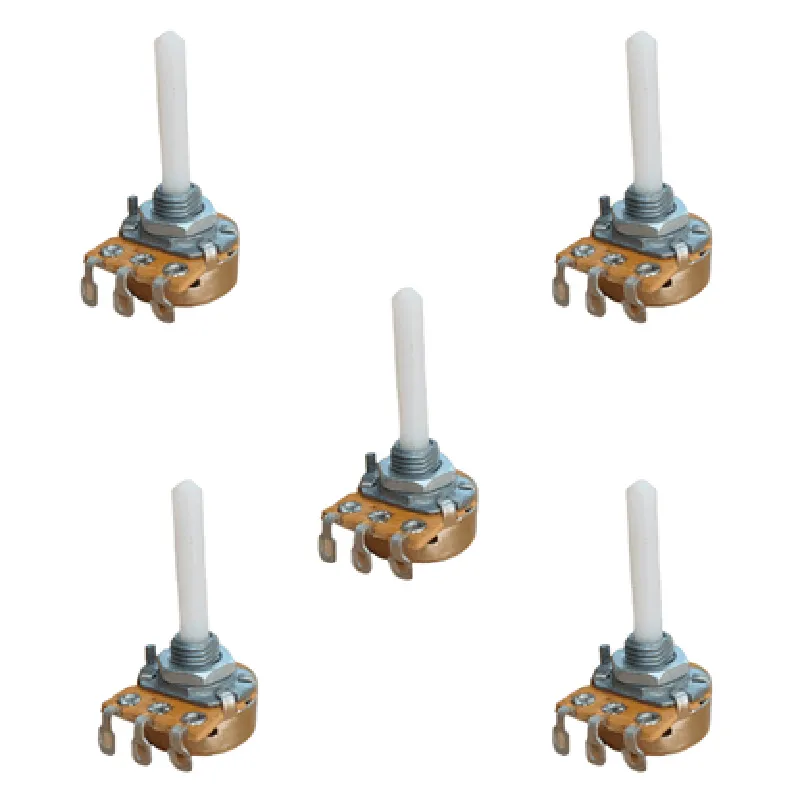
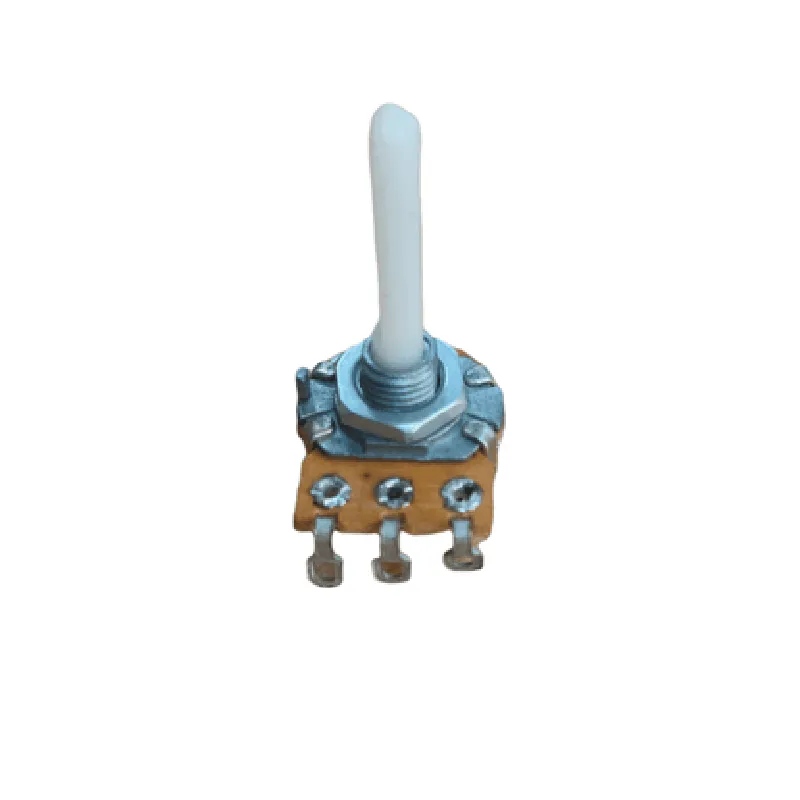
5K ohm 16mm Rotatory Variable Potentiometer (Pack of 5)
The 5K ohm 16mm Rotatory Variable Potentiometer is a type of variable resistor used to regulate electrical signals in various applications. This component is a rotary potentiometer, meaning its resistance value can be adjusted by rotating a shaft. It is a popular choice for IoT projects, robotics, and other electronic systems that require manual adjustment of voltage or current.
The primary function of this potentiometer is to divide a voltage source into two parts, allowing the user to adjust the proportion of voltage between the two outputs. This is achieved by varying the resistance between the input and output terminals. When the shaft is rotated, the wiper (the moving contact) slides along the resistive material, changing the resistance ratio between the input and output.
0.5W
-20C to 70C
100M
500V AC/1 minute
10 gfcm (typical)
1000 cycles
| This 5K ohm 16mm Rotatory Variable Potentiometer is suitable for a wide range of applications, including |
IoT projects
Robotics
Audio equipment (e.g., volume controls)
Motor speed control
Voltage dividers
Signal conditioning circuits
Medical devices
Industrial control systems
Before using the potentiometer, ensure it is properly installed and secured to prevent mechanical damage or electrical shock.
The rated power should not be exceeded to prevent overheating or damage to the component.
The potentiometer should be operated within the specified temperature range to maintain optimal performance and reliability.
5K ohm 16mm Rotatory Variable Potentiometer (Pack of 5) DocumentationOverviewThe 5K ohm 16mm Rotatory Variable Potentiometer is a type of potentiometer that allows for the adjustment of electrical resistance using a rotary mechanism. This component is commonly used in electronic circuits to control voltage levels, signal levels, and other parameters. The pack of 5 provides a convenient quantity for prototyping, testing, and small-scale production.Technical SpecificationsResistance: 5 k
Power Rating: 0.25 W
Rotary Angle: 300
Linear Travel: 16 mm
Operating Temperature: -25C to 70C
Terminal Type: 3-pin (CW, CCW, Wiper)PinoutThe 3-pin terminal has the following connections:CW (ClockWise): one end of the resistive track
CCW (Counter-ClockWise): the other end of the resistive track
Wiper: the movable contact that connects to the resistive trackCode Examples### Example 1: Basic Analog Voltage Divider (Arduino)In this example, we will use the potentiometer to create an analog voltage divider, controlling the output voltage using the rotary mechanism.```c++
const int potentPin = A0; // Potentiometer wiper connected to Analog Input 0
const int ledPin = 9; // LED connected to Digital Pin 9void setup() {
pinMode(ledPin, OUTPUT);
}void loop() {
int potentValue = analogRead(potentPin);
int outputValue = map(potentValue, 0, 1023, 0, 255);
analogWrite(ledPin, outputValue);
delay(20);
}
```In this code, the `analogRead()` function reads the voltage at the potentiometer's wiper terminal, which varies between 0 and 1023. The `map()` function scales this value to a range suitable for the LED's brightness (0 to 255). Finally, `analogWrite()` sets the LED's brightness accordingly.### Example 2: Reading Rotary Position (Raspberry Pi with Python)In this example, we will use the potentiometer to read the rotary position and display it on the console.```python
import RPi.GPIO as GPIO
import timeGPIO.setmode(GPIO.BCM)potent_pin = 17 # Potentiometer wiper connected to GPIO 17
GPIO.setup(potent_pin, GPIO.IN)while True:
potent_value = GPIO.input(potent_pin)
rotary_position = (potent_value / 1023) 300 # Scale to 0-300 degrees
print("Rotary Position: {:.2f} degrees".format(rotary_position))
time.sleep(0.1)
```In this code, we use the RPi.GPIO library to read the digital value at the potentiometer's wiper terminal. We scale this value to a range of 0 to 300 degrees, representing the rotary position, and print it to the console.Note: These examples assume a basic understanding of the respective platforms (Arduino and Raspberry Pi) and programming languages (C++ and Python). Always ensure proper connections and voltage levels when working with electronic components.