

Stufin
Home Quick Cart Profile

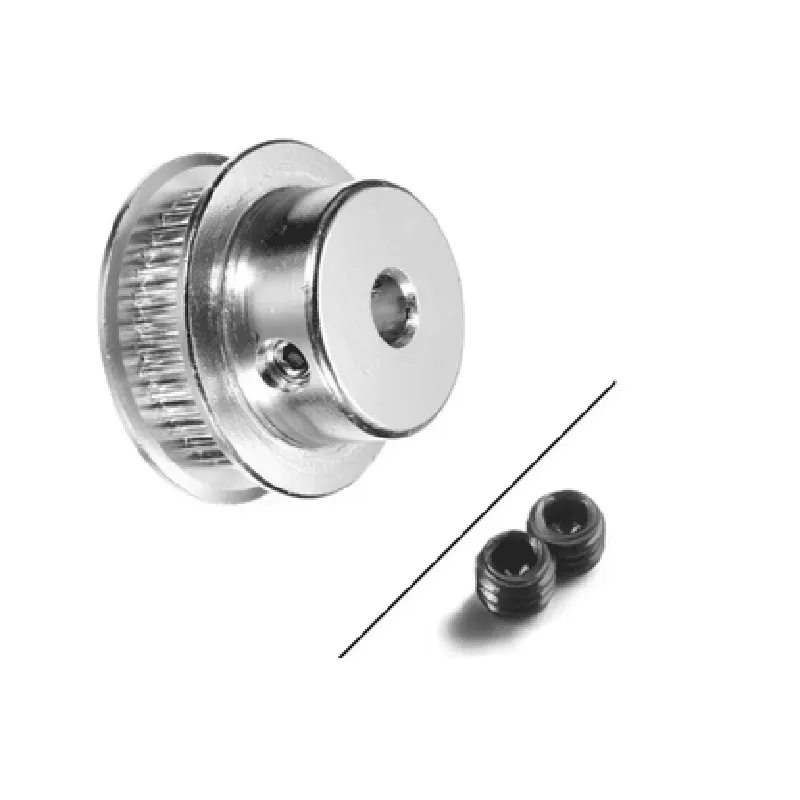
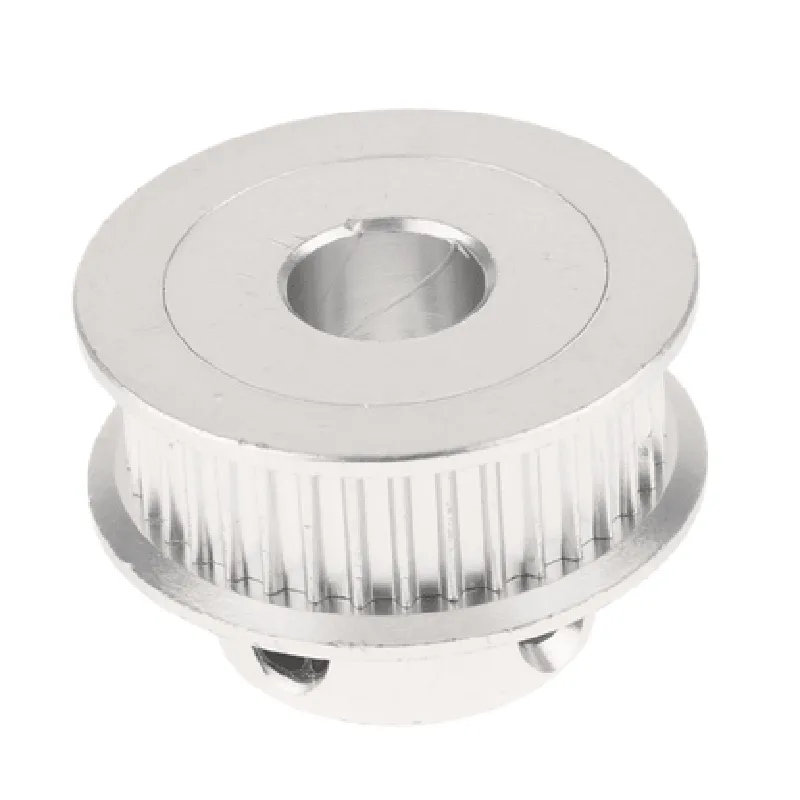
GT2-6mm Belt Width 36 Teeth 6.35mm Bore Timing Pulley

Buy Now on Stufin

Component Documentation

GT2-6mm Belt Width 36 Teeth 6.35mm Bore Timing Pulley

Overview

The GT2-6mm Belt Width 36 Teeth 6.35mm Bore Timing Pulley is a critical component in various IoT applications, particularly in robotics, automation, and motion control systems. This timing pulley is designed to work in conjunction with GT2 belts, providing precise linear motion and timing in a wide range of industrial and commercial settings.

Functionality

The primary function of the GT2-6mm Belt Width 36 Teeth 6.35mm Bore Timing Pulley is to transmit rotational motion into linear motion, while maintaining a precise timing and synchronization. This is achieved by engaging the teeth of the pulley with the corresponding GT2 belt, which is designed to operate at high speeds and under moderate to heavy loads.

Key Features

  • Belt Width and Teeth Count: The pulley features a 6mm wide belt and 36 teeth, ensuring a smooth and precise engagement with the GT2 belt.
  • Bore Size: The pulley has a 6.35mm bore, allowing for easy attachment to a motor shaft or other rotating components.
  • Material: The pulley is typically constructed from high-strength, wear-resistant materials such as aluminum or steel, ensuring durability and longevity in demanding applications.
  • GT2 Profile: The pulley features a GT2 profile, which is designed to provide a high level of precision and accuracy in timing applications.
  • High-Speed Capability: The pulley is designed to operate at high speeds, making it suitable for applications requiring rapid linear motion.
  • Low Backlash: The pulley's design ensures low backlash, reducing the deviation between the intended and actual motion, resulting in improved accuracy and precision.
  • Compact Design: The pulley's compact design makes it ideal for use in applications where space is limited, such as in robotics, 3D printers, and CNC machines.

Specifications

Belt Width

6mm

Teeth Count

36

Bore Size

6.35mm

Material

Aluminum or Steel

GT2 ProfileYes

Speed Capability

High Speed

Backlash

Low

Compatibility

GT2 Belts

Applications

The GT2-6mm Belt Width 36 Teeth 6.35mm Bore Timing Pulley is suitable for a wide range of IoT applications, including

Robotics and automation systems

3D printers and CNC machines

Motion control systems

Conveyor systems

Industrial automation equipment

Conclusion

The GT2-6mm Belt Width 36 Teeth 6.35mm Bore Timing Pulley is a high-performance component designed to provide precise timing and linear motion in various IoT applications. Its compact design, high-speed capability, and low backlash make it an ideal choice for applications requiring accuracy and reliability.

Pin Configuration

  • GT2-6mm Belt Width 36 Teeth 6.35mm Bore Timing Pulley Documentation
  • Overview
  • The GT2-6mm Belt Width 36 Teeth 6.35mm Bore Timing Pulley is a critical component in linear motion systems, commonly used in 3D printers, CNC machines, and robotics. This pulley features a 6mm wide GT2 belt and has 36 teeth, providing a high resolution and precise linear movement. The pulley has a 6.35mm bore, making it compatible with a range of motor shaft sizes.
  • Pinout Description
  • The GT2-6mm Belt Width 36 Teeth 6.35mm Bore Timing Pulley typically does not have electronic pins, as it is a mechanical component. However, it's essential to understand the physical structure and how to connect the pulley to a motor or other mechanical components.
  • Physical Structure
  • Here's a point-by-point breakdown of the pulley's physical structure:
  • 1. Bore: The bore is the central hole of the pulley, which has a diameter of 6.35mm. This is where the motor shaft is inserted to connect the pulley to the motor.
  • 2. Teeth: The pulley has 36 teeth, which engage with the GT2 belt to provide precise linear movement. The teeth are evenly spaced and designed to match the GT2 belt's geometry.
  • 3. Belt Width: The pulley is designed to accommodate a 6mm wide GT2 belt. The belt width is critical to ensure proper engagement with the teeth and smooth linear movement.
  • 4. Flanges: The pulley has two flanges, one on each side of the teeth, which provide additional support and stability to the belt.
  • Connection Structure
  • To connect the pulley to a motor or other mechanical components, follow these steps:
  • 1. Insert motor shaft: Insert the motor shaft into the bore of the pulley, ensuring a secure fit. Use a suitable fastening method, such as a set screw or clamp, to secure the shaft in place.
  • 2. Align belt: Align the GT2 belt with the pulley teeth, ensuring the belt is properly seated and engaged with the teeth.
  • 3. Secure belt: Use a suitable fastening method, such as a clamp or screw, to secure the belt to the pulley. This ensures the belt remains in place during operation.
  • 4. Tighten motor shaft: Tighten the motor shaft to the desired torque specification to ensure a secure connection.
  • Important Notes
  • Ensure proper alignment and tensioning of the belt to avoid damage or misalignment.
  • Use suitable fastening methods and materials to secure the motor shaft and belt to the pulley.
  • Follow the manufacturer's specifications and guidelines for motor shaft diameter, belt tension, and operating conditions.
  • By following these guidelines, you can ensure a secure and reliable connection between the GT2-6mm Belt Width 36 Teeth 6.35mm Bore Timing Pulley and your motor or mechanical components, resulting in precise and smooth linear movement.

Code Examples

GT2-6mm Belt Width 36 Teeth 6.35mm Bore Timing Pulley Documentation
The GT2-6mm Belt Width 36 Teeth 6.35mm Bore Timing Pulley is a critical component in IoT robotic and automation systems, providing precise movement and synchronization of mechanical parts. This documentation outlines the key features, specifications, and code examples to successfully integrate this pulley into various IoT projects.
Features and Specifications:
Belt width: 6 mm
 Number of teeth: 36
 Bore diameter: 6.35 mm
 Material: Aluminum or Steel (dependent on manufacturer)
 Compatibility: GT2 timing belts
 Application: Robotics, CNC machines, 3D printers, and other automation systems
Code Examples:
### Example 1: Arduino-based Stepper Motor Control with GT2 Pulley
In this example, we'll demonstrate how to control a stepper motor using an Arduino board and the GT2-6mm Belt Width 36 Teeth 6.35mm Bore Timing Pulley.
```cpp
#include <Stepper.h>
// Define the stepper motor pins
#define STEPPER_PIN_DIR 2
#define STEPPER_PIN_STEP 3
// Define the stepper motor specifications
#define STEPS_PER_REVOLUTION 200
#define MICROSTEPPING 16
// Create a Stepper object
Stepper stepper(STEPS_PER_REVOLUTION, STEPPER_PIN_DIR, STEPPER_PIN_STEP);
void setup() {
  // Set the stepper motor speed
  stepper.setSpeed(100);
}
void loop() {
  // Move the stepper motor 360 degrees (1 revolution)
  stepper.step(STEPS_PER_REVOLUTION);
  delay(1000);
}
```
In this example, the GT2 pulley is attached to the stepper motor shaft, and the timing belt is connected to the pulley. The Arduino code controls the stepper motor, which rotates the pulley and moves the connected mechanical parts.
### Example 2: Python-based CNC Machine Control with GT2 Pulley ( Raspberry Pi )
In this example, we'll demonstrate how to control a CNC machine using a Raspberry Pi and the GT2-6mm Belt Width 36 Teeth 6.35mm Bore Timing Pulley.
```python
import RPi.GPIO as GPIO
import time
# Define the GPIO pins for the CNC machine motors
GPIO.setmode(GPIO.BCM)
MOTOR_X_DIR = 17
MOTOR_X_STEP = 23
MOTOR_Y_DIR = 24
MOTOR_Y_STEP = 25
# Set the GPIO pins as output
GPIO.setup(MOTOR_X_DIR, GPIO.OUT)
GPIO.setup(MOTOR_X_STEP, GPIO.OUT)
GPIO.setup(MOTOR_Y_DIR, GPIO.OUT)
GPIO.setup(MOTOR_Y_STEP, GPIO.OUT)
# Define the motor speeds (mm/s)
MOTOR_X_SPEED = 100
MOTOR_Y_SPEED = 100
# Define the GT2 pulley specifications
PULLEY_TEETH = 36
BELT_PITCH = 2  # mm
while True:
    # Move the X-axis motor 10 mm
    GPIO.output(MOTOR_X_DIR, GPIO.HIGH)
    for i in range(int(10  (PULLEY_TEETH / BELT_PITCH))):
        GPIO.output(MOTOR_X_STEP, GPIO.HIGH)
        time.sleep(MOTOR_X_SPEED / 1000)
        GPIO.output(MOTOR_X_STEP, GPIO.LOW)
        time.sleep(MOTOR_X_SPEED / 1000)
# Move the Y-axis motor 10 mm
    GPIO.output(MOTOR_Y_DIR, GPIO.HIGH)
    for i in range(int(10  (PULLEY_TEETH / BELT_PITCH))):
        GPIO.output(MOTOR_Y_STEP, GPIO.HIGH)
        time.sleep(MOTOR_Y_SPEED / 1000)
        GPIO.output(MOTOR_Y_STEP, GPIO.LOW)
        time.sleep(MOTOR_Y_SPEED / 1000)
time.sleep(1000)
```
In this example, the GT2 pulley is attached to the CNC machine's motor shafts, and the timing belts are connected to the pulleys. The Python code controls the CNC machine motors, which rotate the pulleys and move the connected mechanical parts.
Please note that these examples are simplified and may require additional configuration and tuning for specific IoT projects. Ensure to consult the datasheets and documentation for the microcontrollers, motors, and other components used in your project.