

Stufin
Home Quick Cart Profile

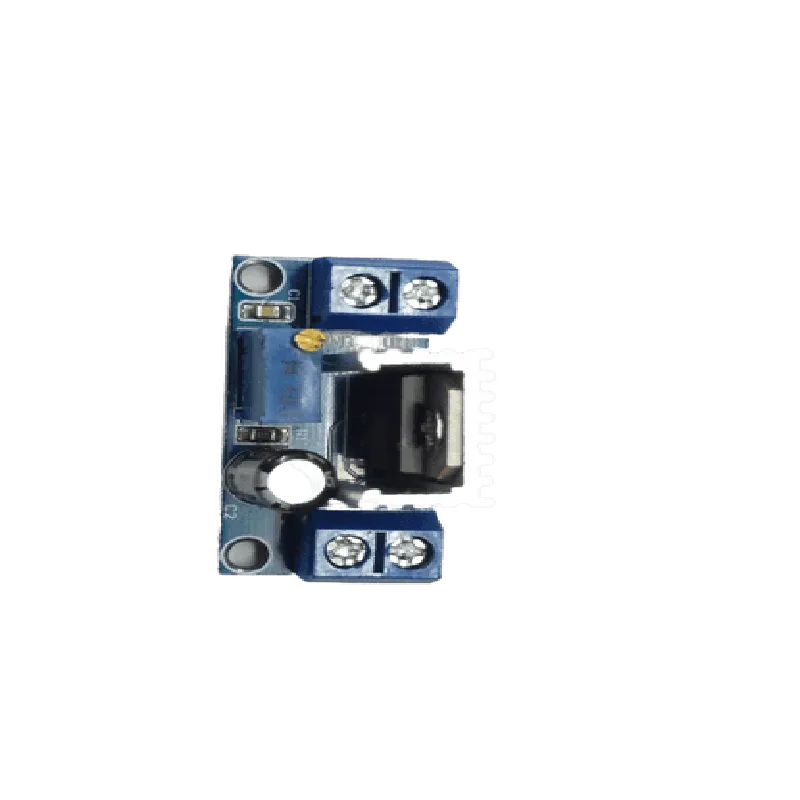
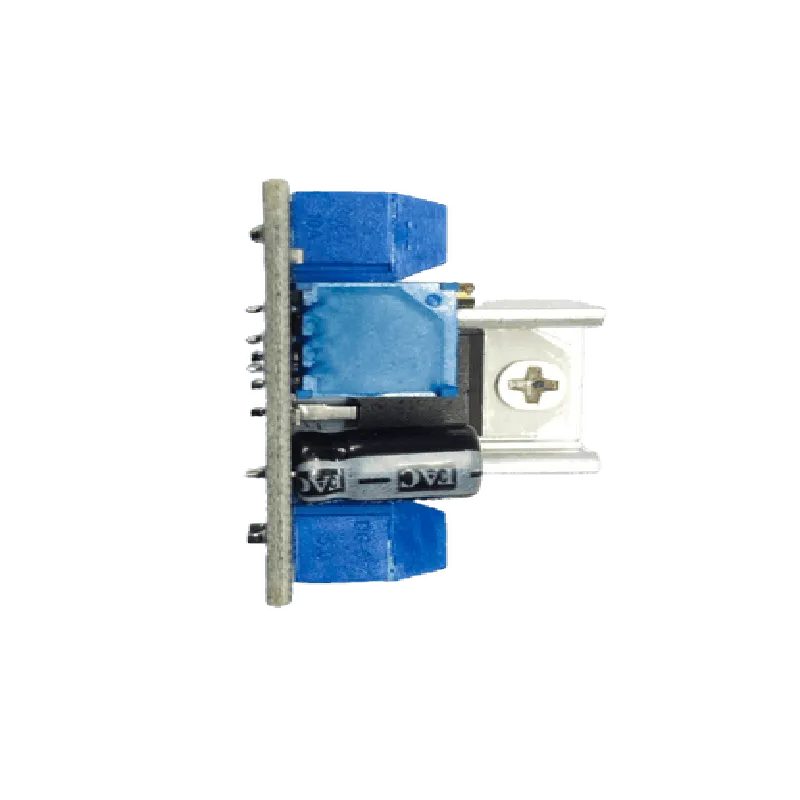
LM317 DC to DC Converter Step Down Power Supply

Buy Now on Stufin

Component Name

LM317 DC to DC Converter Step Down Power Supply

Overview

The LM317 is a popular, high-performance, adjustable voltage regulator IC from Texas Instruments. This component is a DC-to-DC converter step-down power supply, designed to provide a regulated output voltage from a higher input voltage. The LM317 is widely used in various applications, including IoT projects, robotics, and electronic devices, where a stable and adjustable power supply is required.

Functionality

The LM317 DC-to-DC converter step-down power supply functions as a voltage regulator, which reduces the input voltage to a desired, lower output voltage. This is achieved through an internal voltage reference, error amplifier, and a power transistor. The output voltage is determined by a resistor divider network, which sets the desired output voltage.

  • Input Stage: The input voltage is applied to the input pins of the IC.
  • Voltage Regulation: The internal voltage reference and error amplifier compare the input voltage with the desired output voltage, generating an error signal.
  • Power Transistor: The error signal controls the power transistor, which adjusts the output voltage to match the desired value.
  • Output Stage: The regulated output voltage is provided at the output pins of the IC.
The LM317 operates in the following manner

Key Features

  • Adjustable Output Voltage: The output voltage can be adjusted between 1.25V and 37V, using a resistor divider network.
  • High Current Capability: The LM317 can deliver up to 1.5A of output current, making it suitable for powering small to medium-sized loads.
  • Line Regulation: The output voltage remains stable despite input voltage variations, ensuring a regulated output.
  • Load Regulation: The output voltage remains stable despite changes in load current, ensuring a regulated output.
  • Overcurrent Protection: The LM317 features internal overcurrent protection, which limits the output current to prevent damage from excessive loads.
  • Thermal Overload Protection: The IC includes thermal overload protection, which shuts down the device in case of overheating, preventing damage.
  • Wide Operating Temperature Range: The LM317 operates over a wide temperature range of -40C to 125C, making it suitable for various environments.
The LM317 DC-to-DC converter step-down power supply offers the following key features

Technical Specifications

  • Input Voltage Range: 3V to 40V
  • Output Voltage Range: 1.25V to 37V
  • Output Current: Up to 1.5A
  • Line Regulation: 0.05% ( typical)
  • Load Regulation: 0.1% ( typical)
  • Maximum Operating Temperature: 125C
  • Minimum Operating Temperature: -40C
  • Package: TO-220, TO-263 (SMD)
Key technical specifications of the LM317 DC-to-DC converter step-down power supply include

Applications

  • IoT Projects: Powering small IoT devices, sensors, and microcontrollers.
  • Robotics: Powering robotic systems, including motors, sensors, and microcontrollers.
  • Electronic Devices: Powering small electronic devices, such as radios, clocks, and calculators.
  • Battery-Powered Systems: Powering battery-powered systems, including portable electronics and wearables.
The LM317 DC-to-DC converter step-down power supply finds applications in

Conclusion

The LM317 DC-to-DC converter step-down power supply is a reliable and versatile component, offering a high level of performance, flexibility, and reliability. Its adjustable output voltage, high current capability, and built-in protection features make it an ideal choice for a wide range of applications, from IoT projects to robotics and electronic devices.

Pin Configuration

  • LM317 DC to DC Converter Step Down Power Supply Pinout and Connection Guide
  • The LM317 is a popular, three-terminal linear voltage regulator used in DC-DC converters and power supplies. It can deliver up to 1.5A of output current and can be configured to provide a fixed or adjustable output voltage.
  • Pinout:
  • The LM317 has three pins:
  • 1. Adjust (ADJ) Pin
  • Function: Output voltage adjustment and feedback
  • Description: This pin is used to adjust the output voltage of the regulator. It is connected to a resistive divider network that sets the desired output voltage.
  • 2. Input (VIN) Pin
  • Function: Input voltage supply
  • Description: This pin is connected to the input voltage source, which can range from 3.5V to 40V.
  • 3. Output (VOUT) Pin
  • Function: Regulated output voltage
  • Description: This pin provides the regulated output voltage, which can be adjusted between 1.25V and 37V.
  • Connection Structure:
  • To build a basic power supply using the LM317, follow these steps:
  • Step 1: Input Voltage Connection
  • Connect the input voltage source (VIN) to the Input (VIN) Pin. Ensure the input voltage is within the recommended range of 3.5V to 40V.
  • Step 2: Output Voltage Adjustment
  • Connect a resistive divider network between the Output (VOUT) Pin and the Adjust (ADJ) Pin. The resistors R1 and R2 form a voltage divider that sets the output voltage.
  • The output voltage (VOUT) is determined by the formula: VOUT = 1.25V (1 + R2/R1)
  • Choose the values of R1 and R2 according to the desired output voltage.
  • Step 3: Output Capacitor Connection (Optional)
  • Connect a 10uF to 100uF capacitor between the Output (VOUT) Pin and ground. This capacitor improves the regulator's stability and reduces output noise.
  • Step 4: Input Capacitor Connection (Optional)
  • Connect a 1uF to 10uF capacitor between the Input (VIN) Pin and ground. This capacitor reduces input noise and improves the regulator's performance.
  • Example Connection Diagram:
  • ```
  • +---------------+
  • | |
  • | Input |
  • | Voltage |
  • | (VIN) |
  • +---------------+
  • |
  • |
  • v
  • +---------------+
  • | |
  • | LM317 |
  • | (U1) |
  • +---------------+
  • |
  • |
  • v
  • +---------------+
  • | |
  • | R1 R2 |
  • | 1k 2k |
  • | |
  • +---------------+
  • |
  • |
  • v
  • +---------------+
  • | |
  • | Output |
  • | Voltage |
  • | (VOUT) |
  • +---------------+
  • |
  • |
  • v
  • +---------------+
  • | |
  • | 10uF GND |
  • | Capacitor |
  • | |
  • +---------------+
  • ```
  • In this example, the output voltage is set to approximately 5V using a 1k and 2k resistive divider network.
  • Note:
  • Always ensure the input voltage is within the recommended range for the LM317.
  • Use suitable capacitors and resistors according to your application's requirements.
  • This is a basic connection structure, and you may need to add additional components or circuits depending on your specific use case.

Code Examples

LM317 DC to DC Converter Step Down Power Supply Documentation
Overview
The LM317 is a popular, adjustable voltage regulator IC that can be used to build a DC to DC converter step-down power supply. This component is widely used in IoT projects to step down higher voltage levels to lower voltage levels required by microcontrollers, sensors, and other devices.
Pinout and Package
The LM317 comes in a TO-220 package with three pins:
VIN (input voltage): Pin 1
 VOUT (output voltage): Pin 2
 ADJ (adjustment pin): Pin 3
Operating Conditions
Input Voltage (VIN): 3.5V to 40V
 Output Voltage (VOUT): 1.25V to 37V
 Output Current (IOUT): up to 1.5A
 Dropout Voltage: 2V
Calculating Output Voltage
The output voltage of the LM317 can be calculated using the following formula:
VOUT = 1.25V  (1 + R2/R1)
where R1 and R2 are resistors connected between the ADJ pin and the input/output pins.
Example 1: Fixed 5V Output Power Supply
In this example, we will build a fixed 5V output power supply using the LM317.
Schematic:
```
VIN (12V) --->|---+---|--->
             |  LM317  |
             |  (TO-220) |
             |---+---|--->
             |  R1 (220)  |
             |  R2 (1k)   |
             |---+---|--->
             |  C1 (10uF)  |
             |  C2 (10uF)  |
             |---+---|--->
VOUT (5V) --->|---+---|--->
             |  Load        |
             |  (e.g., Arduino)
             |---+---|--->
```
Code Example: None required, as this is a purely analog circuit.
Example 2: Adjustable Output Power Supply with Arduino
In this example, we will build an adjustable output power supply with an Arduino board.
Schematic:
```
VIN (12V) --->|---+---|--->
             |  LM317  |
             |  (TO-220) |
             |---+---|--->
             |  R1 (220)  |
             |  R2 (10k)  |
             |  POT (10k)  |
             |---+---|--->
             |  C1 (10uF)  |
             |  C2 (10uF)  |
             |---+---|--->
VOUT --->|---+---|--->
             |  Load        |
             |  (e.g., sensors)
             |---+---|--->
```
Code Example (Arduino):
```c++
const int potPin = A0;  // Potentiometer pin
int outputVoltage = 0;  // Output voltage (0-1023)
void setup() {
  pinMode(potPin, INPUT);
}
void loop() {
  outputVoltage = analogRead(potPin);
  outputVoltage = map(outputVoltage, 0, 1023, 125, 370); // Map 0-1023 to 1.25V-37V
  // Update R2 resistance value based on outputVoltage
  updateR2(outputVoltage);
  delay(100);
}
void updateR2(int outputVoltage) {
  // Calculate R2 resistance value based on outputVoltage
  float r2 = (outputVoltage - 1.25) / (220 / (outputVoltage - 1.25));
  // Update R2 resistance value (e.g., using a digital potentiometer)
}
```
Note: This code example assumes the use of a digital potentiometer or a similar device to update the R2 resistance value. The specific implementation may vary depending on the chosen device.
Conclusion
The LM317 is a versatile and widely used DC to DC converter step-down power supply component. With its adjustable output voltage feature, it can be used in a variety of IoT projects, from powering small sensors to driving larger loads. By following the examples provided, you can design and build your own custom power supply solutions using the LM317.