Radial Ball Bearing 685ZZ for 3D Printer


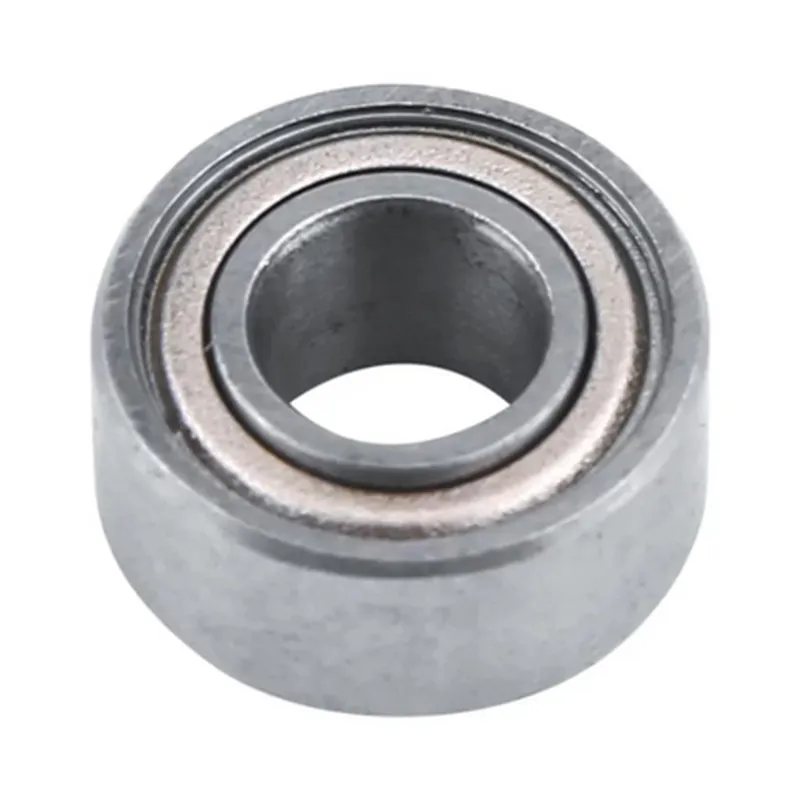
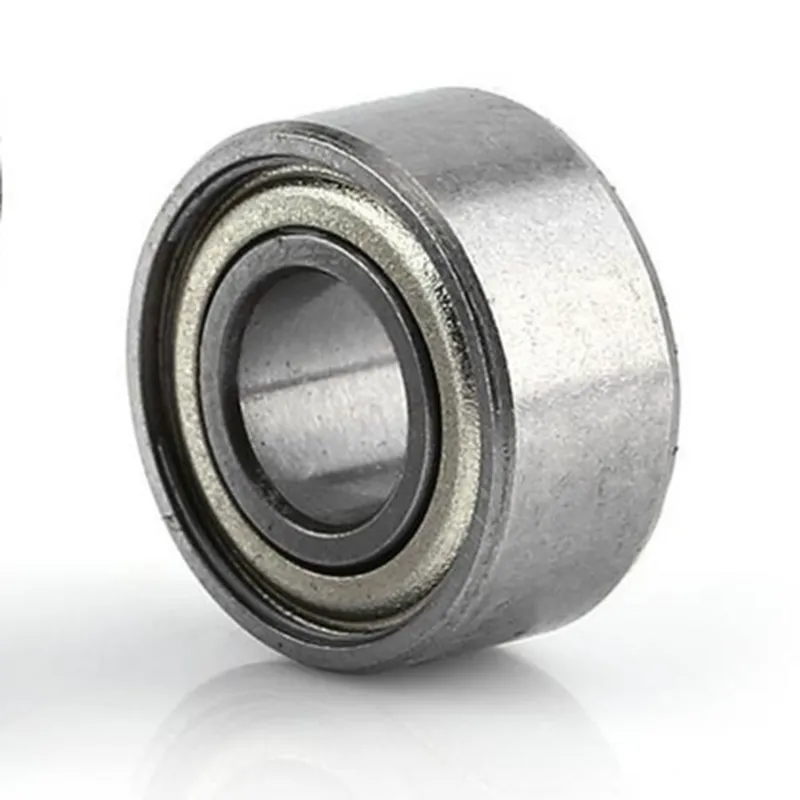
Radial Ball Bearing 685ZZ for 3D Printer
The Radial Ball Bearing 685ZZ is a high-precision bearing specifically designed for 3D printing applications. It is a crucial component in 3D printers, ensuring smooth and accurate motion of the printer's axes. This bearing is a type of radial ball bearing, which means it is designed to support radial loads, providing low friction and high precision rotation.
The primary function of the Radial Ball Bearing 685ZZ is to enable the smooth and precise movement of the 3D printer's axes, including the X, Y, and Z axes. This is achieved by reducing friction and providing a stable platform for the axis to rotate upon. The bearing's radial design allows it to withstand radial loads, which are common in 3D printing applications, and ensures that the printer's movements are accurate and repeatable.
5mm
13mm
4mm
High-carbon chromium steel (bearing rings and balls) and polyamide (cage)
Grease-lubricated
Double-shielded (ZZ)
-20C to 150C
20,000 rpm
1.15 kN (radial), 0.55 kN (axial)
The Radial Ball Bearing 685ZZ is specifically designed for 3D printing applications, but it can also be used in other precision machinery, such as CNC machines, robots, and linear motion systems.
The Radial Ball Bearing 685ZZ is a high-precision, high-performance bearing designed specifically for 3D printing applications. Its compact design, high-speed capability, and low friction make it an ideal choice for 3D printer manufacturers and enthusiasts alike. With its high load capacity, corrosion resistance, and easy installation, this bearing is sure to provide reliable and accurate performance in demanding 3D printing applications.
Radial Ball Bearing 685ZZ for 3D PrinterOverviewThe Radial Ball Bearing 685ZZ is a high-precision bearing designed specifically for 3D printing applications. It features a single-row deep groove ball bearing with a metal shield on both sides (ZZ) to provide excellent radial load capacity and low friction. This bearing is ideal for use in 3D printers, CNC machines, and other precision mechanical systems.Technical SpecificationsBearing Type: Radial Ball Bearing
Model Number: 685ZZ
Inner Diameter: 5mm
Outer Diameter: 13mm
Width: 4mm
Material: Chrome Steel
Load Rating: 440N (radial), 140N (axial)
Speed Rating: 25,000 rpm
Operating Temperature: -20C to 120CCode Examples### Example 1: Using the Radial Ball Bearing 685ZZ in a 3D Printer Stepper Motor Assembly (Arduino)In this example, we will demonstrate how to use the Radial Ball Bearing 685ZZ in a 3D printer stepper motor assembly using an Arduino board.
```c
#include <Stepper.h>// Stepper motor pin connections
#define STEPPER_DIR 2
#define STEPPER_STEP 3// Stepper motor settings
#define STEPS_PER_REV 200
#define RPM 100Stepper stepper(STEPS_PER_REV, STEPPER_DIR, STEPPER_STEP);void setup() {
// Initialize stepper motor
stepper.setSpeed(RPM);
}void loop() {
// Rotate stepper motor clockwise
stepper.step(100);
delay(500);
// Rotate stepper motor counterclockwise
stepper.step(-100);
delay(500);
}
```
In this example, the Radial Ball Bearing 685ZZ is used to support the stepper motor shaft, allowing for smooth and precise rotation.### Example 2: Using the Radial Ball Bearing 685ZZ in a Linear Motion System (Python)In this example, we will demonstrate how to use the Radial Ball Bearing 685ZZ in a linear motion system using a Raspberry Pi and Python.
```python
import RPi.GPIO as GPIO
import time# GPIO pin connections
GPIO.setmode(GPIO.BCM)
DIR_PIN = 17
STEP_PIN = 18# Linear motion settings
STEPS_PER_MM = 10
SPEED_MM_S = 5# Initialize GPIO pins
GPIO.setup(DIR_PIN, GPIO.OUT)
GPIO.setup(STEP_PIN, GPIO.OUT)def move_linear(distance_mm):
# Calculate number of steps
steps = int(distance_mm STEPS_PER_MM)
# Move linearly
GPIO.output(DIR_PIN, GPIO.HIGH if distance_mm > 0 else GPIO.LOW)
for i in range(abs(steps)):
GPIO.output(STEP_PIN, GPIO.HIGH)
time.sleep(0.001)
GPIO.output(STEP_PIN, GPIO.LOW)
time.sleep(0.001)# Move 10mm forward and backward
move_linear(10)
move_linear(-10)
```
In this example, the Radial Ball Bearing 685ZZ is used to support the linear motion system's shaft, allowing for smooth and precise linear movement.Note: These examples are for illustrative purposes only and may require additional components, such as motor drivers, power supplies, and mechanical components, to function properly.