V5 Heat Break Hotend Throat With Teflon Tube for 1.75mm Filament


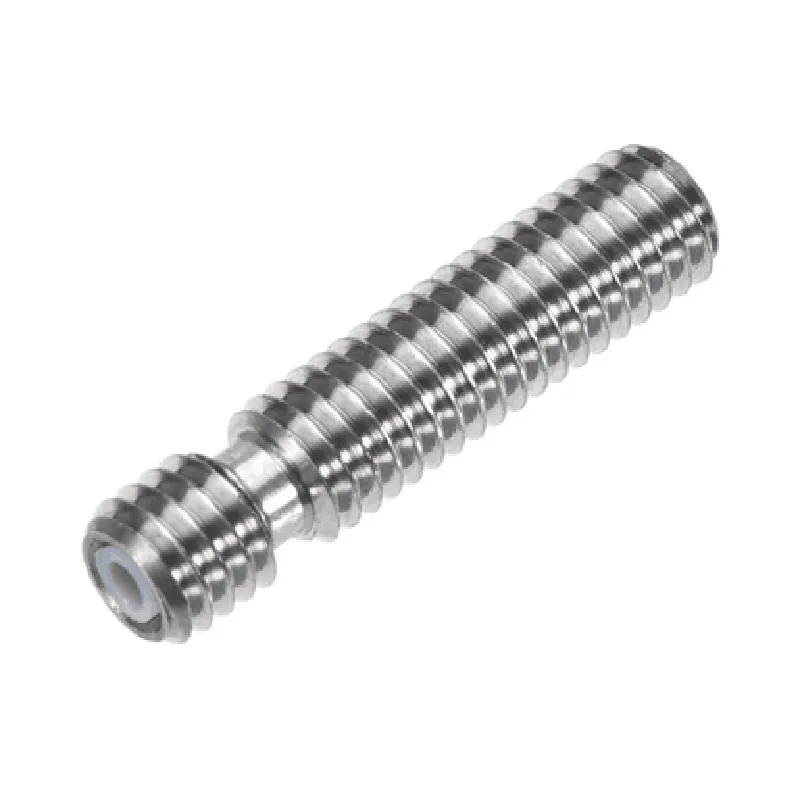
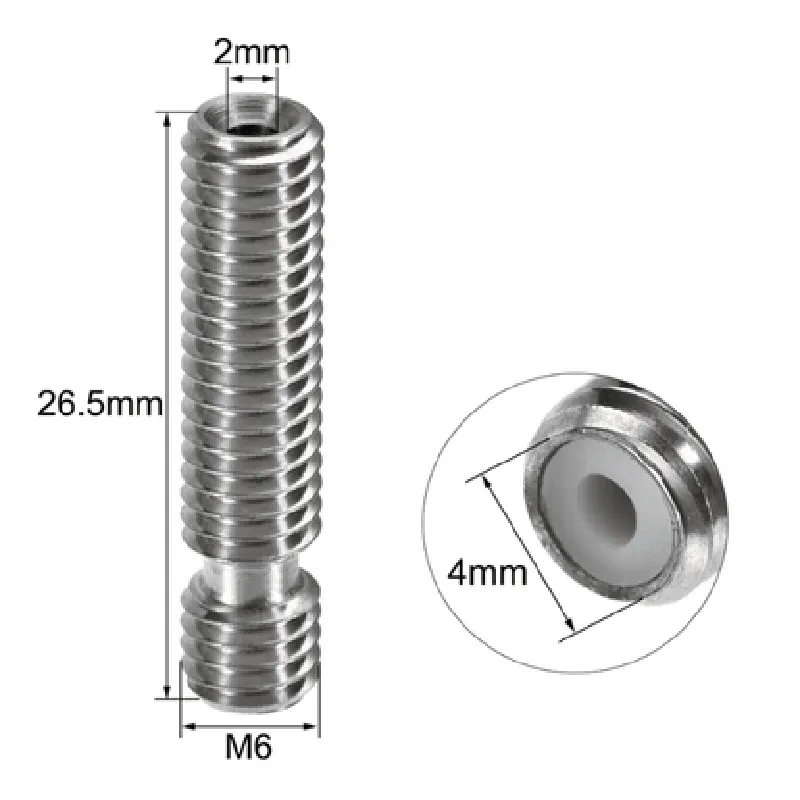
V5 Heat Break Hotend Throat With Teflon Tube for 1.75mm Filament
The V5 Heat Break Hotend Throat With Teflon Tube is a crucial component in 3D printing systems, designed specifically for use with 1.75mm filament. This component plays a vital role in the hotend assembly, responsible for melting and extruding the filament to create the desired 3D object.
The primary function of the V5 Heat Break Hotend Throat is to melt the 1.75mm filament and transfer it through the hotend, ensuring a consistent and controlled flow of molten material. This is achieved through a combination of thermal management and precision engineering.
High-quality metal alloy with Teflon tube
1.75mm filament
Optimized for efficient heat transfer
Smooth, non-stick surface for reduced friction and jamming
Up to 300C (572F)
[Insert dimensions, e.g., length, diameter, thread size]
| The V5 Heat Break Hotend Throat With Teflon Tube is suitable for a wide range of 3D printing applications, including |
FFF/FDM 3D printing
Prototype development
Model making
Production of functional parts
Artistic and creative projects
By integrating the V5 Heat Break Hotend Throat With Teflon Tube into your 3D printing system, you can ensure reliable, high-quality prints with improved thermal management and reduced downtime.
V5 Heat Break Hotend Throat With Teflon Tube for 1.75mm Filament DocumentationOverviewThe V5 Heat Break Hotend Throat With Teflon Tube for 1.75mm Filament is a critical component in 3D printing systems, responsible for melting and extruding filament. This heat break hotend throat is designed for use with 1.75mm filament and features a Teflon tube for reduced friction and improved print quality.Technical SpecificationsFilament diameter: 1.75mm
Heat break material: Stainless Steel
Teflon tube material: PTFE (Polytetrafluoroethylene)
Operating temperature range: 150C to 300C
Compatibility: Most 3D printing systems, including RepRap, Prusa, and MakerBotCode Examples### Example 1: Marlin Firmware ConfigurationIn this example, we'll demonstrate how to configure the V5 Heat Break Hotend Throat With Teflon Tube for 1.75mm Filament in Marlin firmware, a popular open-source firmware for 3D printers.```c
// Marlin firmware configuration// Hotend settings
#define HOTEND0.Named "E3D V5 Hotend"
#define HOTEND0.Temperature_Flags 0x00000001 // enable hotend temperature control
#define HOTEND0.HeatBreak // define heat break pin
#define HOTEND0.Thermistor // define thermistor pin// Filament settings
#define FILAMENT_DIAMETER 1.75
#define FILAMENT_EXTRUSION_RATE 90// Calibration settings
#define HOTEND_CALIBRATION_TEMPERATURE 215
#define HOTEND_CALIBRATION_WAIT 30
```### Example 2: Python Script for Temperature Control Using RPiIn this example, we'll demonstrate how to control the V5 Heat Break Hotend Throat With Teflon Tube for 1.75mm Filament using a Python script running on a Raspberry Pi (RPi).```python
# Python script for temperature control using RPiimport RPi.GPIO as GPIO
import time# Set up GPIO pins for heat break and thermistor
heat_break_pin = 17
thermistor_pin = 23# Set up temperature control
target_temperature = 220 # set target temperature
pwm_frequency = 100 # set PWM frequencyGPIO.setmode(GPIO.BCM)
GPIO.setup(heat_break_pin, GPIO.OUT)
GPIO.setup(thermistor_pin, GPIO.IN)while True:
# Read thermistor temperature
temperature = read_thermistor_temperature(thermistor_pin)
# Calculate duty cycle based on temperature
duty_cycle = calculate_duty_cycle(temperature, target_temperature, pwm_frequency)
# Control heat break using PWM
GPIO.output(heat_break_pin, GPIO.HIGH)
time.sleep(duty_cycle)
GPIO.output(heat_break_pin, GPIO.LOW)
time.sleep(pwm_frequency - duty_cycle)def read_thermistor_temperature(pin):
# Implementation of thermistor temperature reading function
passdef calculate_duty_cycle(temperature, target_temperature, pwm_frequency):
# Implementation of duty cycle calculation function
pass
```Note: The `read_thermistor_temperature` and `calculate_duty_cycle` functions are not implemented in this example and should be replaced with actual implementations specific to your 3D printing system.