5V 1 Channel Relay Module (Made in India - GL Make)


5V 1 Channel Relay Module (Made in India - GL Make)
The 5V 1 Channel Relay Module is a widely used Internet of Things (IoT) component designed to control high-power devices using a low-power signal. This module is manufactured in India by GL Make, a reputable electronics manufacturing company. It is a single-channel relay module, meaning it can control one device at a time.
The primary function of this relay module is to act as a switch that can be controlled electronically. It allows a low-voltage signal (typically 5V) from a microcontroller or other electronic device to switch a higher-voltage circuit (up to 250V AC or 30V DC) on and off. This enables the control of devices that require more power than a microcontroller can provide, such as lights, motors, and pumps.
5V DC
250V AC or 30V DC
Single-channel relay module, controlling one device at a time
Electromagnetic relay with a high-switching capacity
Normally Open (NO) and Normally Closed (NC) contacts available
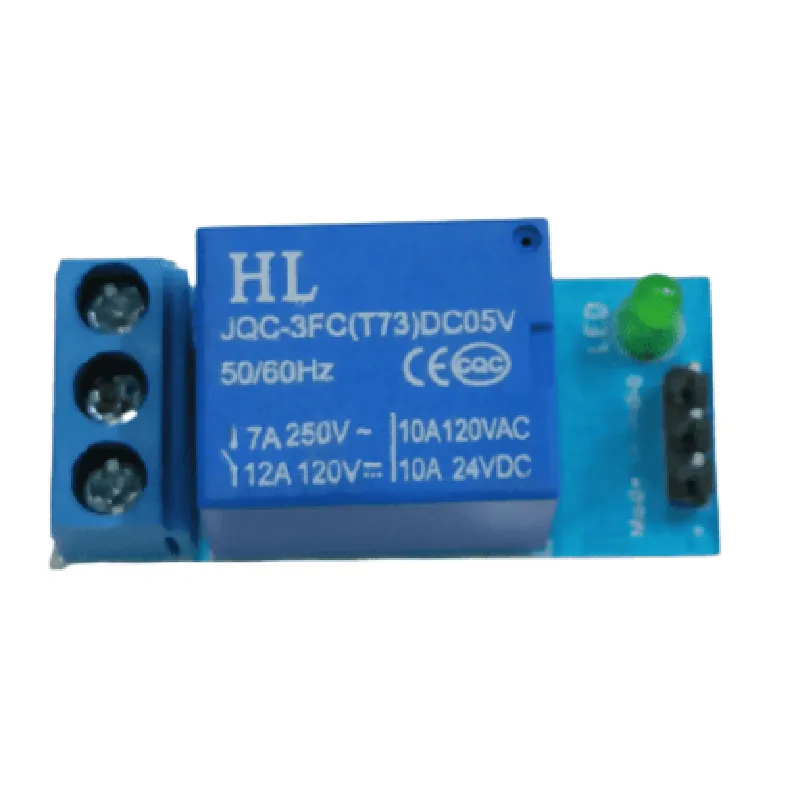
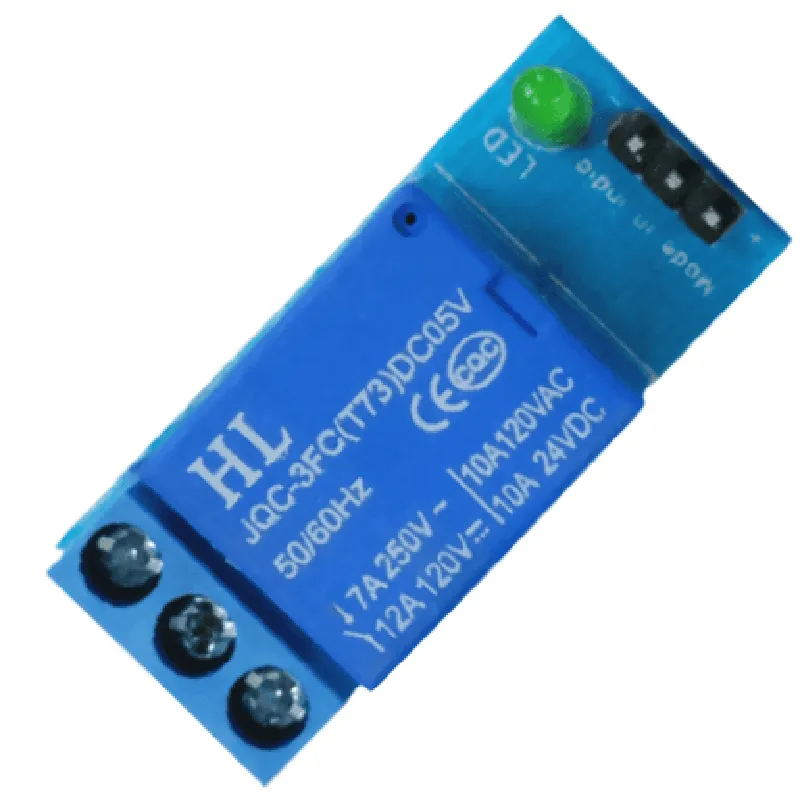
3-pin screw terminal for connecting the load (device to be controlled)
3-pin header for connecting to a microcontroller or other control device
Onboard LED indicator shows the relay's status (on or off)
Low power consumption, making it suitable for battery-powered devices
Compact size, ideal for use in small projects and prototypes
Compliant with relevant Indian and international safety standards
-20C to 75C
-40C to 125C
5% to 95% RH (non-condensing)
100,000 cycles (min.)
100 M (min.)
2500 V AC (min.)
Ensure proper wiring and connection to avoid damage to the relay module or other devices.
Use a suitable heat sink or enclosure to prevent overheating.
Follow proper safety precautions when working with high-voltage devices.
By understanding the features and functionality of the 5V 1 Channel Relay Module, you can effectively integrate it into your IoT projects and control devices with ease.
Component Documentation: 5V 1 Channel Relay Module (Made in India - GL Make)OverviewThe 5V 1 Channel Relay Module is a popular IoT component used to switch high-voltage devices (up to 250V AC/DC) using a low-voltage signal from a microcontroller or other electronic devices. This module is made in India by GL Make and features a single relay channel, making it an ideal choice for various IoT projects.Technical SpecificationsOperating Voltage: 5V
Relay Type: Single Pole Double Throw (SPDT)
Maximum Contact Rating: 10A, 250V AC/DC
Operating Temperature: -40C to 85C
Dimensions: 44.5mm x 17.5mm x 18.5mmPinout DiagramThe 5V 1 Channel Relay Module has the following pinout:| Pin | Function |
| --- | --- |
| VCC | 5V Power Supply |
| GND | Ground |
| IN | Input Signal (Active Low) |
| NC | Normally Closed (Switched to COM when IN is Low) |
| COM | Common Terminal |
| NO | Normally Open (Switched to COM when IN is High) |Example 1: Controlling a 220V AC Light Bulb using ArduinoIn this example, we will use the 5V 1 Channel Relay Module to control a 220V AC light bulb using an Arduino Uno board.Hardware Requirements:5V 1 Channel Relay Module
Arduino Uno board
220V AC light bulb
Breadboard and jumper wiresSoftware Code:
```c
const int relayPin = 2; // Pin connected to IN pin of relay modulevoid setup() {
pinMode(relayPin, OUTPUT);
}void loop() {
digitalWrite(relayPin, HIGH); // Turn on the light bulb
delay(1000);
digitalWrite(relayPin, LOW); // Turn off the light bulb
delay(1000);
}
```
Explanation:In this example, we connect the IN pin of the relay module to digital pin 2 of the Arduino Uno board. We then use the `digitalWrite()` function to send a HIGH signal to the relay module, which closes the NO and COM contacts, allowing the 220V AC light bulb to turn on. Conversely, when we send a LOW signal, the relay module opens, and the light bulb turns off.Example 2: Controlling a 12V DC Fan using Raspberry PiIn this example, we will use the 5V 1 Channel Relay Module to control a 12V DC fan using a Raspberry Pi.Hardware Requirements:5V 1 Channel Relay Module
Raspberry Pi
12V DC fan
Breadboard and jumper wires
12V power supplySoftware Code:
```python
import RPi.GPIO as GPIO
import timeGPIO.setmode(GPIO.BCM)
relay_pin = 17
GPIO.setup(relay_pin, GPIO.OUT)while True:
GPIO.output(relay_pin, GPIO.HIGH) # Turn on the fan
time.sleep(1)
GPIO.output(relay_pin, GPIO.LOW) # Turn off the fan
time.sleep(1)
```
Explanation:In this example, we connect the IN pin of the relay module to GPIO pin 17 of the Raspberry Pi. We then use the `GPIO.output()` function to send a HIGH signal to the relay module, which closes the NO and COM contacts, allowing the 12V DC fan to turn on. Conversely, when we send a LOW signal, the relay module opens, and the fan turns off.These examples demonstrate the basic operation of the 5V 1 Channel Relay Module and its ability to control high-voltage devices using a low-voltage signal. This module is an excellent addition to any IoT project requiring relay control.