The module uses the u-blox NEO-7M GPS chip to provide accurate positioning data, including latitude, longitude, altitude, and velocity.


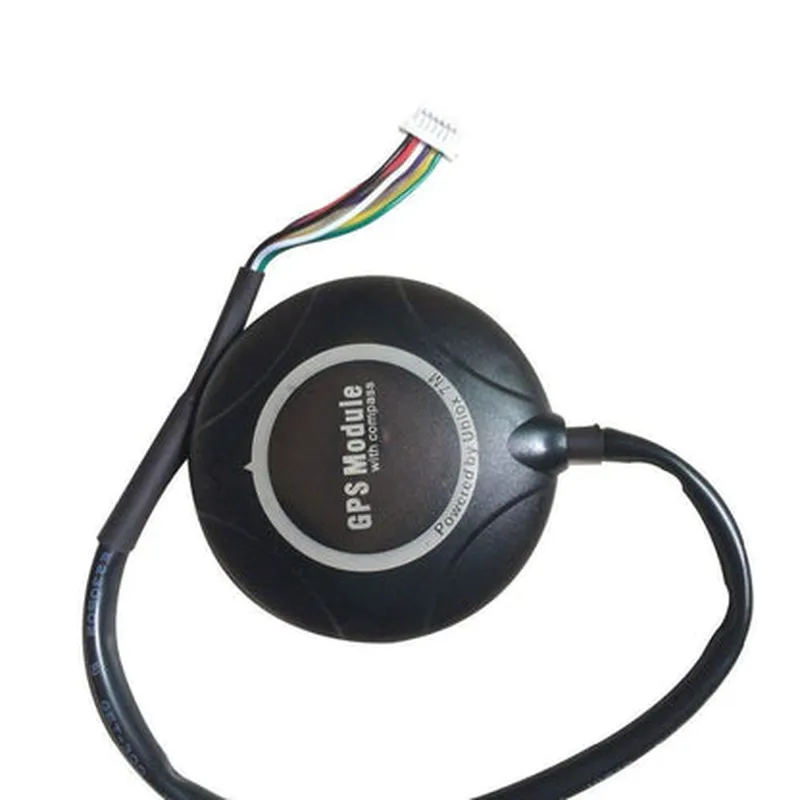
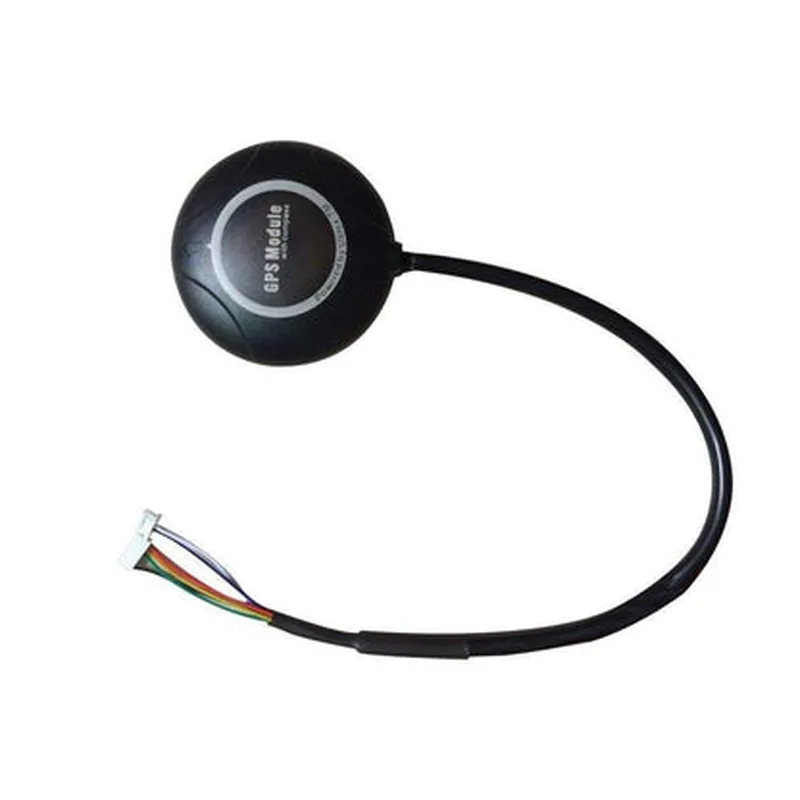
The module uses the u-blox NEO-7M GPS chip to provide accurate positioning data, including latitude, longitude, altitude, and velocity.
The built-in magnetometer (HMC5883L) provides heading information, enabling the flight controller to determine the vehicle's orientation and direction.
The module provides accurate time data, essential for synchronizing flight controller operations and logging flight data.
Key Features
| High-Sensitivity GPS | The NEO-7M GPS chip provides high sensitivity and accuracy, even in challenging environments, such as urban canyons or under tree cover. |
| Fast Time-to-First-Fix (TTFF) | The module can achieve a TTFF of less than 30 seconds, enabling quick GPS lock-on and minimizing startup time. |
| WAAS/EGNOS Support | The module supports Wide Area Augmentation System (WAAS) and European Geostationary Navigation Overlay System (EGNOS) for improved accuracy and integrity. |
| Built-in Magnetometer | The integrated HMC5883L magnetometer provides reliable heading information, eliminating the need for an external compass module. |
| UART and I2C Interfaces | The module supports both UART and I2C interfaces, allowing for easy integration with a range of microcontrollers and flight controllers. |
The module is designed for low power consumption, making it suitable for battery-powered UAVs and other applications.
The module's compact size and lightweight design make it ideal for use in small UAVs and other space-constrained applications.
Technical Specifications
u-blox NEO-7M
HMC5883L
UART, I2C
Up to 115200 bps
3.3V to 5.5V
Typical 20mA, max 30mA
| GPS positioning | 2.5m CEP, Velocity: 0.5m/s, Time: 10ns |
-40C to +85C
-40C to +125C
Applications
| The F18468-70 NEO-7M 7M GPS Module with Compass is suitable for use in a range of applications, including |
Unmanned Aerial Vehicles (UAVs)
Autonomous Systems
Robotics
Surveying and Mapping
Agriculture and Forestry
Emergency Services
Conclusion
The F18468-70 NEO-7M 7M GPS Module with Compass is a high-performance GPS module designed for use with APM2.5, 2.6, and 2.8 flight controllers. Its compact design, low power consumption, and high accuracy make it an ideal solution for a range of applications requiring GPS positioning, velocity, and time data, as well as magnetometer readings for navigation and orientation.
F18468-70 NEO-7M 7M GPS Module with Compass for APM2.5 2.6 2.8 DocumentationOverviewThe F18468-70 NEO-7M 7M GPS Module with Compass is a high-performance GPS receiver and electronic compass module designed for autonomous systems, particularly for the APM (ArduPilotMega) autopilot system. This module integrates a u-blox NEO-7M GPS receiver and a 3-axis magnetometer, providing precise GPS positioning and orientation data.Module FeaturesHigh-sensitivity GPS receiver with 7M signal acquisition and tracking
Built-in 3-axis magnetometer for electronic compass functionality
Supports APM 2.5, 2.6, and 2.8 autopilot systems
TTL serial interface for easy communication
Operating temperature range: -40C to +85C
Power supply: 3.3V to 5VCommunication ProtocolThe F18468-70 NEO-7M 7M GPS Module communicates using a standard TTL serial protocol at a baud rate of 9600 bps. The module transmits GPS data in NMEA 0183 format and magnetometer data in binary format.Code Examples### Example 1: Reading GPS Data with ArduinoThis example demonstrates how to read GPS data from the F18468-70 NEO-7M 7M GPS Module using an Arduino board.```c++
#include <SoftwareSerial.h>// Define the serial pins for the GPS module
const int gpsRx = 2;
const int gpsTx = 3;SoftwareSerial gpsSerial(gpsRx, gpsTx);void setup() {
Serial.begin(9600);
gpsSerial.begin(9600);
}void loop() {
// Read GPS data
while (gpsSerial.available() > 0) {
char c = gpsSerial.read();
Serial.write(c);
}// Parse GPS data (example: $GPRMC,123519,A,4807.038,N,01131.000,E,022.4,084.4,230394,003.1,W6A)
if (Serial.available() > 0) {
String gpsData = Serial.readStringUntil('
');
int startIndex = gpsData.indexOf(',');
if (startIndex != -1) {
String latitude = gpsData.substring(startIndex + 1, startIndex + 10);
Serial.print("Latitude: ");
Serial.println(latitude);
}
}delay(1000);
}
```### Example 2: Reading Compass Data with Python (Raspberry Pi)This example demonstrates how to read compass data from the F18468-70 NEO-7M 7M GPS Module using a Raspberry Pi and Python.```python
import serial
import struct# Open the serial connection to the GPS module
ser = serial.Serial('/dev/ttyUSB0', 9600)while True:
# Read 7 bytes of magnetometer data
magnetometer_data = ser.read(7)# Unpack the binary data
heading = struct.unpack('<h', magnetometer_data[2:4])[0]
pitch = struct.unpack('<h', magnetometer_data[4:6])[0]
roll = struct.unpack('<h', magnetometer_data[6:])# Convert headings to degrees
heading_deg = heading 180 / 32768
pitch_deg = pitch 180 / 32768
roll_deg = roll 180 / 32768print("Heading: {:.2f}, Pitch: {:.2f}, Roll: {:.2f}".format(heading_deg, pitch_deg, roll_deg))# Wait 100ms before reading again
time.sleep(0.1)
```Important NotesMake sure to connect the GPS module to a suitable power supply and ground.
Configure the serial interface according to the autopilot system's requirements.
For accurate GPS and compass readings, ensure the module has a clear view of the sky and is away from electromagnetic interference.
Refer to the module's datasheet and autopilot system's documentation for detailed configuration and integration instructions.