

Stufin
Home Quick Cart Profile

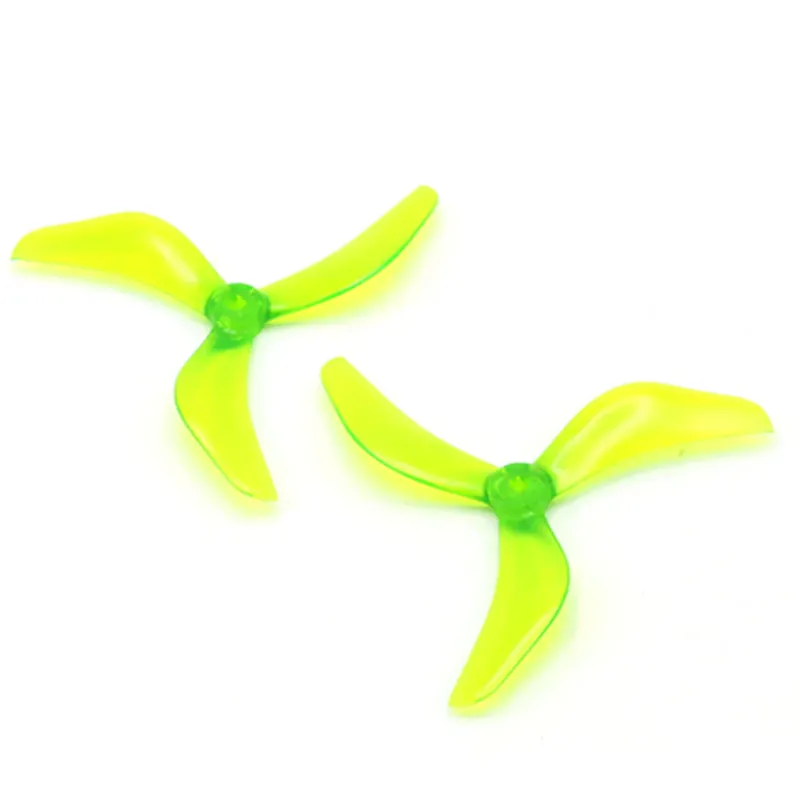
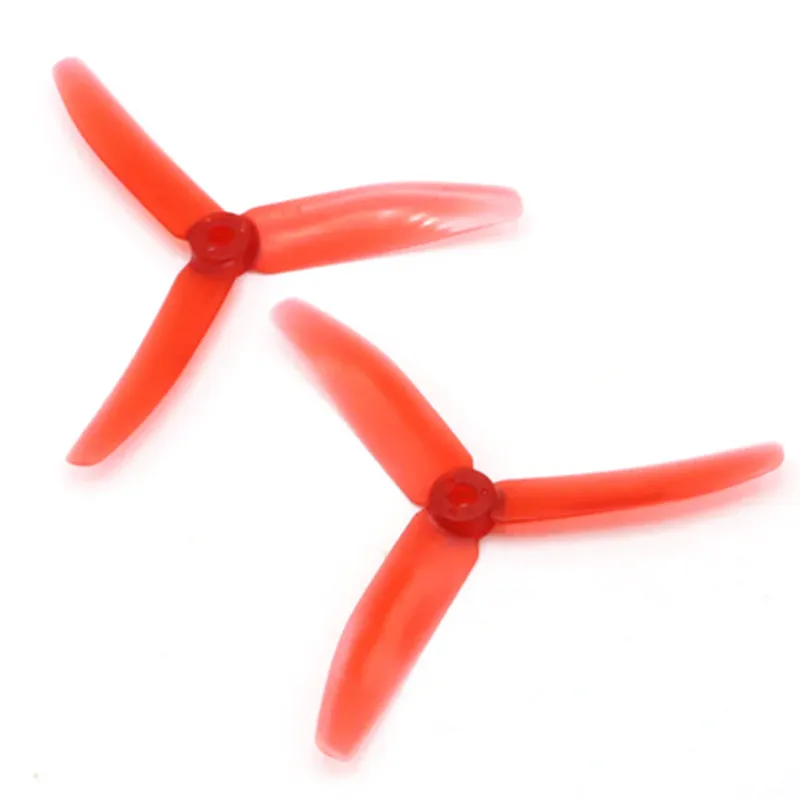
5040 5x4x3 Tri-Blade CW CCW Propeller- Any Color (2pcs)

Buy Now on Stufin

Component Documentation

5040 5x4x3 Tri-Blade CW CCW Propeller (2pcs)

Overview

The 5040 5x4x3 Tri-Blade CW CCW Propeller is a high-performance propeller designed for use in various unmanned aerial vehicles (UAVs) and remote-controlled (RC) aircraft applications. This component is available in various colors and comes in a pack of two propellers.

Functionality

The primary function of the 5040 Tri-Blade Propeller is to provide thrust and lift to an aircraft or UAV, enabling it to take off, hover, and maneuver through the air. The propeller's design and materials work together to convert the rotational energy from a motor into aerodynamic forces, generating the necessary lift and thrust for flight.

Key Features

  • Tri-Blade Design: The 5040 Propeller features a tri-blade design, which provides a higher thrust-to-weight ratio and improved efficiency compared to traditional two-blade propellers.
  • Direction of Rotation: This propeller is available in both Clockwise (CW) and Counter-Clockwise (CCW) rotation directions, making it compatible with a wide range of motor configurations.
  • 5x4x3 Dimensions: The propeller measures 5 inches in diameter, 4 inches in pitch, and 3 inches in height, making it suitable for a variety of applications, including miniature UAVs and RC aircraft.
  • High-Quality Materials: The propeller is constructed from durable, high-quality materials that provide excellent strength, stiffness, and resistance to wear and tear.
  • Aerodynamic Design: The propeller's aerodynamic design features a carefully crafted blade shape and angle to minimize drag and maximize thrust, resulting in improved efficiency and reduced energy consumption.
  • Lightweight Construction: The propeller's lightweight design reduces the overall weight of the aircraft or UAV, improving its power-to-weight ratio and overall performance.
  • Color Options: The 5040 Propeller is available in various colors, allowing users to customize their aircraft or UAV to suit their preferences or meet specific design requirements.
  • Packaging: The propeller comes in a pack of two, making it a convenient and cost-effective solution for users who require multiple propellers for their projects.

Technical Specifications

Diameter

5 inches (127 mm)

Pitch

4 inches (102 mm)

Height

3 inches (76 mm)

Weight

[TBD]

Material

High-quality plastic or composite materials

Rotation Direction

Clockwise (CW) and Counter-Clockwise (CCW)

Color Options

Various colors available

Packaging

2 propellers per pack

Mounting and Installation

The 5040 Tri-Blade Propeller is designed to be mounted on a compatible motor shaft or hub. Users should ensure proper alignment and secure mounting of the propeller to prevent damage or failure during operation. Refer to the manufacturer's instructions for specific mounting and installation guidelines.

Safety Precautions

When handling and operating the 5040 Tri-Blade Propeller, users should exercise caution to avoid injury or damage. Ensure proper safety precautions, such as wearing protective gear and maintaining a safe distance from the propeller during operation.

By providing a detailed description of the 5040 5x4x3 Tri-Blade CW CCW Propeller, this documentation aims to equip technical professionals and informed hobbyists with the necessary information to effectively integrate and utilize this component in their projects.

Pin Configuration

  • Component Documentation: 5040 5x4x3 Tri-Blade CW CCW Propeller (2pcs)
  • Overview
  • The 5040 5x4x3 Tri-Blade CW CCW Propeller is a high-quality, durable, and interchangeable propeller designed for use in unmanned aerial vehicles (UAVs), drones, and other hobbyist or industrial applications. This propeller comes in a set of two pieces, one with clockwise (CW) rotation and the other with counterclockwise (CCW) rotation.
  • Pinout and Connection Guide
  • The propeller motor has a standardized 3-pin connector, which is commonly used in most brushless motors. Below is a detailed explanation of each pin and how to connect them:
  • Pin 1: Signal/Sync Wire (usually white or yellow)
  • Function: This pin carries the signal from the flight controller to the motor, which is used to control the motor's rotation speed and direction.
  • Connection:
  • + Connect the signal wire to the corresponding signal pin on the flight controller's motor output (usually labeled as M1, M2, M3, etc.).
  • Pin 2: Positive Power Wire (usually red)
  • Function: This pin carries the positive voltage from the power source (battery or power distribution board) to the motor.
  • Connection:
  • + Connect the positive power wire to the power output on the power distribution board or directly to the battery (if using a single battery setup).
  • Pin 3: Negative Power Wire (usually black)
  • Function: This pin carries the negative voltage from the power source (battery or power distribution board) to the motor.
  • Connection:
  • + Connect the negative power wire to the power output on the power distribution board or directly to the battery (if using a single battery setup).
  • Connection Structure
  • Here's a step-by-step guide to connecting the propeller motor to the flight controller and power source:
  • 1. Flight Controller Side
  • Connect the signal wire (white or yellow) from the propeller motor to the corresponding signal pin on the flight controller's motor output (M1, M2, M3, etc.).
  • 2. Power Distribution Board/Power Source Side
  • Connect the positive power wire (red) from the propeller motor to the power output on the power distribution board or directly to the positive terminal of the battery.
  • Connect the negative power wire (black) from the propeller motor to the power output on the power distribution board or directly to the negative terminal of the battery.
  • Important Notes
  • Make sure to match the motor rotation direction (CW or CCW) with the correct propeller installation on the drone/UAV.
  • Use the correct propeller adapter or mounting system to secure the propeller to the motor shaft.
  • Ensure proper soldering and insulation of the wire connections to prevent damage or electrical shorts.
  • Follow the manufacturer's recommendations for wire gauge, length, and insulation to ensure reliable operation and minimize electromagnetic interference (EMI).

Code Examples

Component Documentation: 5040 5x4x3 Tri-Blade CW CCW Propeller (2pcs)
Overview
The 5040 5x4x3 Tri-Blade CW CCW Propeller is a high-quality propeller designed for use in drone and UAV applications. This propeller features a 5-inch diameter, 4-inch pitch, and 3-blade design, making it suitable for a wide range of motor sizes and drone configurations. The propeller is available in various colors and comes in a package of two pieces.
Technical Specifications
Diameter: 5 inches (127 mm)
 Pitch: 4 inches (102 mm)
 Number of Blades: 3
 Material: High-quality plastic
 Color: Various colors available
 Package Includes: 2 pieces of propellers (one CW and one CCW)
Connection and Installation
The propeller is designed to be attached to a drone motor using a standard propeller adapter or mounting system. Please consult the motor documentation for specific installation instructions.
Code Examples
### Example 1: Arduino Drone Control using ESC and Motor
In this example, we will demonstrate how to use the 5040 Tri-Blade CW CCW Propeller with an Arduino board, an electronic speed controller (ESC), and a drone motor.
Hardware Requirements
Arduino Board (e.g., Arduino Uno or Arduino Mega)
 Electronic Speed Controller (ESC)
 Drone Motor
 5040 Tri-Blade CW CCW Propeller
 Power source (e.g., LiPo battery)
Code
```c++
#include <ESC.h>
// Define ESC and motor pins
const int escPin = 9;  // Connect ESC signal wire to digital pin 9
const int motorPin = 10;  // Connect motor signal wire to digital pin 10
// Create an instance of the ESC class
ESC esc(escPin);
void setup() {
  // Initialize the ESC
  esc.init();
}
void loop() {
  // Set the motor speed (0-255)
  int motorSpeed = 128;
  esc.setSpeed(motorSpeed);
  delay(20);
}
```
### Example 2: Raspberry Pi Drone Control using Python and RPi.GPIO
In this example, we will demonstrate how to use the 5040 Tri-Blade CW CCW Propeller with a Raspberry Pi, an ESC, and a drone motor using Python and the RPi.GPIO library.
Hardware Requirements
Raspberry Pi (e.g., Raspberry Pi 4)
 Electronic Speed Controller (ESC)
 Drone Motor
 5040 Tri-Blade CW CCW Propeller
 Power source (e.g., LiPo battery)
Code
```python
import RPi.GPIO as GPIO
import time
# Define ESC and motor pins
esc_pin = 17  # Connect ESC signal wire to GPIO 17
motor_pin = 23  # Connect motor signal wire to GPIO 23
# Set up GPIO mode
GPIO.setmode(GPIO.BCM)
# Set up ESC and motor pins as output
GPIO.setup(esc_pin, GPIO.OUT)
GPIO.setup(motor_pin, GPIO.OUT)
# Define a function to set the motor speed
def set_motor_speed(speed):
    # Set the motor speed (0-100%)
    GPIO.output(esc_pin, GPIO.HIGH)
    time.sleep(speed / 100)
    GPIO.output(esc_pin, GPIO.LOW)
    time.sleep((100 - speed) / 100)
while True:
    # Set the motor speed (0-100%)
    set_motor_speed(50)
    time.sleep(1)
```
Note: These code examples are for demonstration purposes only and may require modifications to work with your specific drone configuration and hardware.
Safety Precautions
Always handle propellers with care to avoid injury or damage.
 Ensure proper installation and secure attachment of the propeller to the motor to prevent accidents.
 Keep out of reach of children and pets.
 Follow proper safety guidelines when working with drones and UAVs.