

Stufin
Home Quick Cart Profile

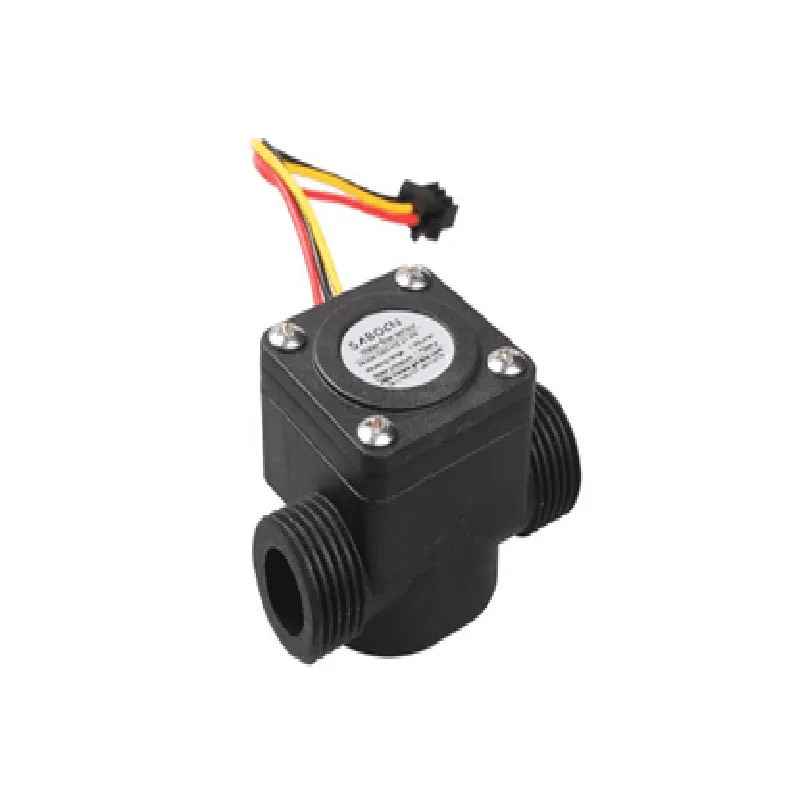
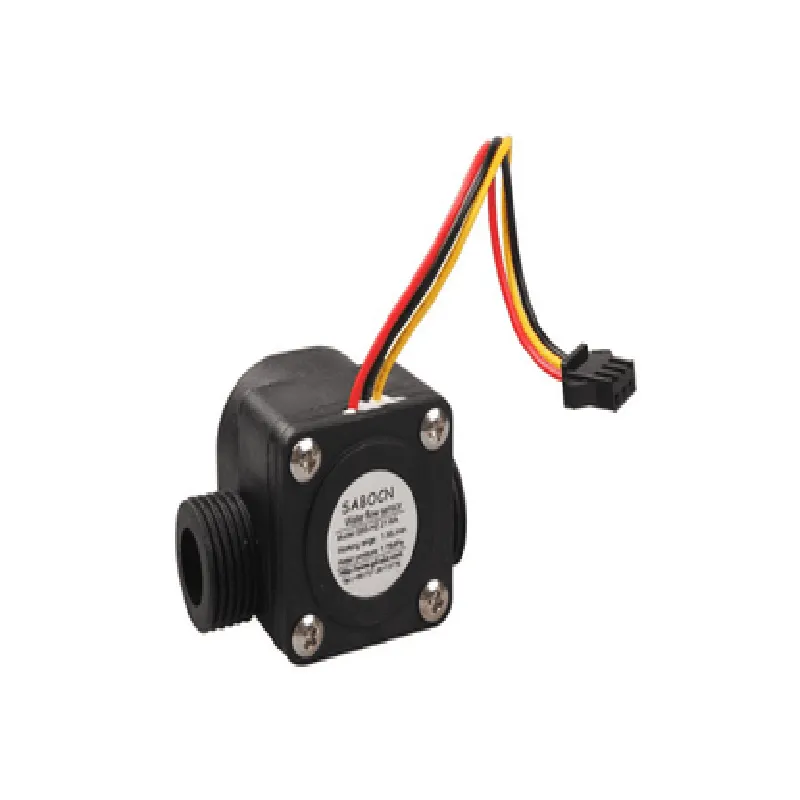
3/4 Inch Water Flow Sensor SEN-HZ43WA

Buy Now on Stufin

Component Description

3/4 Inch Water Flow Sensor SEN-HZ43WA

Overview

The 3/4 Inch Water Flow Sensor SEN-HZ43WA is a highly accurate and reliable sensor designed to measure the flow rate of water in various applications, including industrial, commercial, and residential settings. This sensor is widely used in water management systems, irrigation systems, and HVAC systems to monitor water flow rates, detect leaks, and optimize water usage.

Functionality

The SEN-HZ43WA water flow sensor operates on the principle of magnetic sensing, which detects the movement of water flowing through the sensor's pipe. When water flows through the sensor, it creates a magnetic field that induces a voltage signal proportional to the flow rate. The sensor's internal circuitry processes this signal to provide an accurate measurement of the water flow rate.

Key Features

  • High Accuracy: The SEN-HZ43WA offers high accuracy of 5% of the full scale, ensuring reliable measurements in a wide range of applications.
  • Wide Flow Range: The sensor can measure water flow rates from 0.5 to 30 liters per minute, making it suitable for various applications, from small-scale irrigation systems to large-scale industrial processes.
  • Sturdy Construction: The sensor's body is made of high-quality brass, ensuring durability and resistance to corrosion. The sensor's pipe is made of stainless steel, which provides excellent resistance to wear and tear.
  • Easy Installation: The sensor features a 3/4-inch BSPP male thread, making it easy to install and integrate into existing plumbing systems.
  • Digital Output: The SEN-HZ43WA provides a 5V TTL digital output signal, which can be easily connected to microcontrollers, PLCs, or other automation systems.
  • Low Power Consumption: The sensor operates at a low power consumption of <20mA, making it suitable for battery-powered applications.
  • High-Temperature Resistance: The sensor can operate in temperatures ranging from -20C to 80C, making it suitable for use in various environmental conditions.
  • IP67 Waterproof Rating: The sensor is designed to be waterproof and can withstand immersion in water up to 1 meter, ensuring reliable operation in wet environments.

Technical Specifications

Operating Voltage

5V DC

Current Consumption

<20mA

Flow Range

0.5 to 30 liters per minute

Accuracy

5% of full scale

Response Time

1 second

Output Signal

5V TTL digital output

Thread Size

3/4-inch BSPP male thread

Material

Brass (body), Stainless Steel (pipe)

Operating Temperature

-20C to 80C

Storage Temperature

-30C to 90C

IP Rating

IP67

Applications

The 3/4 Inch Water Flow Sensor SEN-HZ43WA is suitable for use in various applications, including

Water management systems

Irrigation systems

HVAC systems

Industrial processes

Water treatment plants

Agricultural applications

Certifications and Compliance

The SEN-HZ43WA water flow sensor complies with relevant industry standards and regulations, including CE, RoHS, and REACH.

Pin Configuration

  • 3/4 Inch Water Flow Sensor SEN-HZ43WA Pinout and Connection Guide
  • The 3/4 Inch Water Flow Sensor SEN-HZ43WA is a digital flow sensor designed to measure the flow rate of water or other liquids. The sensor has 5 pins, which are described below:
  • Pinout:
  • 1. VCC (Red Wire):
  • Function: Power Supply
  • Description: This pin is used to connect the positive power supply (VCC) to the sensor. Typically, a voltage range of 3.3V to 5V is recommended.
  • Connection: Connect to the positive terminal of the power supply (e.g., Arduino 5V or 3.3V pin)
  • 2. GND (Black Wire):
  • Function: Ground
  • Description: This pin is used to connect the ground (GND) of the sensor to the system's ground.
  • Connection: Connect to the negative terminal of the power supply (e.g., Arduino GND pin)
  • 3. SIG (Yellow Wire):
  • Function: Signal Output
  • Description: This pin provides a digital signal output, which indicates the flow rate of the liquid. The output is a pulse signal, where the frequency of the pulses is proportional to the flow rate.
  • Connection: Connect to a digital input pin on a microcontroller (e.g., Arduino Uno's digital pin 2)
  • 4. NC (White Wire):
  • Function: Not Connected
  • Description: This pin is not internally connected and should be left unconnected.
  • Connection: Leave unconnected
  • 5. NC (Green Wire):
  • Function: Not Connected
  • Description: This pin is not internally connected and should be left unconnected.
  • Connection: Leave unconnected
  • Connecting the Pins:
  • To connect the pins, follow these steps:
  • 1. Connect the VCC (Red Wire) to a power supply (e.g., Arduino 5V pin).
  • 2. Connect the GND (Black Wire) to the system's ground (e.g., Arduino GND pin).
  • 3. Connect the SIG (Yellow Wire) to a digital input pin on a microcontroller (e.g., Arduino Uno's digital pin 2).
  • 4. Leave the NC (White Wire) and NC (Green Wire) unconnected.
  • Important Notes:
  • Make sure to use a suitable power supply that matches the recommended voltage range (3.3V to 5V).
  • Use appropriate wiring and connectors to ensure reliable connections.
  • Avoid reversing the power supply connections (VCC and GND) to prevent damage to the sensor.
  • The sensor requires a minimum flow rate of 0.5 L/min to operate accurately.
  • For accurate measurements, ensure the sensor is properly installed and the liquid flow is smooth and consistent.

Code Examples

3/4 Inch Water Flow Sensor SEN-HZ43WA Documentation
Overview
The 3/4 Inch Water Flow Sensor SEN-HZ43WA is a Hall effect-based flow sensor designed to measure the flow rate of water in pipes. It's commonly used in IoT applications such as water management systems, irrigation systems, and industrial automation. This sensor provides a pulse output proportional to the flow rate, making it easy to integrate into various microcontroller-based projects.
Technical Specifications
Flow range: 1-30 L/min
 Pulse output: 1 pulse per 2.25 mL of water flow
 Power supply: 5-24V DC
 Operating temperature: -25C to 80C
 Pipe size: 3/4 inch
 Connection type: G3/4"
Wiring Diagram
To connect the sensor to a microcontroller, follow the wiring diagram below:
```
  +-----------+
  |          |
  |  SEN-HZ43WA  |
  |          |
  +-----------+
          |
          |
          v
  +-----------+
  |          |
  |  Microcontroller  |
  |  (e.g., Arduino)  |
  +-----------+
          |
          |
          v
  +-----------+
  |          |
  |  Power Supply  |
  |  (5-24V DC)    |
  +-----------+
```
Example 1: Measuring Water Flow Rate with Arduino
In this example, we'll use an Arduino Uno board to measure the water flow rate using the SEN-HZ43WA sensor.
```c++
const int flowSensorPin = 2;  // Pin 2 for pulse input
volatile int pulseCount = 0;
void setup() {
  Serial.begin(9600);
  attachInterrupt(digitalPinToInterrupt(flowSensorPin), pulseCounter, RISING);
}
void loop() {
  pulseCount = 0;
  delay(1000);  // Take a 1-second sample
  float flowRate = (pulseCount / 7.5);  // Convert pulses to L/min
  Serial.print("Flow rate: ");
  Serial.print(flowRate);
  Serial.println(" L/min");
}
void pulseCounter() {
  pulseCount++;
}
```
In this example, we're using the Arduino's built-in interrupt capability to count the pulses from the sensor. The `pulseCounter()` function increments the `pulseCount` variable whenever a pulse is detected. In the `loop()` function, we take a 1-second sample of the pulse count and calculate the flow rate in liters per minute.
Example 2: Water Flow Monitoring with Raspberry Pi and Python
In this example, we'll use a Raspberry Pi board to monitor the water flow rate using the SEN-HZ43WA sensor and Python.
```python
import RPi.GPIO as GPIO
import time
GPIO.setmode(GPIO.BCM)
FLOW_SENSOR_PIN = 17  # GPIO 17 for pulse input
GPIO.setup(FLOW_SENSOR_PIN, GPIO.IN, pull_up_down=GPIO.PUD_UP)
pulse_count = 0
def pulse_counter(channel):
    global pulse_count
    pulse_count += 1
GPIO.add_event_detect(FLOW_SENSOR_PIN, GPIO.RISING, callback=pulse_counter)
while True:
    pulse_count = 0
    time.sleep(1)  # Take a 1-second sample
    flow_rate = pulse_count / 7.5  # Convert pulses to L/min
    print("Flow rate: {:.2f} L/min".format(flow_rate))
```
In this example, we're using the RPi.GPIO library to set up GPIO 17 as an input with a pull-up resistor. We then define a callback function `pulse_counter()` to increment the `pulse_count` variable whenever a pulse is detected. In the main loop, we take a 1-second sample of the pulse count and calculate the flow rate in liters per minute.
Note: In both examples, you'll need to adjust the power supply and wiring according to your specific setup. Additionally, make sure to calibrate the sensor according to the manufacturer's instructions for accurate flow rate measurements.