Durable steel and ergonomic rubber grip


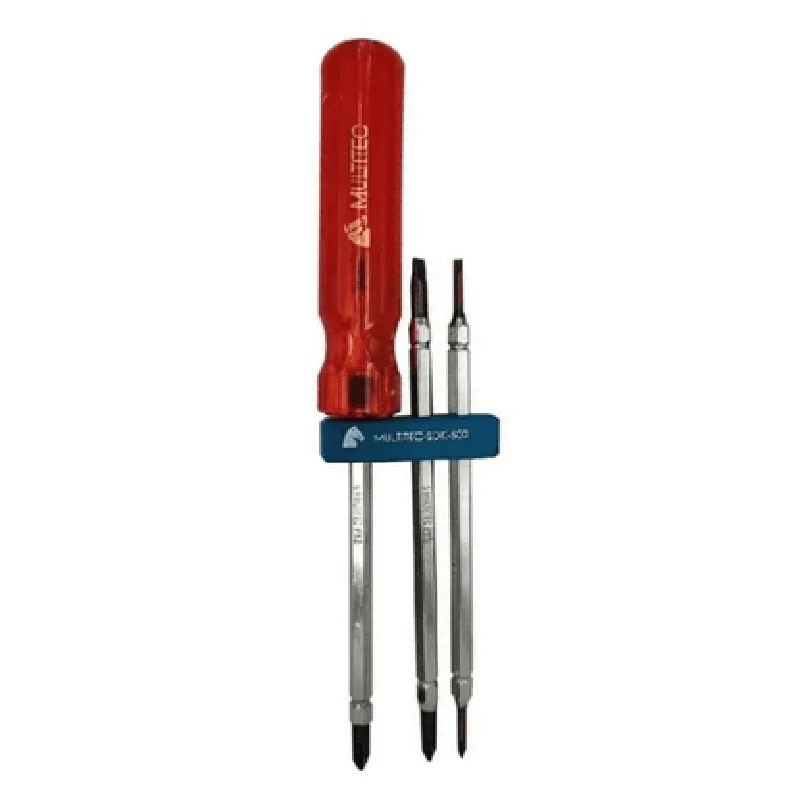
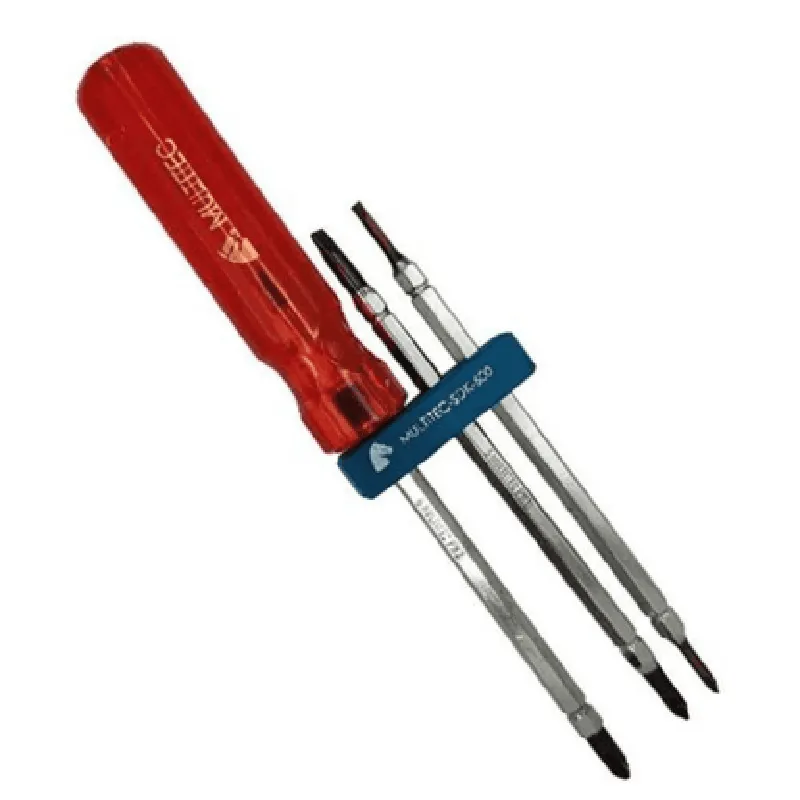
Durable steel and ergonomic rubber grip
1/4" (6.35 mm)
Flathead, Phillips, Torx, Hex, Tri-Wing, and Pentalobe
0.5 Nm to 5 Nm (adjustable)
5mm, 3V, 20mA
-20C to 60C (-4F to 140F)
150 mm x 80 mm x 30 mm (5.9 in x 3.1 in x 1.2 in)
Application
| The Multitec SDK-600 Screw Driver Set is ideal for various IoT-related applications, including |
IoT device development and prototyping
IoT device installation, maintenance, and repair
Precision adjustment and calibration of IoT devices
Troubleshooting and debugging IoT systems
Warranty and Support
The Multitec SDK-600 Screw Driver Set comes with a 2-year limited warranty and dedicated customer support. For more information, please visit the manufacturer's website or contact their support team.
Multitec SDK-600 Screw Driver Set DocumentationOverviewThe Multitec SDK-600 Screw Driver Set is a versatile IoT component designed for remote control and automation of screwdriving applications. This SDK provides a comprehensive set of tools for developers to integrate screwdriving functionality into their IoT projects.Technical SpecificationsCommunication Protocol: Wi-Fi, Bluetooth 5.0, and UART
Operating Voltage: 5V DC
Current Consumption: 100mA (average)
Screwdriver Bits: 6 bits (PH0, PH1, PH2, PZ0, PZ1, PZ2)
Torque Range: 0.5 Nm to 10 Nm
Rotation Speed: 100 rpm to 1000 rpmProgramming Languages SupportedC++
Python
Java
C#Code Examples### Example 1: Basic Screwdriving using PythonIn this example, we will demonstrate how to use the Multitec SDK-600 Screw Driver Set to screw a part using Python.Hardware Requirements:Multitec SDK-600 Screw Driver Set
Raspberry Pi or compatible single-board computer
Wi-Fi or Bluetooth connectivitySoftware Requirements:Python 3.x
PySerial library (for UART communication)Code:
```python
import serial# Establish UART connection with the Multitec SDK-600
ser = serial.Serial('/dev/ttyUSB0', 9600, timeout=1)# Set screwdriver bit to PH1
ser.write(b'BIT_PH1
')# Set torque to 2 Nm
ser.write(b'TORQUE_2NM
')# Set rotation speed to 500 rpm
ser.write(b'SPEED_500RPM
')# Start screwing
ser.write(b'SCREW_IN
')# Wait for screwing to complete
while True:
response = ser.readline()
if response == b'SCREW_DONE
':
break# Release screwdriver
ser.write(b'RELEASE
')
```
### Example 2: IoT-based Screwdriving Automation using C++In this example, we will demonstrate how to use the Multitec SDK-600 Screw Driver Set to automate screwdriving tasks using C++ and Wi-Fi connectivity.Hardware Requirements:Multitec SDK-600 Screw Driver Set
ESP32 or compatible microcontroller
Wi-Fi connectivitySoftware Requirements:C++ compiler
Wi-Fi library (e.g., WiFi.h)Code:
```c
#include <WiFi.h>// Define Wi-Fi credentials
const char ssid = "your_wifi_ssid";
const char password = "your_wifi_password";// Define screwdriver Bit and Torque settings
const char bitSetting = "BIT_PH1";
const char torqueSetting = "TORQUE_2NM";// Establish Wi-Fi connection
WiFi.begin(ssid, password);
while (WiFi.status() != WL_CONNECTED) {
delay(1000);
Serial.println("Connecting to Wi-Fi...");
}// Connect to Multitec SDK-600 via Wi-Fi
client.connect("sdk600.local", 8080);// Set screwdriver bit and torque
client.println(bitSetting);
client.println(torqueSetting);// Start screwing
client.println("SCREW_IN");// Wait for screwing to complete
while (client.available() == 0) {
delay(100);
}// Release screwdriver
client.println("RELEASE");// Close Wi-Fi connection
client.stop();
```
Note: The above examples demonstrate basic usage of the Multitec SDK-600 Screw Driver Set. Please refer to the component's datasheet and documentation for more advanced features and configuration options.