

Stufin
Home Quick Cart Profile

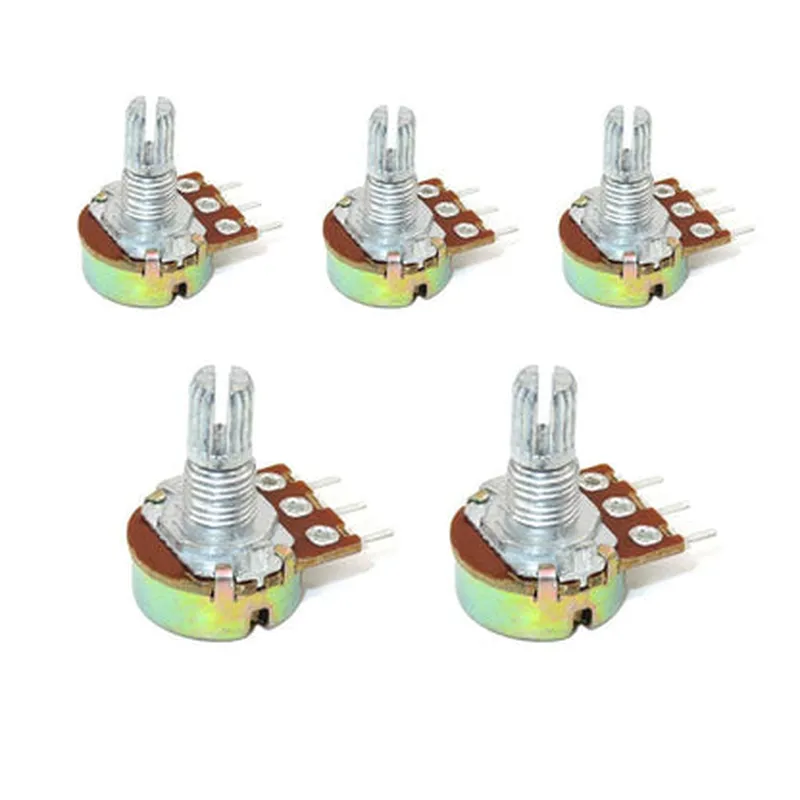
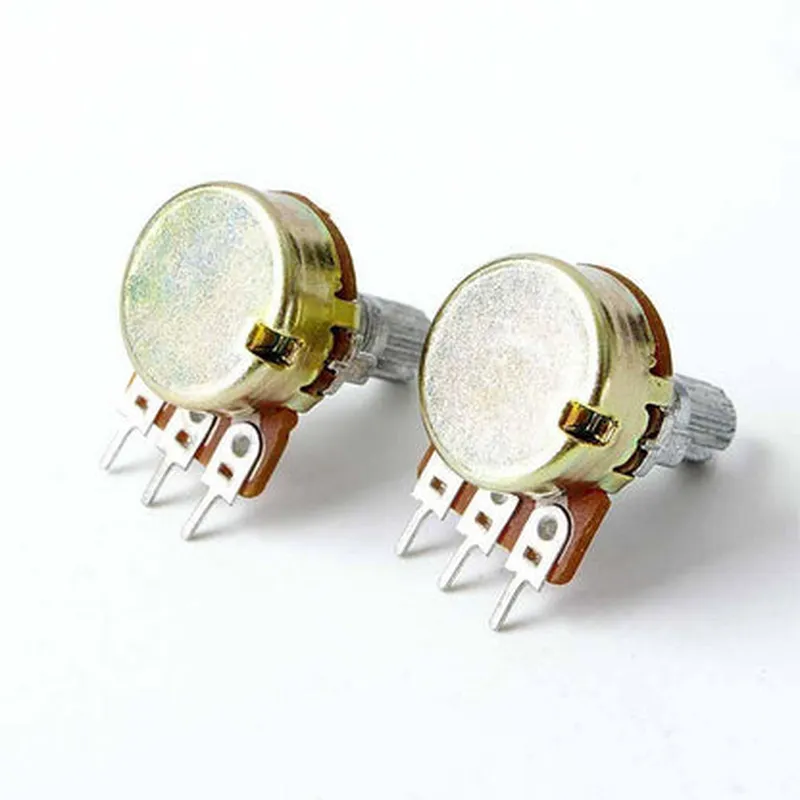
100 Ohm Pot Potentiometer - (Pack of 5)

Buy Now on Stufin

Component Name

100 Ohm Pot Potentiometer (Pack of 5)

Overview

The 100 Ohm Pot Potentiometer is a variable resistor component used to control and regulate voltage levels in a wide range of electronic circuits. This pack of 5 potentiometers provides a cost-effective solution for prototyping, testing, and development of IoT projects. Each potentiometer features a compact design, making it ideal for space-constrained applications.

Functionality

A potentiometer is a type of variable resistor that allows the user to adjust the resistance value by rotating a knob or shaft. The 100 Ohm Pot Potentiometer works by dividing the input voltage into two parts, with one part being connected to the wiper terminal and the other part being connected to the other two terminals. As the user rotates the knob, the wiper terminal moves along the resistive track, changing the resistance value and output voltage.

Key Features

  • Resistance Value: 100 Ohms
  • Power Rating: 0.5 W
  • Tolerance: 20%
  • Operating Temperature: -20C to 70C
  • Rotation Angle: 300
  • Shaft Type: Knob with flat shaft
  • Termination Style: Through-hole
  • Package Type: Radial
  • Dimension: 9.5 mm (Diameter) x 15.5 mm (Height)
  • Weight: Approximately 5 grams per unit

Electrical Characteristics

  • Resistance Taper: Logarithmic
  • Linearity: 20%
  • Noise Reduction: Internal noise reduction module
  • Dielectric Strength: 500 Vrms (1 minute)

Mechanical Characteristics

  • Shaft Material: Brass
  • Bush Material: Plastic
  • Terminal Material: Tin-plated copper

Applications

  • Audio Equipment: Volume control, tone control, and balance control
  • Industrial Automation: Position sensors, speed control, and voltage regulation
  • Medical Devices: Patient monitoring systems, medical imaging equipment, and hospital lighting control
  • Consumer Electronics: Remote controls, gaming consoles, and set-top boxes
  • IoT Projects: Robotics, drones, and automation systems

Packaging and Storage

The 100 Ohm Pot Potentiometer is packed in a anti-static bag with five units per pack. Store the components in a cool, dry place away from direct sunlight and moisture. Avoid exposing the components to mechanical stress, vibration, or impact.

Warranty and Support

The component is covered under a 1-year warranty against manufacturing defects. For technical support, documentation, and repair services, please contact the manufacturer or authorized distributor.

By using this 100 Ohm Pot Potentiometer, you can effectively control and regulate voltage levels in your IoT projects, ensuring reliable and efficient performance.

Pin Configuration

  • 100 Ohm Pot Potentiometer - (Pack of 5) Documentation
  • Pin Description:
  • The 100 Ohm Pot Potentiometer is a three-terminal device with the following pins:
  • Pin 1: Terminal 1 (T1)
  • Function: One end of the resistive track
  • Description: This pin is connected to one end of the resistive track inside the potentiometer.
  • Pin 2: Wiper (W)
  • Function: Moving contact that divides the resistive track
  • Description: This pin is connected to the wiper, which is the moving contact that divides the resistive track into two parts. The wiper is mechanically connected to the shaft of the potentiometer.
  • Pin 3: Terminal 2 (T2)
  • Function: Other end of the resistive track
  • Description: This pin is connected to the other end of the resistive track inside the potentiometer.
  • Connection Structure:
  • Here's a step-by-step guide to connecting the pins:
  • Connection Diagram:
  • Step 1: Connect VCC to Terminal 1 (T1)
  • Connect the positive voltage supply (VCC) to Pin 1 (Terminal 1, T1). This pin is the fixed end of the resistive track.
  • Step 2: Connect Wiper (W) to the Output
  • Connect Pin 2 (Wiper, W) to the output device or circuit. The wiper is the moving contact that divides the resistive track, and its position determines the output voltage.
  • Step 3: Connect Ground to Terminal 2 (T2)
  • Connect the ground (GND) to Pin 3 (Terminal 2, T2). This pin is the other fixed end of the resistive track.
  • Important Notes:
  • The potentiometer acts as a voltage divider, and the output voltage at the wiper (Pin 2) is determined by the position of the wiper.
  • The output voltage will be proportional to the position of the shaft, with 0 Ohms at one end and 100 Ohms at the other end.
  • Make sure to use the correct voltage rating and current handling when using this potentiometer in your circuit.
  • By following these connection steps, you can effectively use the 100 Ohm Pot Potentiometer in your IoT project.

Code Examples

Component Documentation: 100 Ohm Pot Potentiometer (Pack of 5)
Overview
The 100 Ohm Pot Potentiometer is a rotary potentiometer with a linear taper that provides a variable resistance output. This component is commonly used in a wide range of IoT applications, including robotics, automation, and sensor systems. The pack of 5 potentiometers offers flexibility and convenience for prototyping and development.
pinout
The potentiometer has three terminals:
Terminal 1 (CCW): Counter-clockwise terminal
 Terminal 2 (Wiper): Middle terminal connected to the moving contact
 Terminal 3 (CW): Clockwise terminal
Electrical Characteristics
Resistance: 100 Ohms
 Power Rating: 0.5 Watts
 Operating Temperature: -20C to 70C
 Rotation Angle: 300
 Angular Displacement: 10 to 320
Using the 100 Ohm Pot Potentiometer in Various Contexts
Here are three code examples that demonstrate how to use the 100 Ohm Pot Potentiometer in different contexts:
### Example 1: Analog Input using Arduino
Hardware Requirements
Arduino Board (e.g., Arduino Uno)
 100 Ohm Pot Potentiometer
 Breadboard and jumper wires
Code
```c
const int potPin = A0;  // Analog input pin
void setup() {
  Serial.begin(9600);
}
void loop() {
  int sensorValue = analogRead(potPin);
  int outputValue = map(sensorValue, 0, 1023, 0, 100);
  Serial.print("Potentiometer value: ");
  Serial.print(outputValue);
  Serial.println(" Ohms");
  delay(50);
}
```
In this example, the potentiometer is connected to an analog input pin on the Arduino board. The `analogRead()` function reads the voltage value from the potentiometer and maps it to a resistance value between 0 and 100 Ohms. The output value is then printed to the serial console.
### Example 2: Voltage Divider Circuit using Raspberry Pi (Python)
Hardware Requirements
Raspberry Pi (e.g., Raspberry Pi 3)
 100 Ohm Pot Potentiometer
 Breadboard and jumper wires
 1 k resistor
Code
```python
import RPi.GPIO as GPIO
GPIO.setmode(GPIO.BCM)
pot_pin = 17  # GPIO 17 as input
GPIO.setup(pot_pin, GPIO.IN)
def read_potentiometer():
  voltage_divider = ((GPIO.input(pot_pin) / 1023.0)  3.3)
  resistance = voltage_divider / (1 - voltage_divider)
  return resistance
while True:
  resistance = read_potentiometer()
  print("Potentiometer value: {:.2f} Ohms".format(resistance))
  time.sleep(0.5)
```
In this example, the potentiometer is connected to a voltage divider circuit comprising a 1 k resistor and the Raspberry Pi's GPIO pin. The `read_potentiometer()` function calculates the resistance value based on the voltage divider principle. The output value is then printed to the console.
### Example 3: Pulse-Width Modulation (PWM) using ESP32 (MicroPython)
Hardware Requirements
ESP32 Board (e.g., ESP32 DevKitC)
 100 Ohm Pot Potentiometer
 Breadboard and jumper wires
 LED and resistor for testing PWM output
Code
```python
import machine
import utime
pot_pin = machine.Pin(32)  # GPIO 32 as analog input
pwm_pin = machine.Pin(25)  # GPIO 25 as PWM output
pwm = machine.PWM(pwm_pin, freq=500)
def read_potentiometer():
  adc_value = pot_pin.read_u16()
  return adc_value / 4095.0
while True:
  resistance = read_potentiometer()
  duty_cycle = int(resistance  100)
  pwm.duty(duty_cycle)
  utime.sleep_ms(50)
```
In this example, the potentiometer is connected to an analog input pin on the ESP32 board. The `read_potentiometer()` function reads the ADC value and scales it to a resistance value between 0 and 100 Ohms. The duty cycle of the PWM output is then set based on the resistance value, which can be used to control an LED's brightness or other applications.