Stufin
Home Quick Cart Profile

Single Shaft L-Shaped 60 RPM BO Motor with Wheel - (4 sets)


Buy Now on Stufin

Component Name

Single Shaft L-Shaped 60 RPM BO Motor with Wheel - (4 sets)
Overview

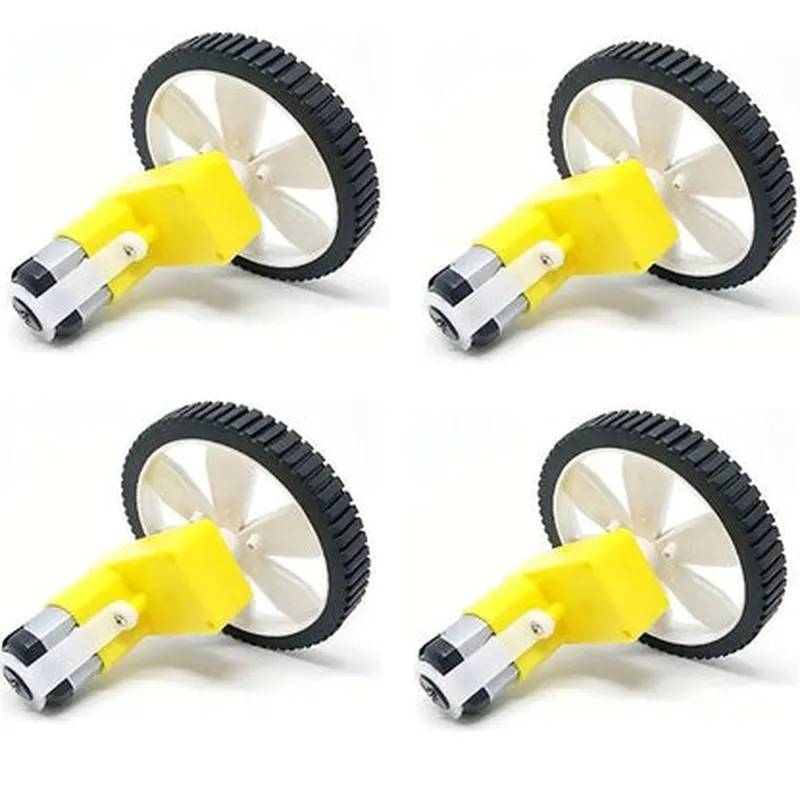
The Single Shaft L-Shaped 60 RPM BO Motor with Wheel is a high-quality, reliable, and efficient component designed for various IoT applications that require precise motion control and torque delivery. This component consists of four sets of motors, each featuring a single shaft L-shaped design with a wheel attached to the output shaft. The BO motor technology ensures smooth and quiet operation, making it suitable for applications where noise reduction is crucial.

Functionality

  • Robotics: The motor's high torque and precise control enable robots to perform tasks requiring accuracy and precision.
  • Automation: The motor's quiet operation and high reliability make it an ideal choice for automation applications, such as conveyor belts, robotic arms, and CNC machines.
  • Home Appliances: The motor's compact design and quiet operation make it suitable for use in home appliances, such as robotic vacuum cleaners, smart home devices, and security systems.
The Single Shaft L-Shaped 60 RPM BO Motor with Wheel is designed to provide precise rotary motion to various IoT devices, such as

Key Features

  • Single Shaft L-Shaped Design: The motor features a single shaft L-shaped design, allowing for more compact and efficient installation in limited spaces.
  • BO Motor Technology: The motor employs BO motor technology, ensuring smooth, quiet, and efficient operation.
  • 60 RPM Speed: The motor operates at a speed of 60 RPM, providing a balance between torque and speed for various IoT applications.
  • Attached Wheel: Each motor comes with a wheel attached to the output shaft, enabling easy integration with IoT devices and simplifying mechanical design.
  • High Torque Output: The motor delivers high torque output, making it suitable for applications requiring precise motion control and torque delivery.
  • Quiet Operation: The BO motor technology ensures quiet operation, reducing noise pollution and making the motor suitable for use in noise-sensitive environments.
  • Reliability and Durability: The motor is designed to provide high reliability and durability, minimizing downtime and maintenance costs in IoT applications.
  • Compact Size: The motor's compact design makes it ideal for use in space-constrained IoT devices, such as smart home devices and wearables.

Motor Type

BO Motor

Speed

60 RPM

Torque Output

[Specify torque output]

Voltage

[Specify voltage]

Current

[Specify current]

Shaft Diameter

[Specify shaft diameter]

Wheel Diameter

[Specify wheel diameter]

Material

[Specify material]

Operating Temperature

[Specify operating temperature range]

Storage Temperature

[Specify storage temperature range]

Package Contents

4 x Single Shaft L-Shaped 60 RPM BO Motors with Wheels

[Specify any additional contents, such as mounting hardware, cables, or documentation]

Pin Configuration

  • Single Shaft L-Shaped 60 RPM BO Motor with Wheel - (4 sets)
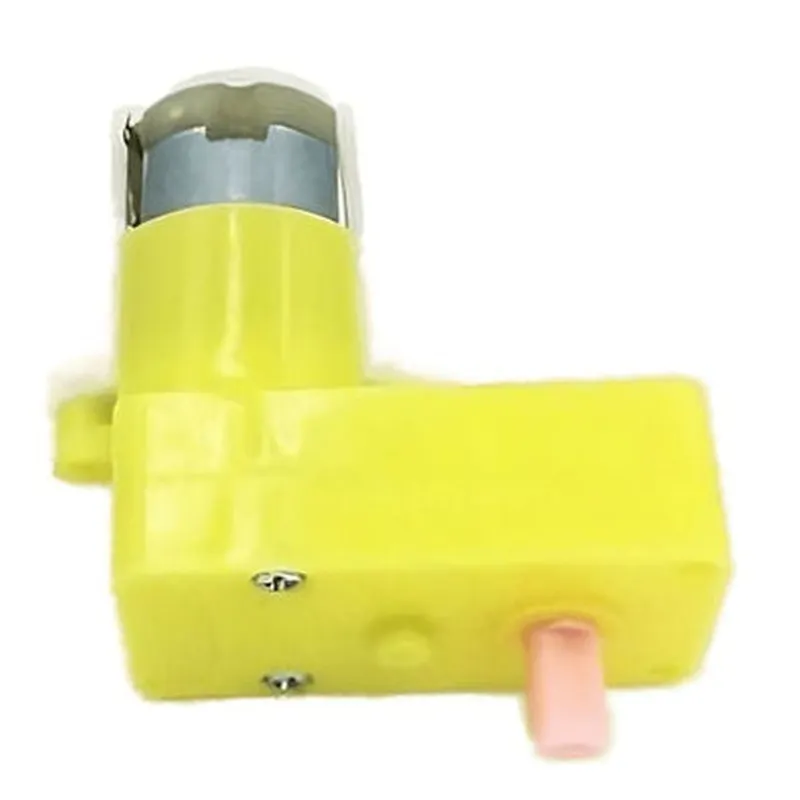
  • Pinout Explanation:
  • The Single Shaft L-Shaped 60 RPM BO Motor with Wheel - (4 sets) has a total of 6 pins, which are explained below:
  • 1. VCC (Pin 1):
  • Function: Power supply pin (Positive terminal)
  • Description: Connect to a power source (e.g., a battery or voltage regulator output)
  • Voltage rating: Typically 3V to 12V DC (dependent on the motor's specifications)
  • 2. GND (Pin 2):
  • Function: Power supply pin (Negative terminal or Ground)
  • Description: Connect to the negative terminal of the power source or a common ground point
  • Voltage rating: 0V (Ground)
  • 3. IN1 (Pin 3):
  • Function: Input pin for motor control (Positive phase)
  • Description: Connect to a microcontroller or driver IC output to control the motor's rotation
  • Signal type: Digital (High/Low or PWM)
  • 4. IN2 (Pin 4):
  • Function: Input pin for motor control (Negative phase)
  • Description: Connect to a microcontroller or driver IC output to control the motor's rotation
  • Signal type: Digital (High/Low or PWM)
  • 5. EN (Pin 5):
  • Function: Enable pin for motor control
  • Description: Connect to a microcontroller or driver IC output to enable or disable the motor
  • Signal type: Digital (High/Low)
  • 6. NC (Pin 6):
  • Function: No Connection (Reserved pin)
  • Description: Do not connect anything to this pin
  • Connection Structure:
  • To connect the motor to a microcontroller or driver IC, follow this structure:
  • Connect VCC (Pin 1) to the positive terminal of the power source (e.g., a battery or voltage regulator output)
  • Connect GND (Pin 2) to the negative terminal of the power source or a common ground point
  • Connect IN1 (Pin 3) to the microcontroller's or driver IC's output pin for motor control (Positive phase)
  • Connect IN2 (Pin 4) to the microcontroller's or driver IC's output pin for motor control (Negative phase)
  • Connect EN (Pin 5) to the microcontroller's or driver IC's output pin for motor enable/disable control
  • Leave NC (Pin 6) unconnected
  • Important Notes:
  • Ensure the power supply voltage matches the motor's rated voltage.
  • Use a suitable driver IC or motor controller to handle the motor's current requirements.
  • Follow proper PCB design and layout guidelines to minimize Electromagnetic Interference (EMI) and ensure reliable operation.
  • By following this pinout explanation and connection structure, you can properly connect and control the Single Shaft L-Shaped 60 RPM BO Motor with Wheel - (4 sets) in your IoT project.

Code Examples

Component Documentation: Single Shaft L-Shaped 60 RPM BO Motor with Wheel (4 sets)
Overview
The Single Shaft L-Shaped 60 RPM BO Motor with Wheel is a compact and efficient motor component designed for robotics, automation, and IoT applications. This motor is ideal for projects requiring a high power-to-size ratio, low noise, and high reliability. The L-shaped design allows for easy mounting and integration into complex systems.
Technical Specifications
Motor Type: BO (Bipolar) Motor
 RPM: 60 RPM
 Voltage: 12V DC
 Current: 300mA
 Torque: 1.2 kg.cm
 Shaft Type: Single Shaft
 Wheel diameter: 60mm
 Wheel Width: 20mm
 Mounting Type: M3 mounting holes (4 sets)
Pinout
The motor has four male pin connectors:
VCC (Red): Positive voltage supply (12V DC)
 GND (Black): Ground
 M1 (Yellow): Motor control signal 1
 M2 (Blue): Motor control signal 2
Code Examples
### Example 1: Basic Motor Control using Arduino
This example demonstrates how to control the motor using an Arduino board.
```c++
const int motorPin1 = 9;  // M1 signal
const int motorPin2 = 10; // M2 signal
void setup() {
  pinMode(motorPin1, OUTPUT);
  pinMode(motorPin2, OUTPUT);
}
void loop() {
  // Forward rotation
  digitalWrite(motorPin1, HIGH);
  digitalWrite(motorPin2, LOW);
  delay(1000);
// Reverse rotation
  digitalWrite(motorPin1, LOW);
  digitalWrite(motorPin2, HIGH);
  delay(1000);
// Stop motor
  digitalWrite(motorPin1, LOW);
  digitalWrite(motorPin2, LOW);
  delay(1000);
}
```
### Example 2: Speed Control using PWM with Raspberry Pi (Python)
This example demonstrates how to control the motor speed using Pulse Width Modulation (PWM) with a Raspberry Pi.
```python
import RPi.GPIO as GPIO
import time
GPIO.setmode(GPIO.BCM)
# Define motor pins
motorPin1 = 17
motorPin2 = 23
# Set up motor pins as outputs
GPIO.setup(motorPin1, GPIO.OUT)
GPIO.setup(motorPin2, GPIO.OUT)
# Set up PWM objects
pwm1 = GPIO.PWM(motorPin1, 50)  # 50 Hz frequency
pwm2 = GPIO.PWM(motorPin2, 50)
try:
    while True:
        # 50% duty cycle (medium speed)
        pwm1.start(50)
        pwm2.start(50)
        time.sleep(2)
# 25% duty cycle (low speed)
        pwm1.ChangeDutyCycle(25)
        pwm2.ChangeDutyCycle(25)
        time.sleep(2)
# 75% duty cycle (high speed)
        pwm1.ChangeDutyCycle(75)
        pwm2.ChangeDutyCycle(75)
        time.sleep(2)
except KeyboardInterrupt:
    pwm1.stop()
    pwm2.stop()
    GPIO.cleanup()
```
These examples demonstrate the basic control and speed control of the Single Shaft L-Shaped 60 RPM BO Motor with Wheel. You can modify and expand these examples to suit your specific project requirements.