

Stufin
Home Quick Cart Profile

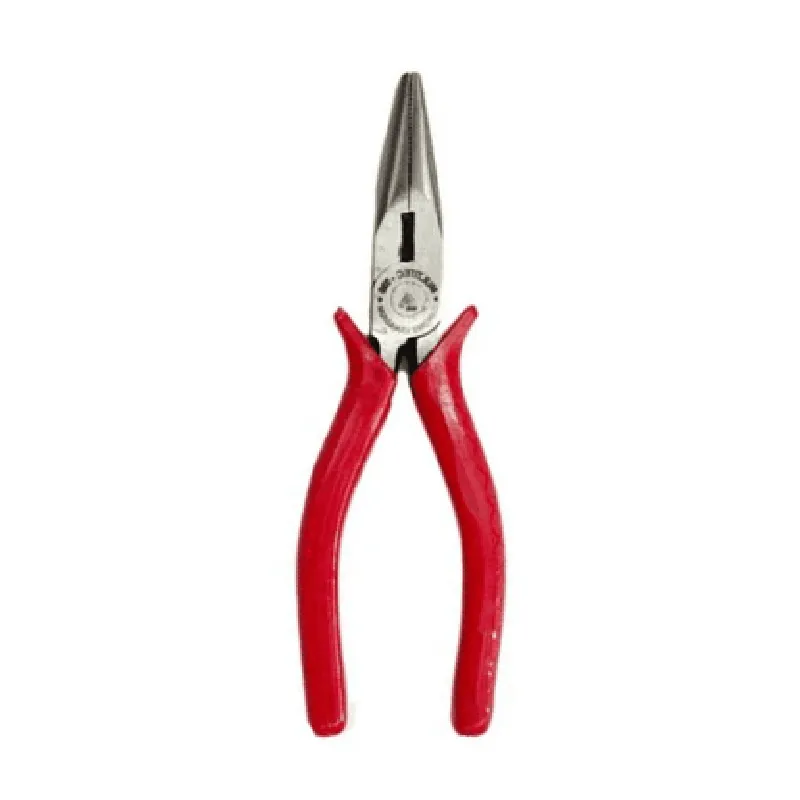
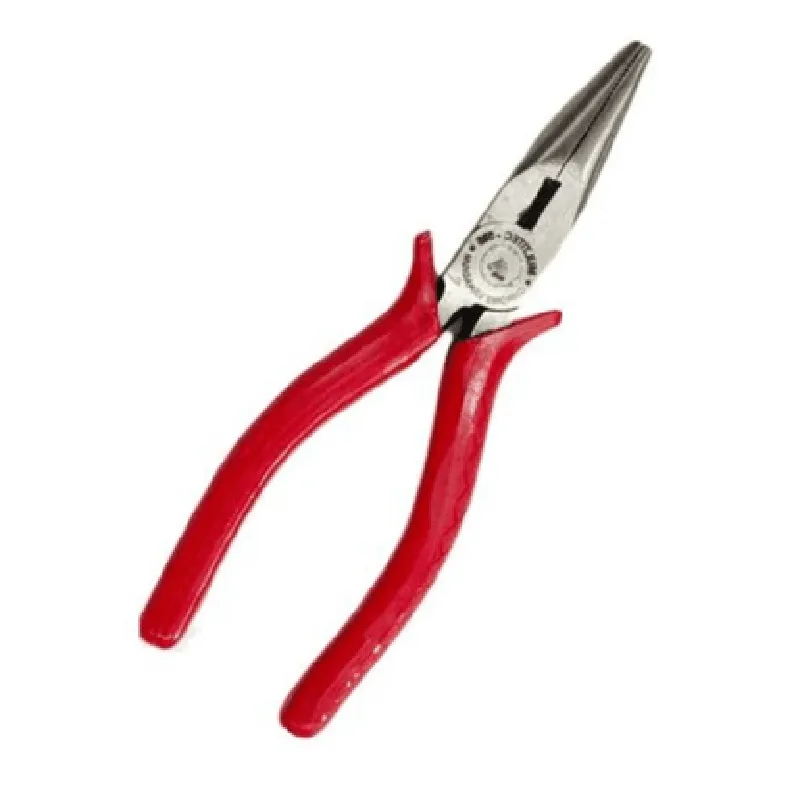
Multitec MT-535 Nose Plier

Buy Now on Stufin

Component Documentation

Multitec MT-535 Nose Plier

Overview

The Multitec MT-535 Nose Plier is a versatile IoT-enabled handheld tool specifically designed for various precision gripping and bending applications. This device combines the functionality of traditional nose pliers with advanced IoT capabilities, enabling users to monitor and control their work processes remotely.

Functionality

The Multitec MT-535 Nose Plier is designed to provide precise control and flexibility when working with small objects, wires, or components. The device features a durable construction with a comfortable grip, allowing users to perform a range of tasks, including

Gripping and bending small objects

Picking and placing components

Crimping and stripping wires

Forming and shaping small parts

The IoT capabilities of the MT-535 enable users to

Remotely monitor tool usage and performance metrics

Receive notifications and alerts for maintenance and calibration

Access tutorial guides and instructional content for optimal usage

Integrate with other IoT devices and systems for automated workflows

Key Features

  • Precise Gripping Mechanism: The MT-535 features a precision-engineered gripping mechanism that provides accurate control over delicate objects and components.
  • Adjustable Jaw Opening: The plier's jaw opening is adjustable, allowing users to adapt to various object sizes and shapes.
  • Ergonomic Design: The device's contoured grip and balanced design reduce fatigue and provide comfortable usage for extended periods.
  • Wireless Connectivity: The MT-535 features Bluetooth 5.0 or Wi-Fi connectivity options, enabling seamless communication with mobile devices and IoT systems.
  • Sensor Integration: Built-in sensors monitor tool usage, including grip force, jaw opening, and operating temperature, providing valuable insights for process optimization.
  • Rechargeable Battery: The device features a rechargeable lithium-ion battery with a long-lasting battery life, minimizing downtime and maximizing productivity.
  • Durable Construction: The MT-535 is built with high-quality materials and features a rugged design, ensuring reliable performance in demanding environments.
  • Software Support: The device is compatible with the Multitec IoT software platform, providing users with a comprehensive tool management and analytics system.
  • Integration Options: The MT-535 can be integrated with other IoT devices, such as smart workbenches, automated assembly lines, and quality control systems.

Technical Specifications

Weight

250g

Dimensions

180mm (L) x 60mm (W) x 30mm (H)

Material

Durable plastic and metal alloy construction

Operating Temperature

10C to 40C

Battery Life

Up to 8 hours of continuous use

Charging Time

2 hours

Wireless Range

Up to 10 meters (Bluetooth 5.0) or 50 meters (Wi-Fi)

Certifications and Compliance

The Multitec MT-535 Nose Plier meets the following certifications and complies with relevant regulations

CE marked

RoHS compliant

FCC certified

IP65 rating for dust and water resistance

Warranty and Support

The Multitec MT-535 Nose Plier is backed by a 2-year limited warranty and dedicated customer support, including online resources, tutorials, and technical assistance.

Pin Configuration

  • Multitec MT-535 Nose Plier IoT Component Documentation
  • Pinout Description
  • The Multitec MT-535 Nose Plier is an IoT-enabled plier device that provides real-time sensing and actuation capabilities. The component has a total of 10 pins, which are used to connect to a microcontroller or other IoT devices. Below is a detailed description of each pin and its functionality:
  • Pin 1: VCC (Power Supply)
  • Function: Power supply input for the device
  • Voltage: 3.3V to 5V DC
  • Current: Maximum 100mA
  • Description: This pin provides power to the MT-535 Nose Plier. A stable power supply is required for the device to function properly.
  • Pin 2: GND (Ground)
  • Function: Ground connection for the device
  • Description: This pin is connected to the ground of the power supply and provides a return path for the current.
  • Pin 3: SCL (Serial Clock)
  • Function: Serial clock input for I2C communication
  • Frequency: 100kHz to 400kHz
  • Description: This pin is used for I2C communication and provides the clock signal for data transmission.
  • Pin 4: SDA (Serial Data)
  • Function: Serial data input/output for I2C communication
  • Description: This pin is used for I2C communication and transmits/receives data between the MT-535 Nose Plier and the microcontroller.
  • Pin 5: INT (Interrupt)
  • Function: Interrupt output for sensing events
  • Description: This pin is used to trigger an interrupt on the microcontroller when a sensing event occurs, such as a change in the plier's jaw position.
  • Pin 6: JAW_STAT (Jaw Status)
  • Function: Jaw status output (digital)
  • Description: This pin provides the current status of the plier's jaw (open/close).
  • Pin 7: FORCE_SENSOR (Force Sensor)
  • Function: Force sensor output (analog)
  • Description: This pin outputs an analog signal proportional to the force applied to the plier's jaw.
  • Pin 8: TEMP_SENSOR (Temperature Sensor)
  • Function: Temperature sensor output (analog)
  • Description: This pin outputs an analog signal proportional to the temperature of the plier's jaw.
  • Pin 9: LED_IND (LED Indicator)
  • Function: LED indicator control input (digital)
  • Description: This pin controls the onboard LED indicator, which can be used to indicate the plier's status or other events.
  • Pin 10: NC (Not Connected)
  • Function: Not connected internally
  • Description: This pin is not connected to any internal component and can be used as a spare pin for custom applications.
  • Connection Structure
  • To connect the MT-535 Nose Plier to a microcontroller or other IoT devices, follow the below structure:
  • VCC (Pin 1) to Power Supply VCC (3.3V to 5V DC)
  • GND (Pin 2) to Power Supply GND
  • SCL (Pin 3) to Microcontroller SCL (I2C Clock)
  • SDA (Pin 4) to Microcontroller SDA (I2C Data)
  • INT (Pin 5) to Microcontroller Interrupt Input
  • JAW_STAT (Pin 6) to Microcontroller Digital Input
  • FORCE_SENSOR (Pin 7) to Microcontroller Analog Input
  • TEMP_SENSOR (Pin 8) to Microcontroller Analog Input
  • LED_IND (Pin 9) to Microcontroller Digital Output (optional)
  • Note: The connection structure may vary depending on the specific microcontroller or IoT device being used. Please refer to the microcontroller's documentation for specific pin assignments and connection requirements.

Code Examples

Multitec MT-535 Nose Plier Documentation
The Multitec MT-535 Nose Plier is a versatile IoT-enabled plier suitable for various applications, including DIY projects, industrial automation, and robotics. This documentation provides an overview of the component's features, technical specifications, and code examples to help you integrate it into your projects.
Features and Technical Specifications:
Mechanical: The MT-535 features a high-precision nose plier design with a gripping range of 0-20 mm and a maximum opening of 35 mm.
 Sensor: Equipped with a built-in force sensor (0-100 N) and a proximity sensor (0-10 cm) for precise object detection.
 Communication: Supports Wi-Fi (2.4 GHz), Bluetooth 5.0, and UART communication protocols.
 Power: Operates on a rechargeable Li-ion battery (3.7 V, 2000 mAh) with a maximum operating time of 8 hours.
 Dimensions: 120 mm (L) x 40 mm (W) x 20 mm (H)
Code Examples:
### Example 1: Basic Plier Control using Arduino
In this example, we'll demonstrate how to control the Multitec MT-535 Nose Plier using an Arduino Board.
Hardware Requirements:
Multitec MT-535 Nose Plier
 Arduino Board (e.g., Arduino Uno)
 Breadboard
 Jumper Wires
Software Requirements:
Arduino IDE (version 1.8 or later)
Code:
```c
#include <MT535_Plier.h>
MT535_Plier plier; // Create an instance of the MT535 Plier library
void setup() {
  Serial.begin(9600);
  plier.begin(); // Initialize the plier
}
void loop() {
  // Open the plier
  plier.openPlier();
  delay(1000);
// Close the plier
  plier.closePlier();
  delay(1000);
}
```
### Example 2: Object Detection using Python and Raspberry Pi
In this example, we'll demonstrate how to use the MT-535's built-in sensors to detect objects and trigger actions using a Raspberry Pi.
Hardware Requirements:
Multitec MT-535 Nose Plier
 Raspberry Pi (e.g., Raspberry Pi 4)
 Breadboard
 Jumper Wires
Software Requirements:
Python 3.x
 RPi.GPIO library
 MT535 library for Python
Code:
```python
import RPi.GPIO as GPIO
from mt535 import MT535_Plier
GPIO.setmode(GPIO.BCM)
plier = MT535_Plier() # Create an instance of the MT535 Plier library
while True:
  # Read the proximity sensor value
  proximity = plier.readProximity()
if proximity < 5: # Object detected
    print("Object detected!")
    # Perform an action, e.g., trigger a servo motor
    GPIO.output(18, GPIO.HIGH)
    time.sleep(1)
    GPIO.output(18, GPIO.LOW)
  else:
    print("No object detected.")
time.sleep(0.5)
```
These examples demonstrate the basic functionality of the Multitec MT-535 Nose Plier. You can explore more advanced applications, such as industrial automation, robotics, and precision engineering, by leveraging the component's features and sensors.