Stufin
Home Quick Cart Profile

DIY Conversion of Energy Science Experiment by LED Alarm Clock using Potato


Buy Now on Stufin

Component Name

DIY Conversion of Energy Science Experiment by LED Alarm Clock using Potato
Overview

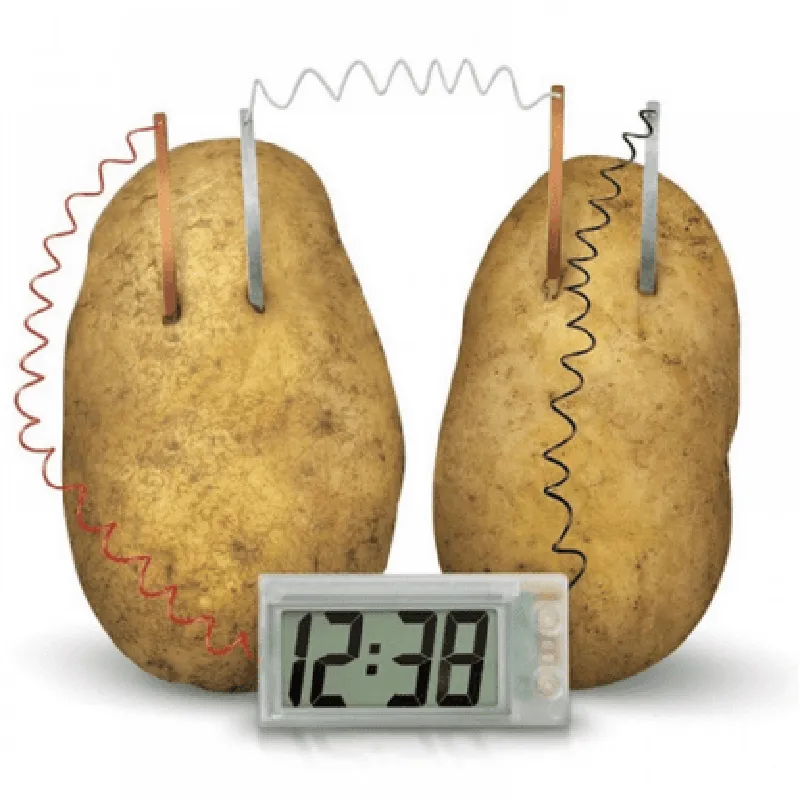
The DIY Conversion of Energy Science Experiment by LED Alarm Clock using Potato is an innovative and educational IoT component that demonstrates the concept of harnessing electrical energy from unconventional sources. This component utilizes a potato as a galvanic cell to power an LED alarm clock, showcasing the potential of bio-electricity in everyday applications.
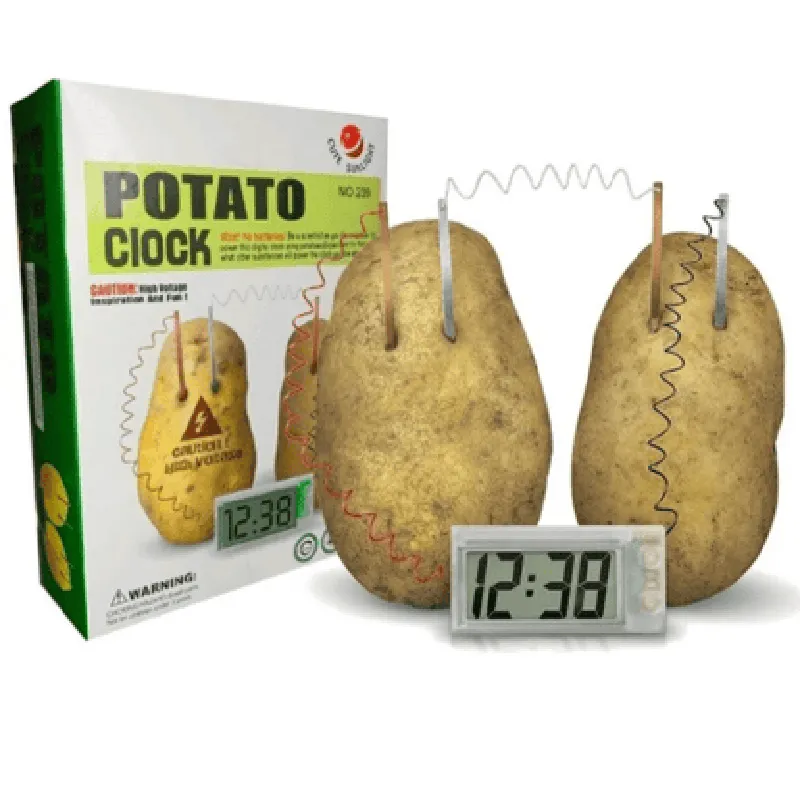
The DIY Conversion of Energy Science Experiment by LED Alarm Clock using Potato comprises the following functional components

  • Potato Galvanic Cell: The potato serves as an electrolyte, facilitating the flow of electrons between two electrodes (copper and zinc) inserted into it. This process generates a small electric potential difference, which is sufficient to power a low-voltage device.
  • LED Alarm Clock: A standard LED alarm clock is modified to operate at a low voltage, allowing it to be powered by the potato galvanic cell. The alarm clock displays the time and can be set to trigger an alarm.
  • Voltage Regulator: A voltage regulator is used to stabilize the output voltage from the potato galvanic cell, ensuring a consistent power supply to the LED alarm clock.

Key Features

  • Sustainable Energy Source: The component utilizes a potato as a bio-electricity source, highlighting the potential of organic materials as alternative energy sources.
  • Low-Voltage Operation: The LED alarm clock is modified to operate at a low voltage (typically around 1.5V), making it suitable for power-harvesting applications.
  • Educational Value: This component serves as a hands-on learning tool for understanding the principles of electrochemistry, bio-electricity, and sustainable energy.
  • Customizability: The DIY nature of this component allows users to experiment with different types of fruits or vegetables as electrolytes, promoting creativity and innovation.
  • Low-Cost: The component is relatively inexpensive to build, making it an accessible and cost-effective way to explore renewable energy concepts.

Input Voltage

1.5V (from potato galvanic cell)

Output Voltage

1.5V (regulated)

Current Capacity

10-20mA (dependent on potato size and freshness)

Alarm Clock Features

Time display, alarm setting, and low-battery indicator

Materials

+ Potato

+ Copper and zinc electrodes

+ LED alarm clock

+ Voltage regulator (e.g., 1.5V low-dropout regulator)

+ Jumper wires and connectors

Applications

  • Education: Ideal for science fairs, classroom projects, or STEM education initiatives.
  • Research and Development: Suitable for exploring bio-electricity applications, sustainable energy sources, and power-harvesting technologies.
  • Art and Design: Can be used as a creative component in interactive installations or environmental art projects.

Safety Precautions

Handle the electrodes and electrical connections with care to avoid short circuits or electrical shocks.

Use a suitable voltage regulator to prevent overvoltage damage to the LED alarm clock.

Keep the potato galvanic cell away from direct sunlight, moisture, and extreme temperatures to ensure optimal performance.

By combining innovative bio-electricity concepts with everyday electronics, the DIY Conversion of Energy Science Experiment by LED Alarm Clock using Potato offers a unique learning experience for both technical professionals and informed hobbyists.

Pin Configuration

  • Component Name: DIY Conversion of Energy Science Experiment by LED Alarm Clock using Potato
  • Component Description: This innovative DIY project demonstrates the conversion of chemical energy from a potato into electrical energy, powering an LED alarm clock. The project utilizes a potato as a battery, generating a small voltage and current to drive the alarm clock.
  • Pinout Description:
  • The following pinout description explains the connections required to complete the DIY conversion of the energy science experiment using a potato.
  • Potato Battery:
  • The potato acts as a galvanic cell, generating a small voltage and current when two different metals (copper and zinc) are inserted into it.
  • Copper Wire (Positive Terminal):
  • + Connect one end of the copper wire to the copper nail or metal rod.
  • + Insert the other end of the copper wire into the potato, making sure it doesn't touch the zinc nail.
  • Zinc Nail (Negative Terminal):
  • + Connect one end of the zinc nail to the aluminum or steel nail.
  • + Insert the other end of the zinc nail into the potato, making sure it doesn't touch the copper wire.
  • LED Alarm Clock:
  • The LED alarm clock is the load device that will be powered by the potato battery.
  • Positive Pin (VCC):
  • + Connect the positive pin of the LED alarm clock to the copper wire (positive terminal) of the potato battery.
  • Negative Pin (GND):
  • + Connect the negative pin of the LED alarm clock to the zinc nail (negative terminal) of the potato battery.
  • Connection Structure:
  • Follow the step-by-step connection structure to complete the DIY conversion of the energy science experiment:
  • 1. Potato Battery Connection:
  • Insert the copper wire (positive terminal) into the potato, ensuring it doesn't touch the zinc nail.
  • Insert the zinc nail (negative terminal) into the potato, ensuring it doesn't touch the copper wire.
  • 2. LED Alarm Clock Connection:
  • Connect the positive pin (VCC) of the LED alarm clock to the copper wire (positive terminal) of the potato battery.
  • Connect the negative pin (GND) of the LED alarm clock to the zinc nail (negative terminal) of the potato battery.
  • Important Notes:
  • Ensure the copper wire and zinc nail do not touch each other when inserted into the potato, as this will create a short circuit.
  • The voltage and current generated by the potato battery may not be sufficient to power the LED alarm clock continuously. The experiment may need to be repeated multiple times to observe the effect.
  • This DIY project is for educational purposes only and is not intended for commercial use.
  • By following this documentation, you should be able to successfully connect the potato battery to the LED alarm clock, demonstrating the conversion of chemical energy from the potato into electrical energy.

Code Examples

Component Name: DIY Conversion of Energy Science Experiment by LED Alarm Clock using Potato
Overview:
This innovative component combines an LED alarm clock with a potato-based energy harvesting system, allowing users to generate electricity from a potato to power the clock. This experiment is an engaging way to demonstrate the principles of electrochemistry and sustainability.
Components:
LED Alarm Clock Module
 Potato
 Copper Wire (insulated)
 Zinc Nail
 Small Piece of Metal (e.g., iron or copper)
 Electrolyte (e.g., lemon juice or saltwater)
Setup and Connection:
1. Connect the copper wire to the zinc nail, leaving a small portion of the wire exposed.
2. Insert the zinc nail into the potato, making sure it doesn't touch the copper wire.
3. Connect the small piece of metal to the exposed copper wire.
4. Place the LED alarm clock module near the potato, ensuring it's not in contact with the potato or the electrolyte.
5. Connect the clock module to the metal piece, allowing the generated electricity to power the clock.
Code Examples:
Example 1: Basic Power On/Off
In this example, we will use an Arduino board to demonstrate the concept of powering the LED alarm clock using the potato-based energy harvesting system.
```c++
int clockPin = 2; // Assign the clock module's VCC pin to digital pin 2
void setup() {
  pinMode(clockPin, OUTPUT);
}
void loop() {
  digitalWrite(clockPin, HIGH); // Power on the clock module
  delay(5000); // Wait for 5 seconds
  digitalWrite(clockPin, LOW); // Power off the clock module
  delay(5000); // Wait for 5 seconds
}
```
Example 2: Real-Time Clock Display
In this example, we will use a microcontroller like ESP32 to read the time from the LED alarm clock module and display it on an LCD screen.
```c++
#include <WiFi.h>
#include <LiquidCrystal_I2C.h>
#define CLOCK_SDA 21
#define CLOCK_SCL 22
#define LCD_SDA 18
#define LCD_SCL 19
LiquidCrystal_I2C lcd(0x27, 16, 2);
void setup() {
  Serial.begin(115200);
  lcd.init();
  lcd.backlight();
}
void loop() {
  int hours, minutes, seconds;
  // Read time from the clock module
  hours = readHour();
  minutes = readMinute();
  seconds = readSecond();
  
  // Display time on the LCD screen
  lcd.setCursor(0, 0);
  lcd.print("Time: ");
  lcd.print(hours);
  lcd.print(":");
  lcd.print(minutes);
  lcd.print(":");
  lcd.print(seconds);
  delay(1000); // Update every second
}
int readHour() {
  // Implement the function to read the hour from the clock module
}
int readMinute() {
  // Implement the function to read the minute from the clock module
}
int readSecond() {
  // Implement the function to read the second from the clock module
}
```
Example 3: Energy Harvesting Monitoring
In this example, we will use a voltage sensor to monitor the voltage generated by the potato-based energy harvesting system and display the readings on a serial console.
```c++
const int voltagePin = A0; // Assign the voltage sensor to analog pin A0
void setup() {
  Serial.begin(115200);
}
void loop() {
  int voltageReading = analogRead(voltagePin);
  float voltage = voltageReading  (5.0 / 1023.0);
  Serial.print("Voltage: ");
  Serial.print(voltage);
  Serial.println(" V");
  delay(1000); // Update every second
}
```
Notes and Precautions:
Handle the potato and electrolyte with care to avoid any potential electrical shock or skin irritation.
 Ensure the copper wire and zinc nail are not in contact with each other or the electrolyte.
 The voltage generated by the potato-based energy harvesting system may vary depending on the potato's condition and the electrolyte used.
 This component is for educational and demonstration purposes only. It's not intended for commercial use or as a reliable power source.