Robot Servo 60kg RDS5160 Metal Gear Digital Servo Motor


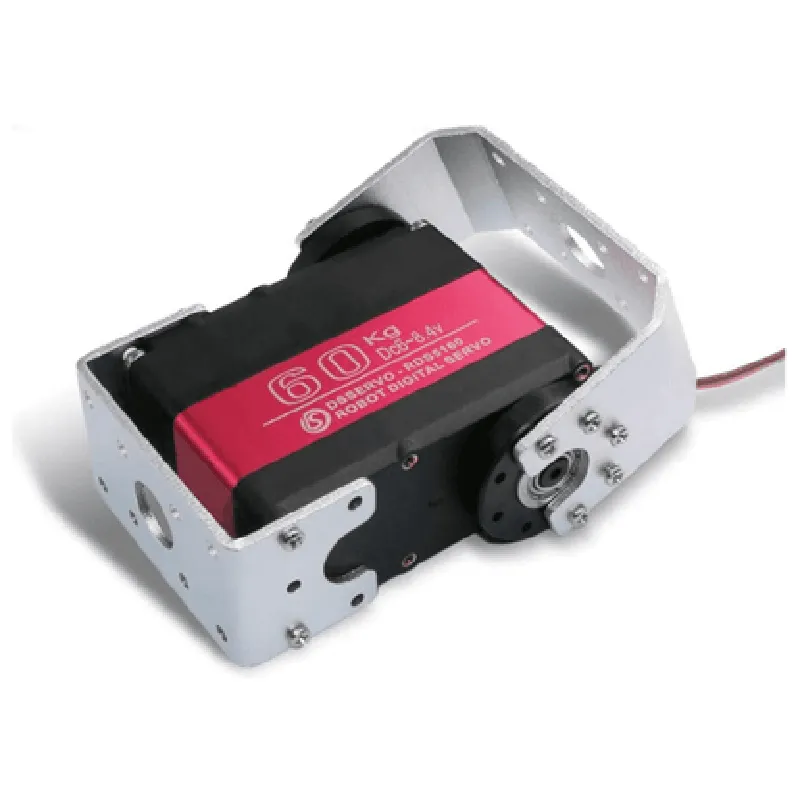
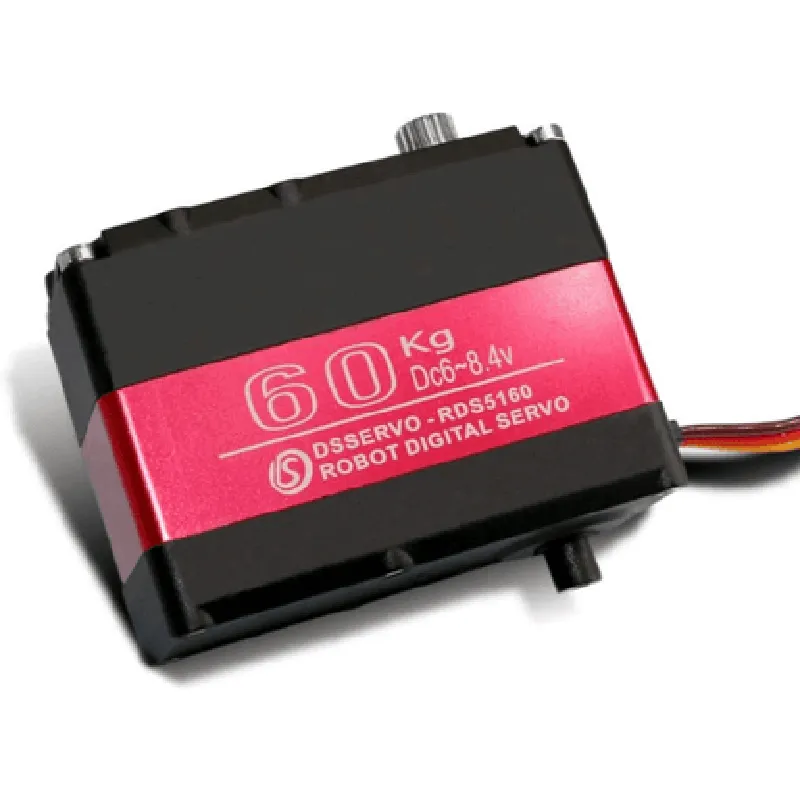
Robot Servo 60kg RDS5160 Metal Gear Digital Servo Motor
The RDS5160 Metal Gear Digital Servo Motor is a high-performance, high-torque servo motor designed for robotic applications requiring precise control and reliability. With a maximum torque of 60kg-cm, this servo motor is suitable for demanding tasks, such as robotic arms, grippers, and other mechanical systems.
The RDS5160 servo motor is a digital servo that converts electrical signals into precise angular movements. It receives control signals from a microcontroller or other control devices and responds by rotating its output shaft to the desired position. The servo motor's built-in controller and feedback system ensure accurate and precise movement, making it ideal for applications requiring repeatable and reliable operation.
| Parameter | Value |
| --- | --- |
| Torque (max) | 60kg-cm |
| Speed (max) | 0.16 sec/60 |
| Rotation Angle | 360 (full rotation) |
| Positional Accuracy | 0.088 |
| Control Signal | Digital (PWM, PPM, serial) |
| Operating Voltage | 6V to 12V |
| Current Draw (max) | 3A |
| Dimensions | 34.5mm x 44.5mm x 59.5mm |
| Weight | 220g |
| Operating Temperature | -20C to 60C |
| Storage Temperature | -30C to 80C |
| The RDS5160 Metal Gear Digital Servo Motor is suitable for a wide range of robotic applications, including |
Robotic arms and grippers
Industrial automation systems
Medical devices and equipment
Aerospace and defense applications
Agricultural and construction equipment
Research and development projects
| The RDS5160 servo motor complies with relevant industry standards and regulations, including |
RoHS (Restriction of Hazardous Substances) directive
CE (Conformit Europene) certification
FCC (Federal Communications Commission) compliance
The RDS5160 servo motor is backed by a limited warranty and dedicated technical support, ensuring that customers receive assistance and resources throughout the product's lifecycle.
Robot Servo 60kg RDS5160 Metal Gear Digital Servo Motor DocumentationOverviewThe Robot Servo 60kg RDS5160 Metal Gear Digital Servo Motor is a high-torque, high-speed servo motor designed for robotic applications. It features a metal gear train, digital signal processing, and a high-resolution encoder. This servo motor is suitable for heavy-duty robotics, robotic arms, and other applications requiring high-precision motion control.Technical SpecificationsType: Digital Servo Motor
Torque: 60kg-cm (840 oz-in)
Speed: 0.17sec/60 (4.8V), 0.13sec/60 (6V)
Motor Type: Coreless motor
Gear Material: Metal
Encoder Resolution: 12-bit (4096 steps)
Operating Voltage: 4.8V to 6V
Current Draw: 1.5A (idle), 3.5A (max)
Weight: 130g
Dimensions: 40.5mm x 20.5mm x 39.5mmInterfacesSignal Wire: 3-pin (VCC, GND, signal)
Signal Protocol: PWM (Pulse Width Modulation)Code Examples### Example 1: Basic Servo Control using ArduinoThis example demonstrates how to control the servo motor using an Arduino board.```c
#include <Servo.h>Servo servo; // create a servo objectvoid setup() {
servo.attach(9); // attach the servo to pin 9
}void loop() {
servo.write(0); // set the servo to 0 degrees
delay(1000);
servo.write(90); // set the servo to 90 degrees
delay(1000);
servo.write(180); // set the servo to 180 degrees
delay(1000);
}
```### Example 2: Servo Control using Raspberry Pi (Python)This example demonstrates how to control the servo motor using a Raspberry Pi and Python.```python
import RPi.GPIO as GPIO
import time# Set up the GPIO library
GPIO.setmode(GPIO.BCM)# Set up the servo pin
servo_pin = 17
GPIO.setup(servo_pin, GPIO.OUT)# Set up the servo frequency
frequency = 50
pwm_servo = GPIO.PWM(servo_pin, frequency)def set_servo_angle(angle):
# Convert the angle to duty cycle
dc = (angle / 180) + 2.5
pwm_servo.ChangeDutyCycle(dc)try:
while True:
set_servo_angle(0)
time.sleep(1)
set_servo_angle(90)
time.sleep(1)
set_servo_angle(180)
time.sleep(1)
except KeyboardInterrupt:
pwm_servo.stop()
GPIO.cleanup()
```Note: Make sure to adjust the pin numbers, frequencies, and other settings according to your specific microcontroller or development board.