9-0-9 500mA Transformer


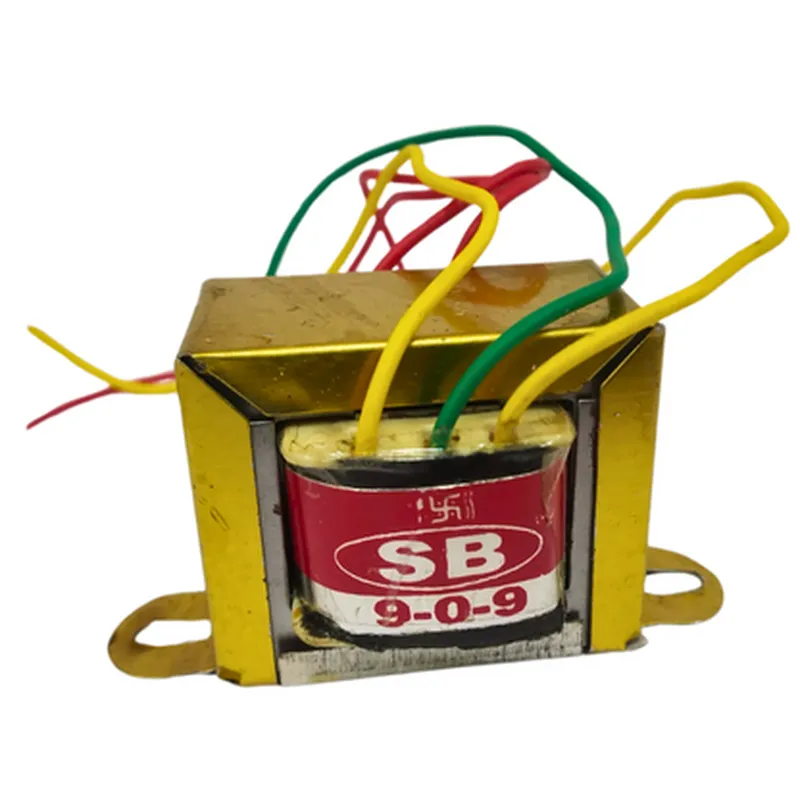
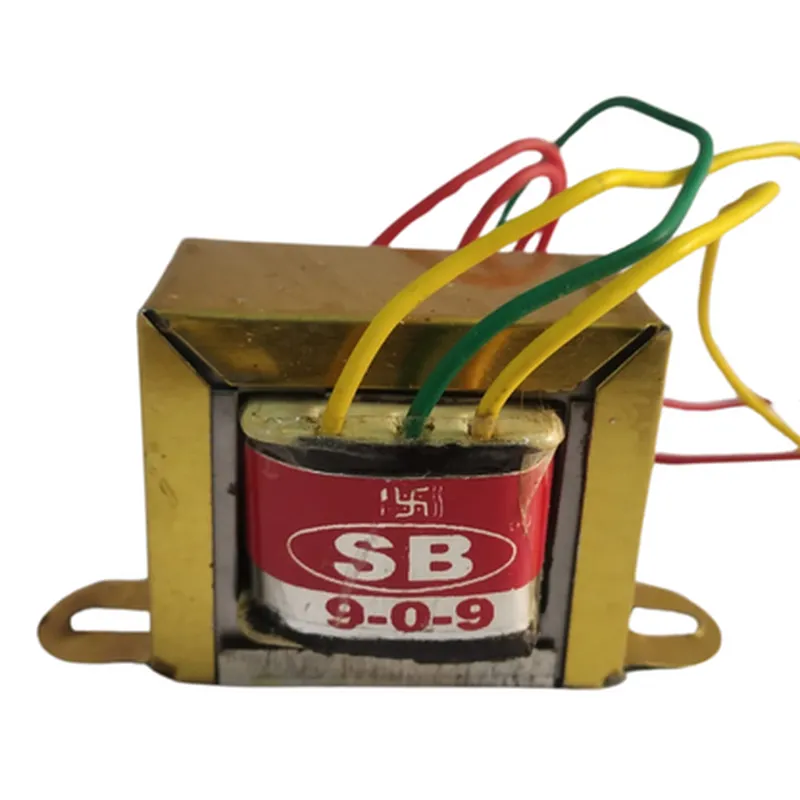
9-0-9 500mA Transformer
The 9-0-9 500mA Transformer is a compact, efficient, and reliable step-down transformer designed for use in a wide range of Internet of Things (IoT) applications, including power supplies, battery chargers, and industrial control systems. This transformer is optimized for high-performance, low-power consumption, and compact size, making it an ideal choice for space-constrained designs.
| The primary function of the 9-0-9 500mA Transformer is to step down an AC input voltage to a lower AC output voltage, while providing electrical isolation between the input and output circuits. This allows the transformer to be used in a variety of applications, including |
The transformer can be used to step down a higher AC voltage from a wall adapter or mains power to a lower voltage required by a device or system.
The transformer can be used to charge batteries in IoT devices, such as smartphones, laptops, or other portable devices.
The transformer can be used to power control systems, sensors, and actuators in industrial automation applications.
Low voltage drop across the transformer, ensuring high efficiency and minimal power loss
High isolation voltage between the input and output circuits, ensuring safe and reliable operation
Compact size and lightweight design, making it ideal for space-constrained applications
High reliability and long lifespan, with a typical MTBF of >100,000 hours
IoT devices and systems
Power supplies and battery chargers
Industrial control systems and automation
Medical devices and equipment
Consumer electronics and appliances
| The 9-0-9 500mA Transformer meets or exceeds the requirements of relevant international standards and regulations, including |
UL (Underwriters Laboratories) 508
IEC 61558-1
EN 61558-1
RoHS (Restriction of Hazardous Substances) compliant
The 9-0-9 500mA Transformer is available in tray or reel packaging, with a minimum order quantity of 100 pieces. For custom orders or large quantities, please contact the manufacturer or authorized distributor for pricing and lead time information.
9-0-9 500mA Transformer DocumentationOverviewThe 9-0-9 500mA transformer is a compact, high-isolation transformer designed for use in a wide range of IoT applications, including power supplies, signal transmission, and isolation. This transformer features a 9:0:9 turns ratio, providing 500mA of current handling capability.Key SpecificationsTurns Ratio: 9:0:9
Current Rating: 500mA
Operating Frequency: 50-400 Hz
Isolation Voltage: 1500Vrms
Dimensions: 14x12x9mmUsing the 9-0-9 500mA Transformer in IoT ApplicationsThe 9-0-9 500mA transformer is often used to step-down or step-up voltages, provide electrical isolation, and reduce noise in IoT systems. Here are some code examples demonstrating how to use this component in various contexts:### Example 1: Simple Power Supply using ArduinoIn this example, we'll use the 9-0-9 500mA transformer to step-down a 230V AC input to 12V AC output, which will then be converted to 12V DC using a bridge rectifier and voltage regulator.Circuit Diagram:```
+-----------+
| 230V AC |
+-----------+
|
|
v
+-----------+
| 9-0-9 |
| Transformer |
+-----------+
|
|
v
+-----------+
| Bridge |
| Rectifier |
+-----------+
|
|
v
+-----------+
| 12V DC |
| (Output) |
+-----------+
```Arduino Code:
```c++
const int inputPin = A0; // Input from transformer secondary
const int outputPin = 12; // Output to voltage regulatorvoid setup() {
pinMode(inputPin, INPUT);
pinMode(outputPin, OUTPUT);
}void loop() {
int inputValue = analogRead(inputPin);
float outputVoltage = (inputValue 12) / 1024;
analogWrite(outputPin, outputVoltage);
delay(10);
}
```### Example 2: Isolated Signal Transmission using Raspberry PiIn this example, we'll use the 9-0-9 500mA transformer to provide electrical isolation between a Raspberry Pi and a sensor circuit.Circuit Diagram:```
+-----------+
| Raspberry |
| Pi (GPIO) |
+-----------+
|
|
v
+-----------+
| 9-0-9 |
| Transformer |
+-----------+
|
|
v
+-----------+
| Sensor |
| Circuit |
+-----------+
```Python Code:
```python
import RPi.GPIO as GPIO# Define GPIO pins
pi_gpio_pin = 17
sensor_gpio_pin = 23GPIO.setmode(GPIO.BCM)
GPIO.setup(pi_gpio_pin, GPIO.OUT)
GPIO.setup(sensor_gpio_pin, GPIO.IN)while True:
# Send signal from Raspberry Pi to sensor circuit
GPIO.output(pi_gpio_pin, GPIO.HIGH)
time.sleep(0.1)
GPIO.output(pi_gpio_pin, GPIO.LOW)
time.sleep(0.1)# Read signal from sensor circuit
sensor_value = GPIO.input(sensor_gpio_pin)
print("Sensor Value:", sensor_value)
time.sleep(0.1)
```
Note: In both examples, proper safety precautions and protective measures must be taken when working with high voltages and electrical circuits. Additionally, the provided code examples are for illustrative purposes only and may require modifications to suit specific IoT application requirements.