22.2v 5200mAh 35C 6S1P Bonka Lipo Battery


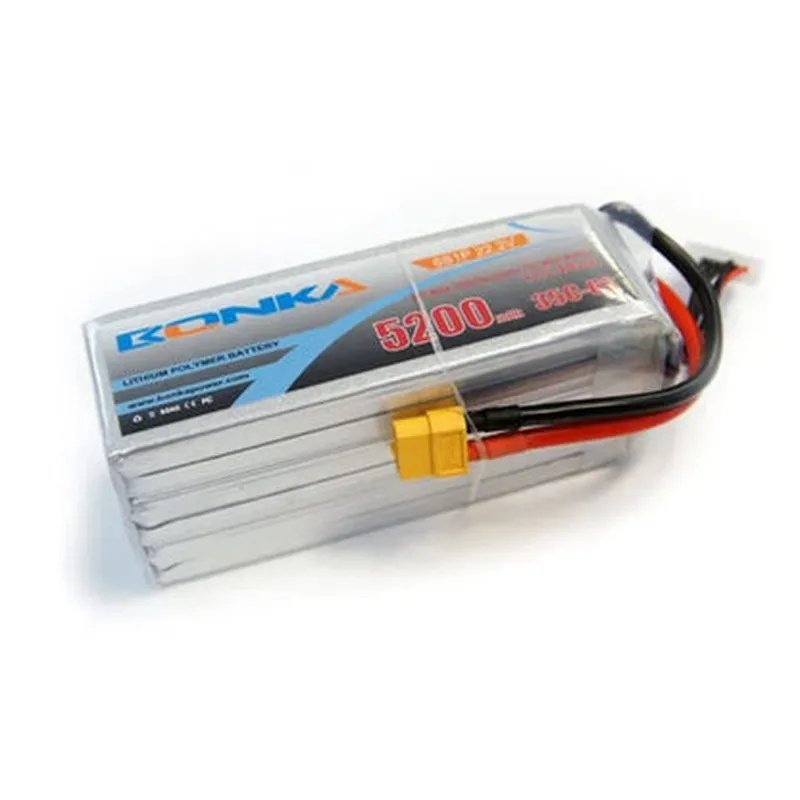
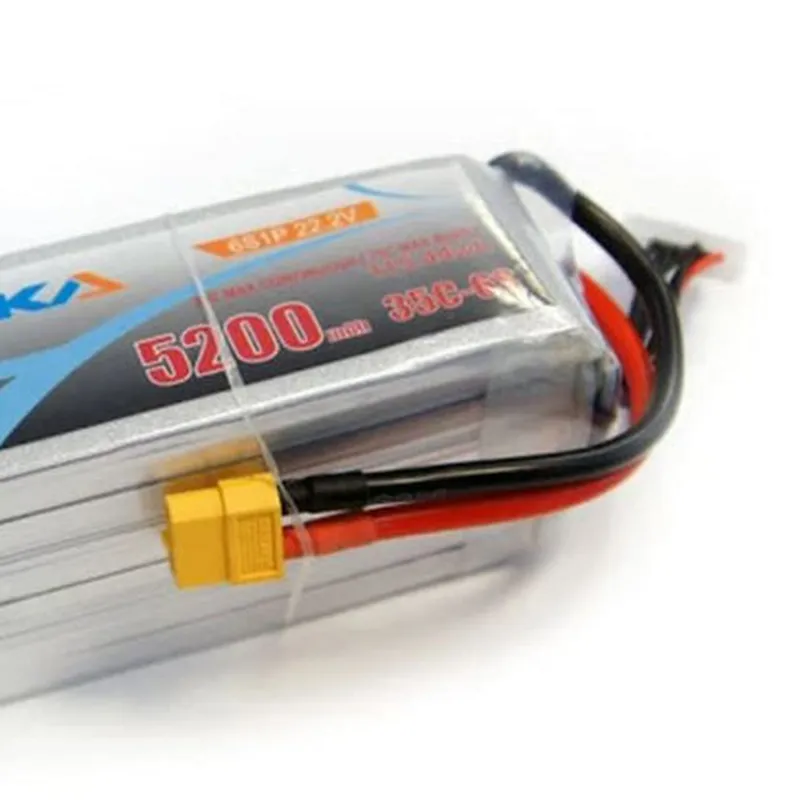
22.2v 5200mAh 35C 6S1P Bonka Lipo Battery
The 22.2v 5200mAh 35C 6S1P Bonka Lipo Battery is a high-performance lithium-polymer (LiPo) battery designed for demanding applications requiring high energy density, reliability, and safety. This battery is specifically engineered for use in electric vehicles, drones, robots, and other IoT devices that require a high-capacity power source.
The primary function of this battery is to store electrical energy for later use in IoT devices. It provides a reliable and efficient power source, allowing devices to operate for extended periods. The battery's high-capacity design ensures that devices can perform tasks that require high energy, such as propulsion, communication, and data processing.
The battery's dimensions are not specified, but it is designed to be compact and lightweight for easy integration into IoT devices.
The battery's weight is not specified, but it is optimized to provide a high power-to-weight ratio.
| The 22.2v 5200mAh 35C 6S1P Bonka Lipo Battery is suitable for a wide range of IoT applications, including |
Electric vehicles and drones
Robotics and autonomous systems
High-power IoT devices
Industrial automation systems
Renewable energy systems
The 22.2v 5200mAh 35C 6S1P Bonka Lipo Battery is a high-performance power source designed for demanding IoT applications. Its high capacity, high-discharge rate, and safe LiPo chemistry make it an ideal choice for devices that require reliable and efficient power.
Component Documentation: 22.2v 5200mAh 35C 6S1P Bonka Lipo BatteryOverviewThe 22.2v 5200mAh 35C 6S1P Bonka Lipo Battery is a high-performance lithium-polymer battery designed for demanding IoT applications. With a high capacity of 5200mAh and a discharge rate of 35C, this battery is ideal for powering devices that require high currents, such as drones, robots, and other autonomous systems.Technical SpecificationsNominal Voltage: 22.2V
Capacity: 5200mAh
Discharge Rate: 35C
Configuration: 6S1P (6 cells in series, 1 parallel group)
Weight: approximately 450g
Dimensions: 105mm x 43mm x 35mmCode Examples### Example 1: Arduino-based Drone using the Bonka Lipo BatteryIn this example, we'll demonstrate how to use the Bonka Lipo Battery to power an Arduino-based drone. We'll use the ArduinoBoard library to control the drone's motors and the INA219 library to monitor the battery's voltage and current.Hardware Requirements:Arduino Board (e.g., Arduino Uno or Arduino Mega)
Bonka Lipo Battery (22.2v 5200mAh 35C 6S1P)
Drone motors (4x)
ESCs (Electronic Speed Controllers) (4x)
INA219 voltage and current sensor
Breadboard and jumper wiresCode:
```c++
#include <Arduino.h>
#include <INA219.h>// Define the battery voltage and current pin connections
const int batteryVoltagePin = A0;
const int batteryCurrentPin = A1;// Define the motor pin connections
const int motor1Pin = 2;
const int motor2Pin = 3;
const int motor3Pin = 4;
const int motor4Pin = 5;// Create an instance of the INA219 library
INA219 ina219;void setup() {
// Initialize the INA219 library
ina219.begin();
}void loop() {
// Read the battery voltage and current
float batteryVoltage = ina219.getVoltage_V(batteryVoltagePin);
float batteryCurrent = ina219.getCurrent_mA(batteryCurrentPin);// Set the motor speeds based on the battery voltage
int motorSpeed = map(batteryVoltage, 21.0, 24.0, 0, 255);
analogWrite(motor1Pin, motorSpeed);
analogWrite(motor2Pin, motorSpeed);
analogWrite(motor3Pin, motorSpeed);
analogWrite(motor4Pin, motorSpeed);// Print the battery voltage and current to the serial console
Serial.print("Battery Voltage: ");
Serial.print(batteryVoltage);
Serial.print(" V, Current: ");
Serial.print(batteryCurrent);
Serial.println(" mA");
delay(1000);
}
```
### Example 2: Raspberry Pi-based IoT Project using the Bonka Lipo BatteryIn this example, we'll demonstrate how to use the Bonka Lipo Battery to power a Raspberry Pi-based IoT project. We'll use the Python library `gpiozero` to control the Raspberry Pi's GPIO pins and monitor the battery's voltage using an ADC (Analog-to-Digital Converter).Hardware Requirements:Raspberry Pi (e.g., Raspberry Pi 4)
Bonka Lipo Battery (22.2v 5200mAh 35C 6S1P)
ADC (Analog-to-Digital Converter) module (e.g., ADS1115)
Breadboard and jumper wiresCode:
```python
import time
import gpiozero
import adc# Define the ADC channel and gain
adc_channel = 0
adc_gain = 1# Define the battery voltage pin connection
battery_voltage_pin = 17# Create an instance of the gpiozero library
gpio = gpiozero.Device()# Create an instance of the ADC library
adc = adc.ADS1115()def read_battery_voltage():
# Read the battery voltage from the ADC
voltage = adc.read_adc(battery_voltage_pin, adc_gain)
return voltage 3.3 / 32767.0while True:
# Read the battery voltage
battery_voltage = read_battery_voltage()# Print the battery voltage to the console
print("Battery Voltage:", battery_voltage, "V")# Perform other IoT project tasks here...time.sleep(1)
```
Note: These code examples are for illustrative purposes only and may require modifications to suit your specific use case. Ensure proper safety precautions when working with high-voltage batteries and electrical systems.