Hammer Drop-In T Nut (M5106 T) (Pack of 10)


Hammer Drop-In T Nut (M5106 T) (Pack of 10)
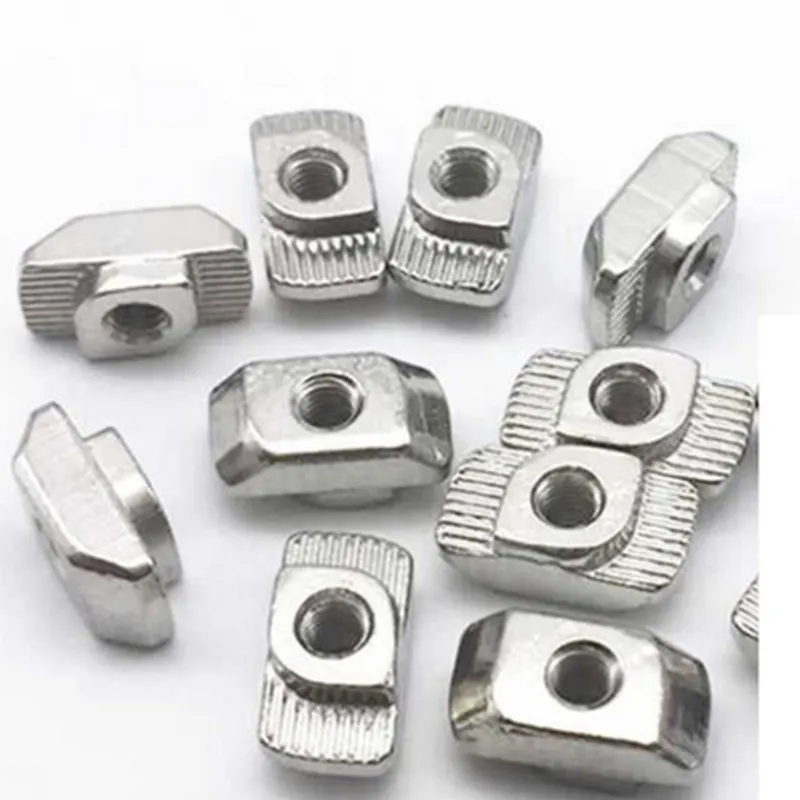
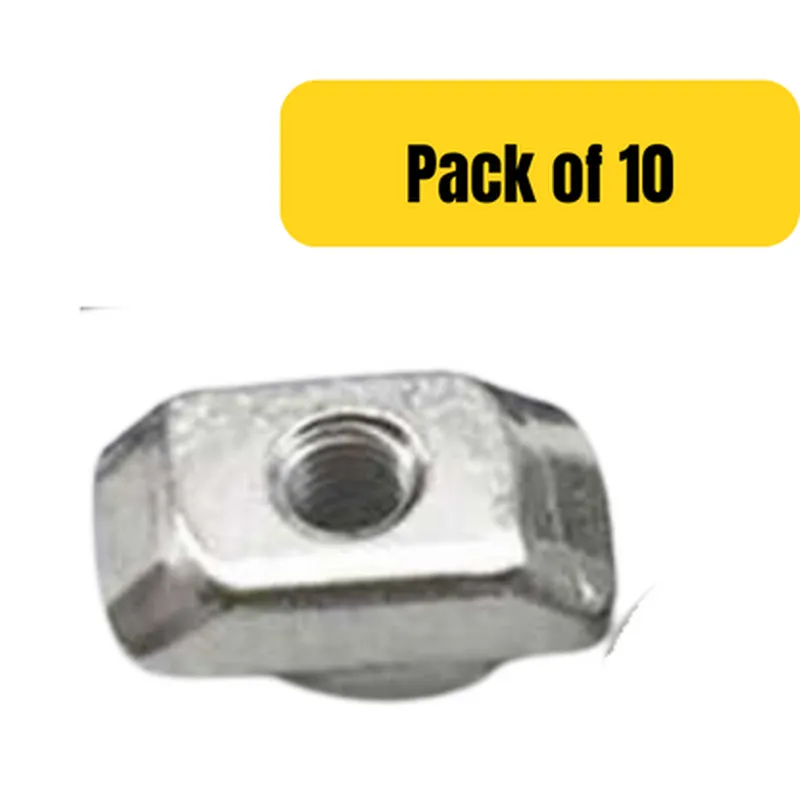
The Hammer Drop-In T Nut (M5106 T) is a type of fastening component designed for secure and reliable connections in IoT projects, robotics, and other applications. This T Nut is part of a pack of 10, making it a convenient and cost-effective solution for projects that require multiple connections.
The primary function of the Hammer Drop-In T Nut is to provide a strong and stable connection between two parts or components, typically in situations where a screw or bolt is used. The T Nut is designed to be dropped into a pre-drilled hole, allowing for easy installation and ensuring a secure fit.
M5
10mm
6mm
High-quality, durable material
10 pieces
[Insert weight]
[Insert operating temperature range]
| The Hammer Drop-In T Nut (M5106 T) is suitable for a wide range of IoT applications, including |
Robotics and robotic arms
CNC machines and 3D printers
Automation systems and industrial equipment
DIY projects and prototyping
IoT devices and sensors
The Hammer Drop-In T Nut (M5106 T) is a reliable and versatile fastening component that provides a secure and stable connection in various IoT applications. Its easy installation, high torque resistance, and compact design make it an ideal choice for projects that require multiple connections.
Hammer Drop-In T Nut (M5106 T) DocumentationOverviewThe Hammer Drop-In T Nut (M5106 T) is a high-quality, precision-machined component designed for secure and reliable connections in various IoT applications. This T nut is specifically designed for M5 screws and features a compact design with a 10mm length and 6mm thickness. This pack of 10 T nuts is ideal for prototyping, proof-of-concept development, or production runs.Technical SpecificationsMaterial: High-strength steel or brass
Thread size: M5
Length: 10mm
Thickness: 6mm
Package contents: 10 T nutsUsage Examples### Example 1: Using Hammer Drop-In T Nuts in a Robotics Project (Arduino)In this example, we'll use the Hammer Drop-In T Nut to secure a robotic arm to a base plate. We'll assume you're using an Arduino board to control the robot.Hardware RequirementsArduino board (e.g., Arduino Uno)
Robotic arm assembly
Base plate
M5 screws
Hammer Drop-In T Nuts (M5106 T)Code Example (Arduino)
```c++
const int roboticArmPin = 9; // Pin for robotic arm servovoid setup() {
pinMode(roboticArmPin, OUTPUT);
}void loop() {
// Initialize robotic arm servo
servo(roboticArmPin, 90); // 90 degrees is the default position// Secure robotic arm to base plate using M5 screws and T nuts
// Assuming the robotic arm is attached to the base plate using M5 screws
// and the T nuts are inserted into the base platedelay(1000); // Wait for 1 second// Move robotic arm to a new position
servo(roboticArmPin, 45);
delay(1000); // Wait for 1 second
}
```
### Example 2: Using Hammer Drop-In T Nuts in a DIY Automation Project (Raspberry Pi)In this example, we'll use the Hammer Drop-In T Nut to secure a sensor module to a custom enclosure. We'll assume you're using a Raspberry Pi board to control the automation system.Hardware RequirementsRaspberry Pi board (e.g., Raspberry Pi 4)
Sensor module (e.g., temperature sensor)
Custom enclosure
M5 screws
Hammer Drop-In T Nuts (M5106 T)Code Example (Python)
```python
import RPi.GPIO as GPIO
import time# Set up GPIO mode
GPIO.setmode(GPIO.BCM)# Define sensor pin
sensor_pin = 17# Set up sensor pin as input
GPIO.setup(sensor_pin, GPIO.IN)try:
while True:
# Read sensor data
sensor_data = GPIO.input(sensor_pin)
print("Sensor data:", sensor_data)# Secure sensor module to custom enclosure using M5 screws and T nuts
# Assuming the sensor module is attached to the custom enclosure using M5 screws
# and the T nuts are inserted into the enclosuretime.sleep(1) # Wait for 1 secondexcept KeyboardInterrupt:
GPIO.cleanup()
```
These examples demonstrate the versatility of the Hammer Drop-In T Nut in various IoT applications, from robotics to automation projects. The T nut's compact design and high-strength material make it an ideal choice for securing components in space-constrained environments.