1.5 Inch Water Flow Sensor YF-DN40


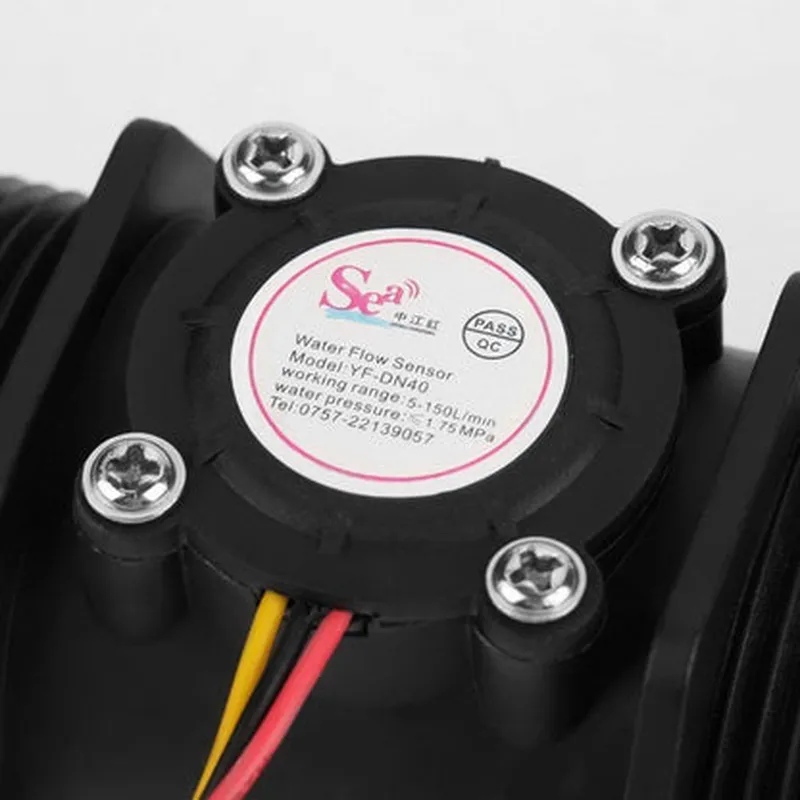
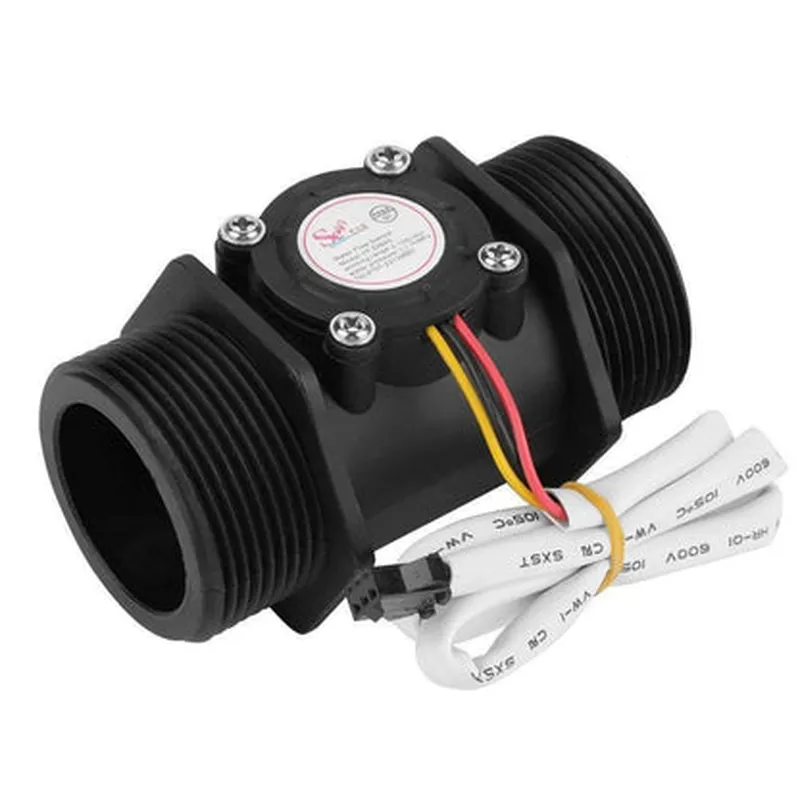
1.5 Inch Water Flow Sensor YF-DN40
The 1.5 Inch Water Flow Sensor YF-DN40 is a high-precision, Hall effect-based sensor designed to measure the flow rate of liquids, particularly water, in various industrial and commercial applications. This sensor is ideal for monitoring water consumption, detecting leaks, and controlling water flow in systems such as HVAC, industrial processes, and water treatment plants.
The YF-DN40 sensor measures the flow rate of water by detecting the rotation of a magnetic impeller, which is driven by the flowing liquid. The sensor's Hall effect detector converts the rotating motion into an electrical signal, proportional to the flow rate. This signal is then processed and outputted in a standardized format for easy integration with various automation systems.
| Parameter | Value |
| --- | --- |
| Measurement Range | 0.5-10 L/min |
| Accuracy | 2.5% of full scale |
| Pipe Size Compatibility | 1.5 inch (DN40) |
| Hall Effect Technology | Yes |
| Analog Output | 4-20 mA |
| Power Supply | 12-24 VDC |
| Enclosure Rating | IP67 |
| Dimensions | 123 mm x 58 mm x 42 mm |
| Mounting Options | Flange or adapter |
| Temperature Range | -20C to 80C (-4F to 176F) |
| The 1.5 Inch Water Flow Sensor YF-DN40 is suitable for various applications, including |
Water consumption monitoring
Leak detection and prevention
Industrial process control
HVAC systems
Water treatment plants
Beverage production
Chemical processing
The 1.5 Inch Water Flow Sensor YF-DN40 is a reliable, high-precision sensor designed for accurate flow measurement in industrial and commercial water management systems. Its compact design, analog output, and versatility make it an ideal choice for a wide range of applications.
1.5 Inch Water Flow Sensor YF-DN40 DocumentationOverviewThe 1.5 Inch Water Flow Sensor YF-DN40 is a digital flow sensor designed to measure the flow rate of water or other liquids in pipes with a diameter of 1.5 inches. The sensor operates on the principle of magnetic induction, providing accurate and reliable flow measurements. This documentation provides a comprehensive guide to using the 1.5 Inch Water Flow Sensor YF-DN40, including code examples for various microcontrollers.Technical SpecificationsPipe diameter: 1.5 inches (DN40)
Flow measurement range: 0.5-10 L/min
Accuracy: 5%
Operating voltage: 5V DC
Output signal: Digital pulse output (TTL level)
Response time: <100 msPinoutThe 1.5 Inch Water Flow Sensor YF-DN40 has a 3-pin interface:VCC (5V power supply)
GND (Ground)
SIG (Digital output signal)Code Examples### Example 1: Measuring Water Flow using ArduinoThis example demonstrates how to use the 1.5 Inch Water Flow Sensor YF-DN40 with an Arduino board to measure water flow rate.
```c
const int flowSensorPin = 2; // Pin 2 for digital output signal
volatile int pulseCount = 0;void setup() {
pinMode(flowSensorPin, INPUT);
attachInterrupt(digitalPinToInterrupt(flowSensorPin), pulseCounter, RISING);
Serial.begin(9600);
}void loop() {
pulseCount = 0;
delay(1000); // Take a 1-second reading
float flowRate = pulseCount / 7.5; // Convert pulses to liters per minute
Serial.print("Flow rate: ");
Serial.print(flowRate);
Serial.println(" L/min");
}void pulseCounter() {
pulseCount++;
}
```
In this example, we use the `attachInterrupt` function to count the pulse output from the sensor, and then calculate the flow rate using the pulse count.### Example 2: Flow Measurement using Raspberry Pi (Python)This example shows how to use the 1.5 Inch Water Flow Sensor YF-DN40 with a Raspberry Pi to measure water flow rate using Python.
```python
import RPi.GPIO as GPIO
import timeGPIO.setmode(GPIO.BCM)
FLOW_SENSOR_PIN = 17 # Pin 17 for digital output signal
GPIO.setup(FLOW_SENSOR_PIN, GPIO.IN, pull_up_down=GPIO.PUD_UP)pulse_count = 0def count_pulses(channel):
global pulse_count
pulse_count += 1GPIO.add_event_detect(FLOW_SENSOR_PIN, GPIO.RISING, callback=count_pulses, bouncetime=20)while True:
pulse_count = 0
time.sleep(1) # Take a 1-second reading
flow_rate = pulse_count / 7.5 # Convert pulses to liters per minute
print("Flow rate: {:.2f} L/min".format(flow_rate))
```
In this example, we use the RPi.GPIO library to set up the GPIO pin for input and enable edge detection to count the pulse output from the sensor. We then calculate the flow rate using the pulse count.Note: The pulse-to-flow-rate conversion factor (7.5) may vary depending on the specific application and sensor calibration. Please consult the sensor datasheet for accurate conversion factors.