28 Pin Wide IC Base (Pack of 5)


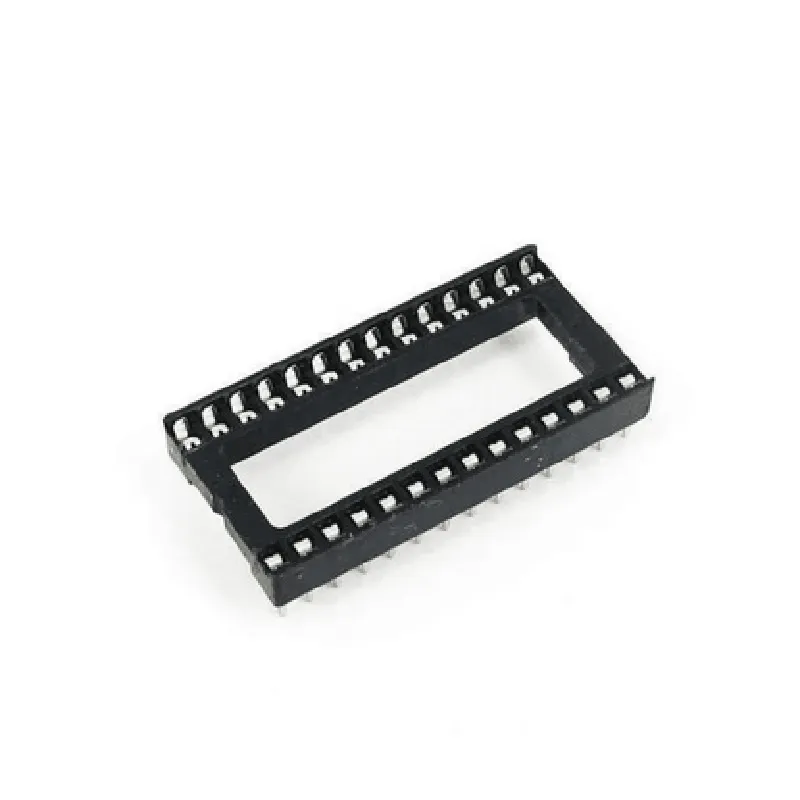
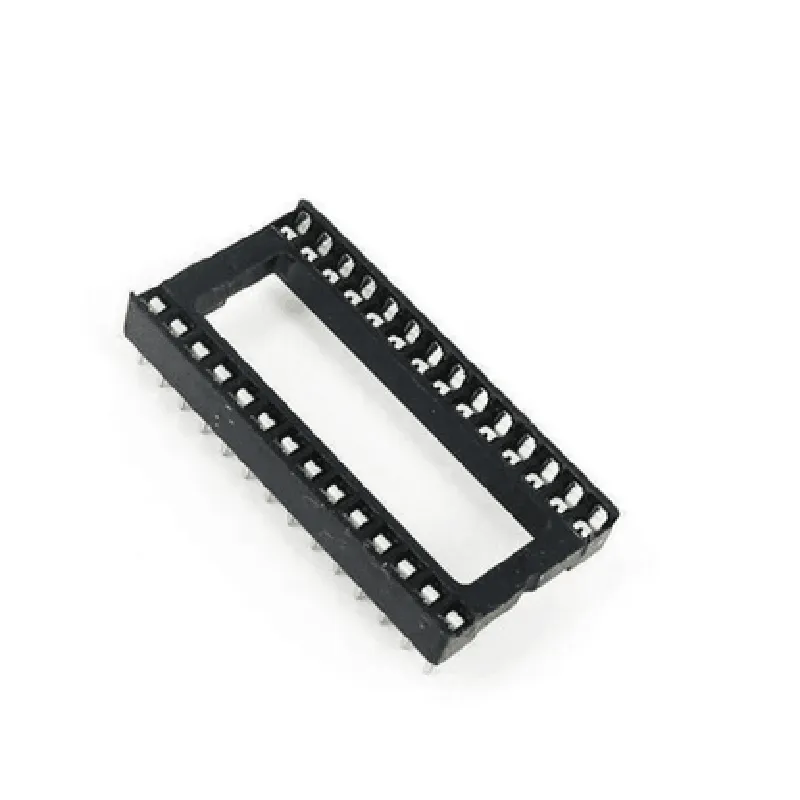
28 Pin Wide IC Base (Pack of 5)
The 28 Pin Wide IC Base is a standardized socket designed to accommodate 28-pin wide integrated circuits (ICs) in electronic circuits. This pack of 5 IC bases provides a convenient and cost-effective solution for prototyping, development, and production of various IoT and electronic projects.
The primary function of the 28 Pin Wide IC Base is to provide a secure and reliable connection between the IC and the printed circuit board (PCB) or breadboard. It allows for easy installation and removal of ICs, ensuring minimal damage to the sensitive components during the development process.
5 x 28 Pin Wide IC Bases
Before using the 28 Pin Wide IC Base, ensure that the IC is compatible with the socket and follows the recommended installation procedures to prevent damage or electrical shock.
28 Pin Wide IC Base (Pack of 5)OverviewThe 28 Pin Wide IC Base is a set of 5 IC bases designed to accommodate 28-pin wide IC chips. These bases are essential for prototyping and development of electronic circuits, providing a convenient and secure way to mount and connect IC chips. Each base features a sturdy construction with clearly labeled pins, making it easy to identify and connect to the corresponding IC pins.Technical SpecificationsCompatible with 28-pin wide IC chips
Pack of 5 IC bases
Sturdy construction with clearly labeled pins
Easy to use and connect to IC chipsUsing the 28 Pin Wide IC Base in a CircuitHere are three code examples that demonstrate how to use the 28 Pin Wide IC Base in various contexts:Example 1: Basic IC Chip Connection using ArduinoIn this example, we will connect an ATmega328P IC chip to the 28 Pin Wide IC Base and use it to blink an LED connected to digital pin 13.Hardware Requirements:28 Pin Wide IC Base
ATmega328P IC chip
Arduino Board
LED
Resistor (220)
Breadboard
Jumper wiresCode:
```c
void setup() {
pinMode(13, OUTPUT);
}void loop() {
digitalWrite(13, HIGH);
delay(1000);
digitalWrite(13, LOW);
delay(1000);
}
```
Example 2: IC Chip Interfacing with Raspberry PiIn this example, we will connect a 74HC595 IC chip to the 28 Pin Wide IC Base and use it to control an LED matrix connected to the Raspberry Pi.Hardware Requirements:28 Pin Wide IC Base
74HC595 IC chip
Raspberry Pi
LED Matrix
Breadboard
Jumper wiresCode (Python):
```python
import RPi.GPIO as GPIO
import time# Set up GPIO library
GPIO.setmode(GPIO.BCM)# Define pins for 74HC595 IC
data_pin = 17
clock_pin = 23
latch_pin = 24# Set up 74HC595 IC pins as outputs
GPIO.setup(data_pin, GPIO.OUT)
GPIO.setup(clock_pin, GPIO.OUT)
GPIO.setup(latch_pin, GPIO.OUT)while True:
# Shift out data to 74HC595 IC
GPIO.output(latch_pin, GPIO.LOW)
GPIO.output(data_pin, GPIO.HIGH)
GPIO.output(clock_pin, GPIO.HIGH)
GPIO.output(clock_pin, GPIO.LOW)
GPIO.output(latch_pin, GPIO.HIGH)# Update LED matrix
time.sleep(0.1)
```
Example 3: Using the IC Base with a BreadboardIn this example, we will connect a 74LS04 IC chip to the 28 Pin Wide IC Base and use it to create a simple NOT gate circuit on a breadboard.Hardware Requirements:28 Pin Wide IC Base
74LS04 IC chip
Breadboard
Jumper wires
Power source (5V)
Resistors (1k, 2k)
LEDs (2)Circuit Diagram:[Insert circuit diagram or describe the circuit]No code required for this exampleIn this example, we simply connect the 74LS04 IC chip to the 28 Pin Wide IC Base and use it to create a simple NOT gate circuit on a breadboard. The output of the NOT gate is connected to an LED, which will be on when the input is low and off when the input is high.These examples demonstrate the versatility of the 28 Pin Wide IC Base and its compatibility with various IC chips and microcontrollers.