M5Stack Core2 ESP32 IoT Development Kit


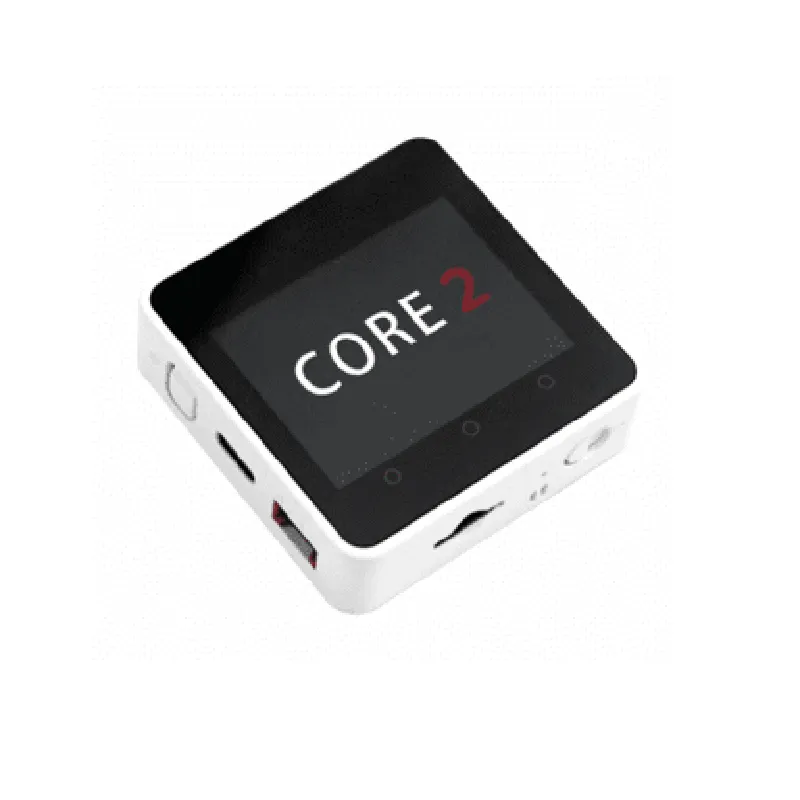
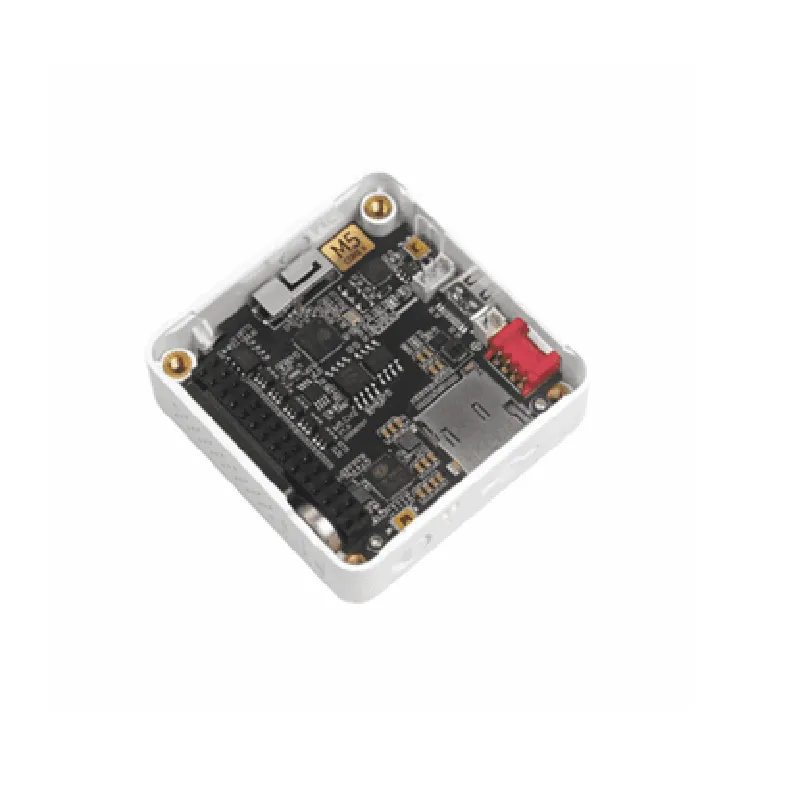
M5Stack Core2 ESP32 IoT Development Kit
The M5Stack Core2 ESP32 IoT Development Kit is a powerful and versatile microcontroller-based development board designed for IoT applications. It is built around the ESP32 system-on-chip (SoC), which provides a robust platform for developing innovative IoT projects. The Core2 kit offers a range of features, including Wi-Fi and Bluetooth capabilities, a high-performance microprocessor, and a comprehensive set of peripherals, making it an ideal choice for prototyping and developing IoT devices.
| The M5Stack Core2 ESP32 IoT Development Kit is designed to facilitate the development of IoT projects, enabling users to create innovative devices that can interact with the physical world and communicate with other devices over the internet. The kit's key functionality includes |
The Core2 kit features dual-mode Wi-Fi and Bluetooth 4.2 capabilities, allowing devices to connect to the internet and communicate with other devices wirelessly.
The kit is powered by the ESP32 microcontroller, which provides a high-performance processing platform for executing complex IoT applications.
The kit includes a range of peripherals, including GPIO pins, analog-to-digital converters (ADCs), and digital-to-analog converters (DACs), which enable devices to interact with the physical world through sensors and actuators.
The kit features a built-in power management system, which includes a USB-C interface for power supply and battery charging.
| The M5Stack Core2 ESP32 IoT Development Kit offers a range of features that make it an attractive choice for IoT development | |
| ESP32 SoC | The kit is built around the ESP32 system-on-chip, which provides a powerful and efficient processing platform. |
| Dual-Core Processor | The ESP32 processor features two Xtensa LX6 cores, operating at up to 240 MHz, providing a high-performance processing platform. |
| 4 MB Flash | The kit includes 4 MB of flash memory, providing ample storage for IoT applications. |
| 520 KB SRAM | The kit features 520 KB of SRAM, providing a large memory space for executing IoT applications. |
| Wi-Fi and Bluetooth 4.2 | The kit supports dual-mode Wi-Fi and Bluetooth 4.2 capabilities, enabling wireless communication with other devices. |
The kit provides 19 GPIO pins, which can be used for interacting with sensors, actuators, and other peripherals.
The kit features a range of peripheral interfaces, including I2C, I2S, UART, SPI, and ADC, which enable communication with various sensors and actuators.
The kit includes a microSD card slot, which provides additional storage for IoT applications.
| USB-C Interface | The kit features a USB-C interface, which provides a convenient and fast way to power and program the device. |
The kit includes a battery holder, which enables the use of external batteries for powering IoT devices.
| The M5Stack Core2 ESP32 IoT Development Kit supports a range of operating systems, including |
A lightweight, interactive programming language, ideal for IoT development.
| C/C++ | A powerful and efficient programming language, suitable for developing complex IoT applications. |
A popular, open-source platform for developing IoT devices.
The M5Stack Core2 ESP32 IoT Development Kit is a powerful and feature-rich platform for developing innovative IoT devices. With its robust processing platform, wireless connectivity capabilities, and comprehensive set of peripherals, the kit provides an ideal environment for prototyping and developing IoT projects. Whether you're a seasoned developer or an informed hobbyist, the Core2 kit offers a convenient and accessible way to create innovative IoT devices that can interact with the physical world and communicate with other devices over the internet.
M5Stack Core2 ESP32 IoT Development Kit DocumentationOverviewThe M5Stack Core2 ESP32 IoT Development Kit is a powerful and feature-rich development board designed for IoT projects. It is based on the ESP32 microcontroller, which provides built-in Wi-Fi and Bluetooth capabilities, making it an ideal choice for a wide range of IoT applications.Key FeaturesESP32 microcontroller with Wi-Fi and Bluetooth capabilities
2.4-inch color LCD display with 320x240 resolution
Built-in microSD card slot for storage expansion
USB-C interface for programming and power supply
Multiple GPIO pins for peripheral connections
Support for various programming languages, including MicroPython, Arduino, and LuaCode Examples### Example 1: Wi-Fi Connection and LCD DisplayThis example demonstrates how to connect to a Wi-Fi network and display a message on the LCD screen using MicroPython.
```python
import network
import lcd# Initialize Wi-Fi module
wifi = network.WLAN(network.STA_IF)
wifi.active(True)
wifi.connect("your_wifi_ssid", "your_wifi_password")# Wait for Wi-Fi connection
while not wifi.isconnected():
passprint("Connected to Wi-Fi")# Initialize LCD module
lcd.init()
lcd.clear()
lcd.print("Hello, World!", 0, 0, lcd.WHITE, lcd.BLACK)
```
Replace "your_wifi_ssid" and "your_wifi_password" with your actual Wi-Fi network credentials.### Example 2: Bluetooth Low Energy (BLE) AdvertisingThis example demonstrates how to use the M5Stack Core2 to advertise a BLE service using Arduino.
```cpp
#include <BLE.h>BLEServer server;
BLEService service;
BLECharacteristic characteristic;void setup() {
Serial.begin(115200);// Create a BLE server
server = new BLEServer();// Create a BLE service
service = server->createService("uuid_of_your_service");// Create a BLE characteristic
characteristic = service->createCharacteristic("uuid_of_your_characteristic", BLECharacteristic::PROPERTY_NOTIFY);
}void loop() {
// Start advertising
server->startAdvertising();delay(50);
}
```
Replace "uuid_of_your_service" and "uuid_of_your_characteristic" with your actual BLE service and characteristic UUIDs.### Example 3: MicroSD Card File AccessThis example demonstrates how to read and write files on a microSD card using Lua.
```lua
-- Initialize microSD card module
-card = dofile("sdcard.lua")-- Mount the microSD card
card.mount()-- Create a file on the microSD card
local file = card.open("example.txt", "w")
file.write("Hello, World!")
file.close()-- Read the file from the microSD card
file = card.open("example.txt", "r")
local content = file.read()
print(content)
file.close()-- Unmount the microSD card
card.unmount()
```
Make sure to replace "sdcard.lua" with the actual path to the microSD card library file.ConclusionThe M5Stack Core2 ESP32 IoT Development Kit is a versatile and powerful tool for building IoT projects. With its built-in Wi-Fi and Bluetooth capabilities, color LCD display, and microSD card slot, it provides a wide range of possibilities for creating innovative IoT applications. The code examples provided demonstrate how to use the M5Stack Core2 in various contexts, including Wi-Fi connection, BLE advertising, and microSD card file access.