

Stufin
Home Quick Cart Profile

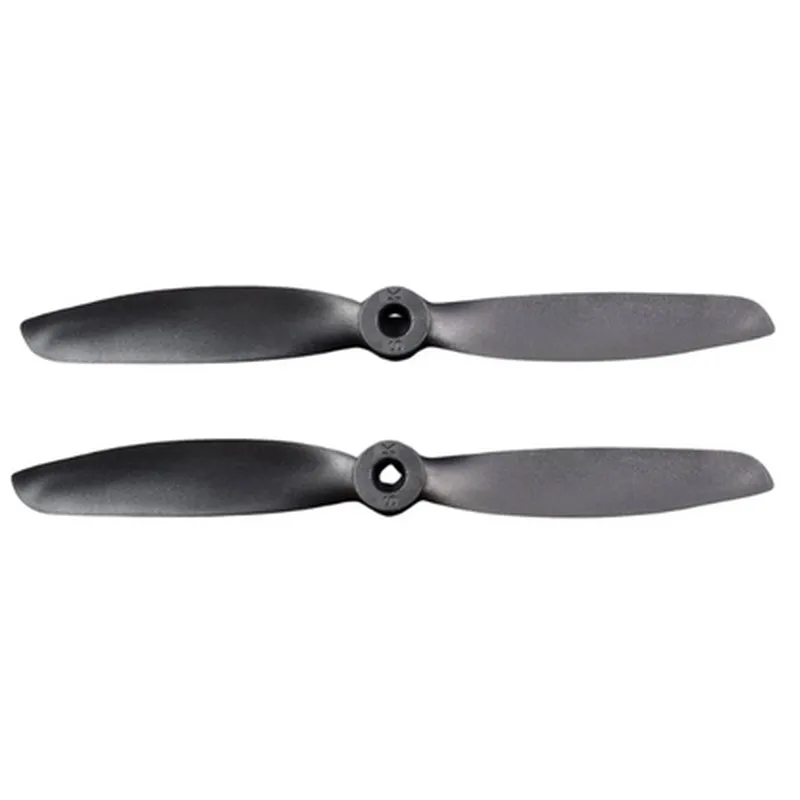
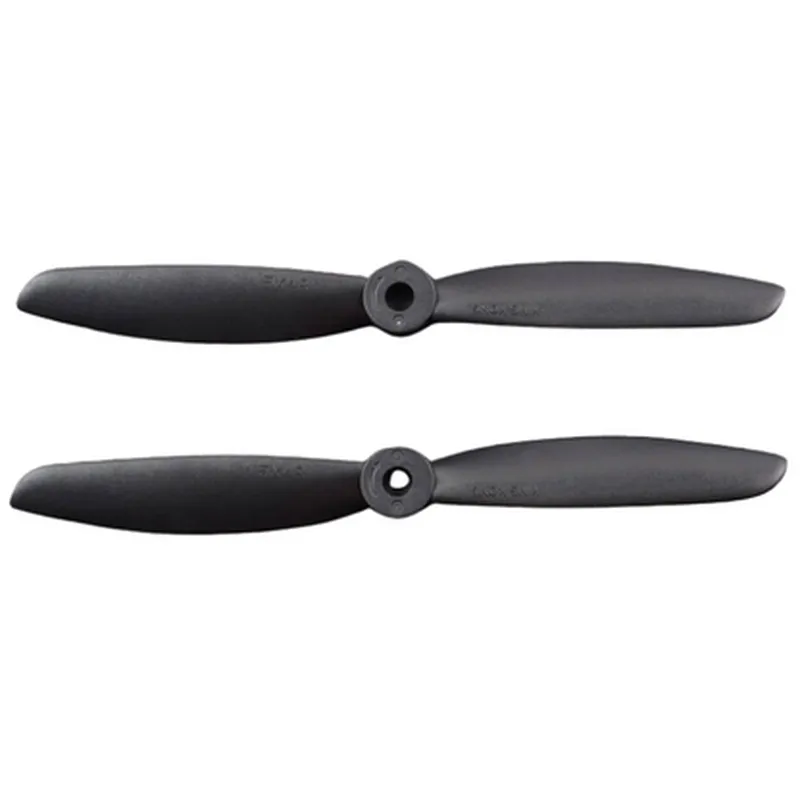
5040 54 Propeller CW/CCW Propeller- Any Color(1 Pair)

Buy Now on Stufin

Component Name

5040 54 Propeller CW/CCW Propeller - Any Color (1 Pair)

Overview

The 5040 54 Propeller CW/CCW Propeller is a pair of multi-colored propellers designed for use in unmanned aerial vehicles (UAVs), drones, and other remote-controlled (RC) aircraft. This component is a crucial part of the drone's propulsion system, providing the necessary thrust and control for stable flight.

Functionality

The primary function of the 5040 54 Propeller is to generate thrust and lift, enabling the drone to take off, hover, and maneuver. The propeller's design and construction ensure efficient airflow, resulting in a smooth and stable flight experience.

Key Features

  • Size and Design: The propeller has a diameter of 5 inches (127mm) and a pitch of 4 inches (102mm). The unique design features a curved blade shape, which enhances airflow and reduces wind resistance.
  • CW/CCW Configuration: The propeller pair consists of one clockwise (CW) and one counter-clockwise (CCW) rotation propeller. This configuration enables the drone to maintain stability and control during flight, as the CW propeller spins in one direction and the CCW propeller spins in the opposite direction.
  • Multi-Color Options: The propellers are available in various colors, allowing users to customize their drone's appearance and personalize their flight experience.
  • Durable Construction: The propellers are made from high-quality, impact-resistant materials that can withstand the stresses of flight and minor crashes.
  • Balance and Symmetry: The propellers are carefully balanced and symmetrical, ensuring that they produce consistent and efficient airflow, which is essential for stable flight.
  • Compatibility: The 5040 54 Propeller is compatible with a wide range of drone motors and flight controllers, making it a versatile and widely applicable component.
  • Easy Installation: The propellers are designed for easy installation and removal, with a simple screw-on or clip-on mechanism (depending on the motor and flight controller).
  • Weight and Dimension: The propellers are lightweight and compact, weighing approximately [X] grams each, with a diameter of 5 inches (127mm) and a height of [X] mm.

Technical Specifications

Material

High-quality, impact-resistant plastic

Diameter

5 inches (127mm)

Pitch

4 inches (102mm)

Weight

Approximately [X] grams per propeller

Rotation

CW and CCW

Compatibility

Compatible with a wide range of drone motors and flight controllers

Color Options

Multiple colors available

Application

The 5040 54 Propeller CW/CCW Propeller is suitable for a wide range of applications, including

Unmanned Aerial Vehicles (UAVs)

Drones

Remote-Controlled (RC) Aircraft

Aerial Photography and Videography

Racing Drones

Hobbyist and Commercial Drone Operations

Conclusion

The 5040 54 Propeller CW/CCW Propeller is a high-quality, durable, and versatile component designed for use in various drone applications. With its efficient airflow design, durable construction, and easy installation, this propeller pair is an excellent choice for drone enthusiasts and professionals alike.

Pin Configuration

  • Component Documentation: 5040 54 Propeller CW/CCW Propeller (1 Pair)
  • Overview
  • The 5040 54 Propeller CW/CCW Propeller is a pair of propellers designed for use in drone and UAV applications. The propeller set consists of one clockwise (CW) and one counterclockwise (CCW) propeller, each with a diameter of 5 inches and a pitch of 4 inches.
  • Pinout
  • The propeller set does not have any electronic pins, as it is a mechanical component. Instead, it has a mounting system to attach to a motor shaft.
  • Mounting Structure
  • To connect the propeller to a motor shaft, follow these steps:
  • CW Propeller
  • Mounting Hole 1:
  • + Location: Center of the propeller hub
  • + Type: M5 thread
  • + Purpose: Attaches to the motor shaft
  • Mounting Hole 2:
  • + Location: 12 o'clock position on the propeller hub
  • + Type: M2 thread
  • + Purpose: Secures the propeller to the motor shaft using a screw
  • CCW Propeller
  • Mounting Hole 1:
  • + Location: Center of the propeller hub
  • + Type: M5 thread
  • + Purpose: Attaches to the motor shaft
  • Mounting Hole 2:
  • + Location: 12 o'clock position on the propeller hub
  • + Type: M2 thread
  • + Purpose: Secures the propeller to the motor shaft using a screw
  • Connection Procedure
  • 1. Mounting the Propeller to the Motor Shaft:
  • Insert the motor shaft into the Mounting Hole 1 of the propeller hub.
  • Secure the propeller to the motor shaft using a screw through Mounting Hole 2.
  • Tighten the screw firmly to ensure a secure connection.
  • 2. Repeat the process for the second propeller:
  • Mount the CCW propeller to the motor shaft using the same process as above.
  • Important Notes
  • Make sure to match the CW propeller with the CW motor output and the CCW propeller with the CCW motor output to ensure proper rotation.
  • Always follow the manufacturer's instructions for motor and propeller installation to avoid damage or injury.
  • Properly balance the propellers before flight to ensure stable and safe operation.

Code Examples

Component Documentation: 5040 54 Propeller CW/CCW Propeller- Any Color (1 Pair)
Overview
The 5040 54 Propeller CW/CCW Propeller is a pair of propellers designed for use with quadcopter or drone applications. Each propeller has a diameter of 5 inches and a pitch of 4 inches, making them suitable for small to medium-sized drone platforms. The CW (clockwise) and CCW (counter-clockwise) propellers are designed to work in tandem to provide stability and lift.
Technical Specifications
Propeller Diameter: 5 inches (12.7 cm)
 Propeller Pitch: 4 inches (10.2 cm)
 Material: Durable plastic
 Weight: 10 grams (each propeller)
 Color: Available in various colors
 Thread Type: M5
Pinout and Connection
The propellers do not have any electronic connections. They are designed to be attached to a motor or ESC (Electronic Speed Controller) using the M5 thread.
Code Examples
Example 1: Basic Drone Flight using Arduino
In this example, we will demonstrate how to use the propellers with an Arduino board and a quadcopter motor driver to control the drone's flight.
```c++
#include <QuadCopter.h>
// Define motor pins
const int motorFL = 2;  // Front-left motor
const int motorFR = 3;  // Front-right motor
const int motorRL = 4;  // Rear-left motor
const int motorRR = 5;  // Rear-right motor
QuadCopter quadCopter = QuadCopter(motorFL, motorFR, motorRL, motorRR);
void setup() {
  // Initialize motor pins as outputs
  pinMode(motorFL, OUTPUT);
  pinMode(motorFR, OUTPUT);
  pinMode(motorRL, OUTPUT);
  pinMode(motorRR, OUTPUT);
}
void loop() {
  // Set motor speeds to 50% (adjust as needed)
  quadCopter.setMotorSpeed(50, 50, 50, 50);
  delay(1000); // Hold for 1 second
// Change motor speeds to 75% (adjust as needed)
  quadCopter.setMotorSpeed(75, 75, 75, 75);
  delay(1000); // Hold for 1 second
}
```
Example 2: Drone Stabilization using Raspberry Pi and Python
In this example, we will demonstrate how to use the propellers with a Raspberry Pi and a Python script to control the drone's stabilization.
```python
import RPi.GPIO as GPIO
import time
# Define motor pins
motor_FL = 17  # Front-left motor
motor_FR = 23  # Front-right motor
motor_RL = 24  # Rear-left motor
motor_RR = 25  # Rear-right motor
# Set up GPIO pins
GPIO.setmode(GPIO.BCM)
GPIO.setup(motor_FL, GPIO.OUT)
GPIO.setup(motor_FR, GPIO.OUT)
GPIO.setup(motor_RL, GPIO.OUT)
GPIO.setup(motor_RR, GPIO.OUT)
# Set motor speeds to 50% (adjust as needed)
GPIO.output(motor_FL, GPIO.HIGH)
GPIO.output(motor_FR, GPIO.HIGH)
GPIO.output(motor_RL, GPIO.HIGH)
GPIO.output(motor_RR, GPIO.HIGH)
time.sleep(1)  # Hold for 1 second
# Change motor speeds to 75% (adjust as needed)
GPIO.output(motor_FL, GPIO.LOW)
GPIO.output(motor_FR, GPIO.LOW)
GPIO.output(motor_RL, GPIO.LOW)
GPIO.output(motor_RR, GPIO.LOW)
time.sleep(1)  # Hold for 1 second
```
Additional Resources
For more information on drone flight control and stabilization, refer to the documentation of the quadcopter flight controller or motor driver used in your setup.
 For more information on the Arduino or Raspberry Pi boards, refer to their respective official documentation.