500K 3386P Trimpot (Pack of 5)


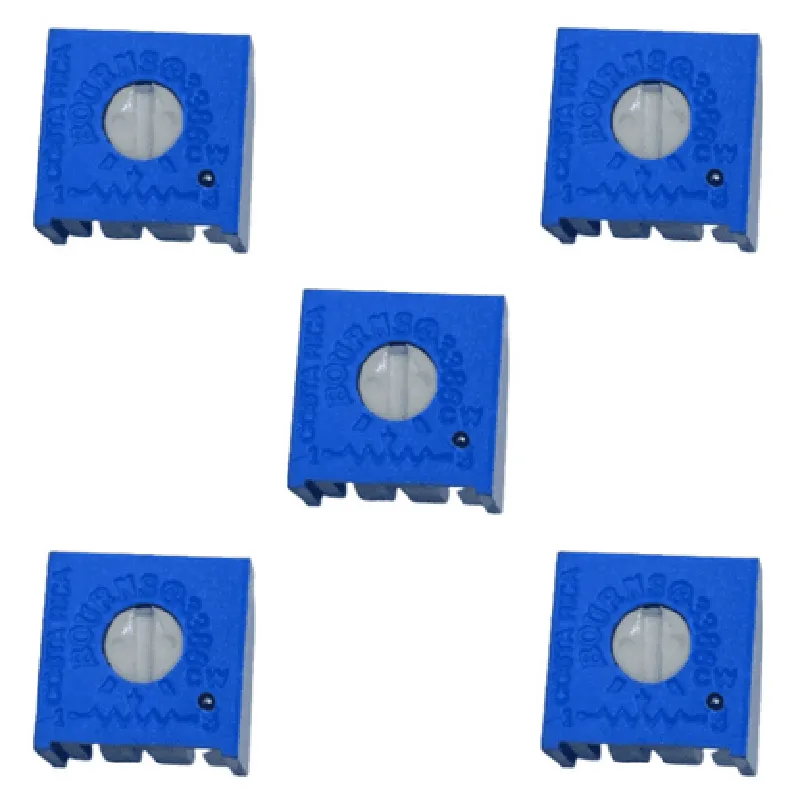
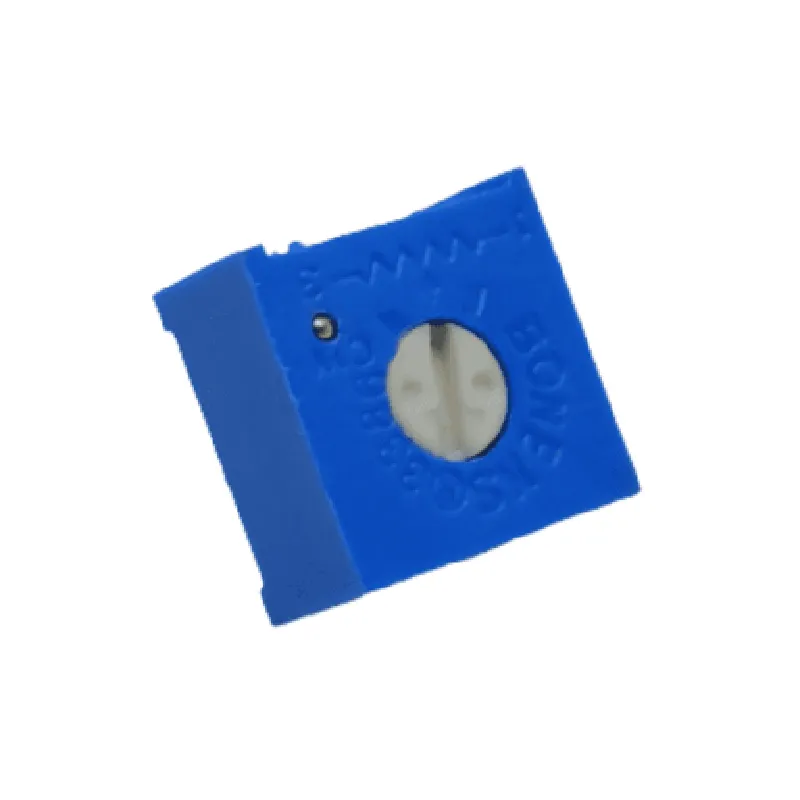
500K 3386P Trimpot (Pack of 5)
The 500K 3386P Trimpot is a precision potentiometer designed for trimming and adjusting circuit parameters in electronic devices. It is a variable resistor that allows for precise adjustments to be made to circuit resistance, often used in applications where fine-tuning is required.
| The primary function of the 500K 3386P Trimpot is to provide a variable resistance value within a specific range, allowing the user to adjust the circuit's behavior accordingly. This is achieved by rotating the potentiometer's shaft, which changes the resistive path between the three terminals. The resulting resistance value can be used to control various circuit parameters, such as |
Voltage dividers
Gain control
Impedance matching
Signal attenuation
The 500K 3386P Trimpot offers a wide resistance range, allowing for precise adjustments to be made to circuit parameters.
| The 500K 3386P Trimpot is suitable for use in a variety of applications, including |
Audio equipment
Measuring instruments
Medical devices
Industrial control systems
Automotive systems
Consumer electronics
| Parameter | Value |
| --- | --- |
| Resistance Range | 500K Ohms |
| Tolerance | 10% |
| Power Rating | 0.5W |
| Operating Temperature | -40C to +125C |
| Adjustment Cycle Life | 100,000 cycles |
| Terminal Material | Copper alloy |
| Insulation Material | Phenolic resin |
| Dimensions | 9.5mm x 4.5mm x 4.5mm |
The 500K 3386P Trimpot should be handled with care to avoid damage or contamination.
The component is sensitive to environmental factors such as moisture and extreme temperatures, which can affect its performance and lifespan.
It is recommended to follow proper soldering techniques and guidelines when mounting the trimpot on a PCB.
By providing a precise and stable resistance value, the 500K 3386P Trimpot is an essential component in many electronic devices, allowing for fine-tuning and adjustments to be made to circuit parameters.
Component Documentation: 500K 3386P Trimpot (Pack of 5)OverviewThe 500K 3386P Trimpot is a multi-turn potentiometer, commonly used in electronic circuits to vary resistance and voltage levels. This component is a pack of 5 trimpots, offering flexibility and convenience for various applications. The 500K 3386P Trimpot features a 500k resistance rating, a 3386P part number, and a compact design.Technical SpecificationsResistance: 500k
Part Number: 3386P
Package: Pack of 5
Multi-turn potentiometer
Compact designPinoutThe 500K 3386P Trimpot has three pins:Pin 1: Center Wiper ( CW )
Pin 2: Left Leg ( LL )
Pin 3: Right Leg ( RL )ApplicationsThe 500K 3386P Trimpot is suitable for various applications, including:Audio equipment (volume control, tone control)
Sensors and transducers (gain adjustment, signal conditioning)
Power supplies (voltage regulation, current limiting)
Robotics and automation (motor control, sensor calibration)Code Examples### Example 1: Arduino Volume ControlIn this example, we'll use the 500K 3386P Trimpot to control the volume of an audio signal using an Arduino board.```c++
// Pin connections
const int trimpotPin = A0; // Trimpot wiper pin connected to Arduino analog input A0
const int speakerPin = 9; // Speaker pin connected to Arduino digital output 9void setup() {
pinMode(speakerPin, OUTPUT);
}void loop() {
int trimpotValue = analogRead(trimpotPin); // Read trimpot value (0-1023)
int volume = map(trimpotValue, 0, 1023, 0, 255); // Map trimpot value to 0-255 range
analogWrite(speakerPin, volume); // Adjust speaker volume based on trimpot value
delay(10);
}
```### Example 2: Raspberry Pi Voltage DividerIn this example, we'll use the 500K 3386P Trimpot to create a voltage divider circuit to measure an analog input signal using a Raspberry Pi.```python
import RPi.GPIO as GPIO
import time# Pin connections
TRIMPOT_PIN = 17 # Trimpot wiper pin connected to Raspberry Pi GPIO 17
ANALOG_INPUT_PIN = 18 # Analog input pin connected to Raspberry Pi GPIO 18GPIO.setmode(GPIO.BCM)
GPIO.setup(TRIMPOT_PIN, GPIO.IN)while True:
trimpot_value = GPIO.input(TRIMPOT_PIN)
analog_input_voltage = (trimpot_value / 1023.0) 3.3 # Calculate analog input voltage (0-3.3V)
print("Analog input voltage:", analog_input_voltage)
time.sleep(0.1)
```These code examples demonstrate how to use the 500K 3386P Trimpot to control an analog output and measure an analog input signal, respectively. By adjusting the trimpot's resistance, you can vary the output voltage or signal level in your circuit.