2K 3386P Trimpot (Pack of 5)


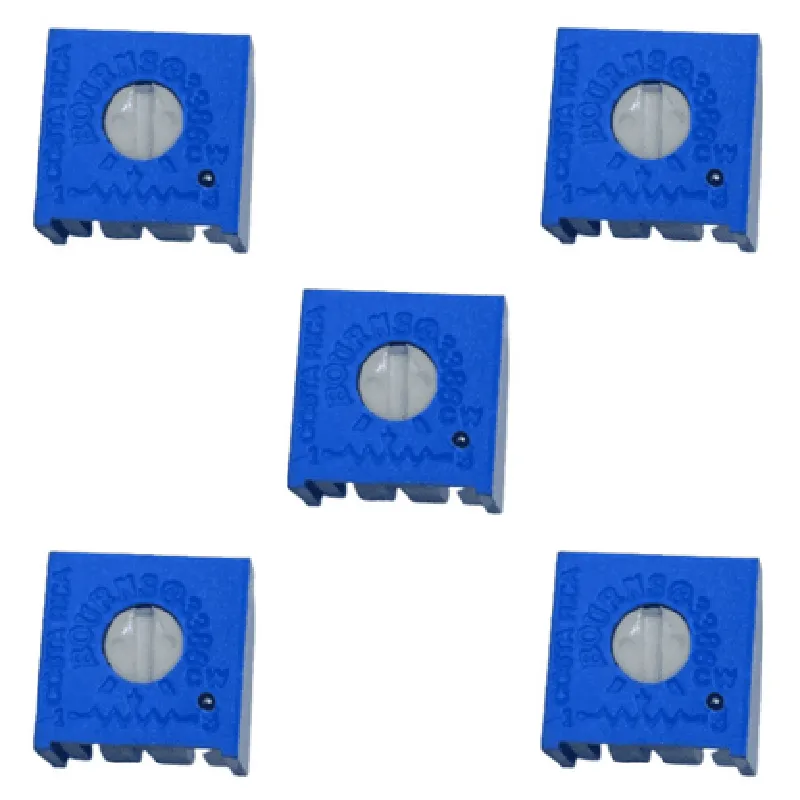
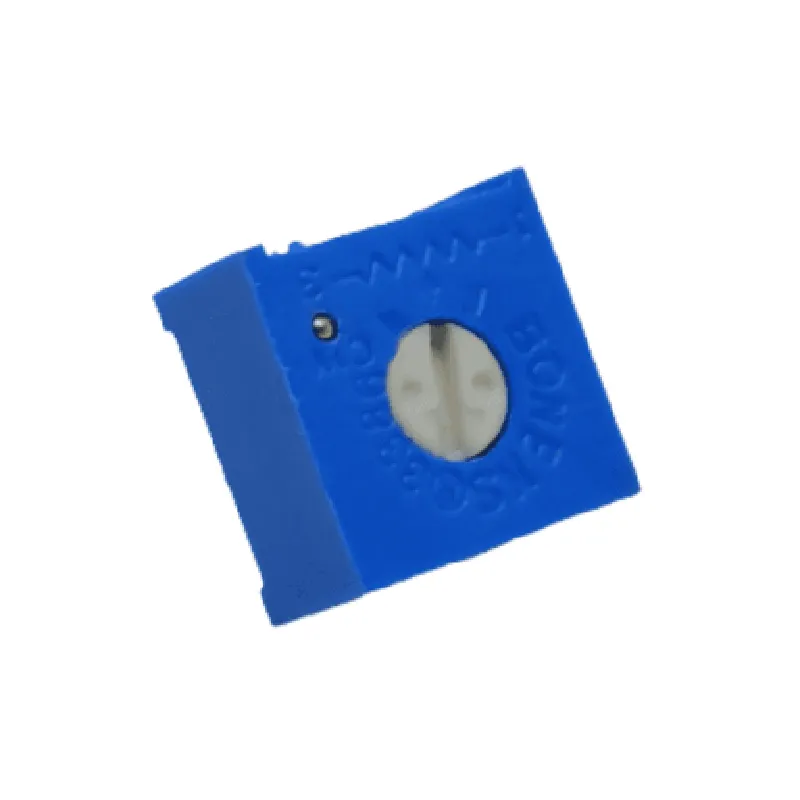
2K 3386P Trimpot (Pack of 5)
The 2K 3386P Trimpot is a type of variable resistor, also known as a trimpot or trimming potentiometer, designed for precise adjustments in electronic circuits. This pack of 5 trimpots is ideal for prototyping, development, and production applications.
The 2K 3386P Trimpot is a three-terminal device that allows for precise adjustment of resistance values within a specific range. The trimpot acts as a voltage divider, allowing the user to adjust the output voltage by rotating the shaft. This adjustment enables fine-tuning of voltage levels, signal amplitudes, and impedance matching in various electronic circuits.
2 k
20%
0.5 W
-40C to 125C
Through-hole (THD)
Slotted
12 mm
4 mm
9 mm
22 mm
1 dB
100 turns
300
300
Adjustable resistance for precise circuit tuning
Compact size for easy integration into compact designs
Durable construction for reliable operation
RoHS compliant and lead-free
Tone controls, volume controls, and impedance matching
Signal conditioning, instrumentation, and monitoring systems
Process control, sensors, and actuator circuits
Sensor interfaces, voltage regulation, and signal conditioning
Fine-tuning of voltage levels and signal amplitudes
The 2K 3386P Trimpot is available in a pack of 5, making it an economical option for designers and engineers. When ordering, be sure to specify the correct package type, resistance value, and tolerance to ensure the correct component is received.
To maintain the component's performance and longevity, handle the trimpot with care to avoid mechanical stress, excessive force, and exposure to moisture. Store the component in a dry, cool environment, away from direct sunlight and extreme temperatures.
By providing a range of resistance values and a compact design, the 2K 3386P Trimpot is an essential component for any electronics designer or engineer, offering a high degree of flexibility and precision in circuit tuning and development.
Component Documentation: 2K 3386P Trimpot (Pack of 5)OverviewThe 2K 3386P Trimpot is a precision trimmer potentiometer designed for various IoT applications. This component is a variable resistor that allows for fine-tuning of circuit parameters, making it an essential component in many IoT projects. This documentation provides an overview of the component's features, specifications, and code examples to demonstrate its usage in different contexts.Features and SpecificationsResistance: 2k
Power Rating: 0.5W
Material: Carbon
Operating Temperature: -40C to 150C
Adjustment Type: Screwdriver adjustment
Package: 5 pieces per pack
Dimensions: 9mm x 4mm x 3.5mm (L x W x H)Code Examples### Example 1: Analog Voltage Divider with ArduinoIn this example, we will use the 2K 3386P Trimpot to create an analog voltage divider circuit with an Arduino board.Circuit DiagramR1 (2K 3386P Trimpot) - VCC - R2 (1k) - GND
| |
A0 (Analog Input)Code
```c++
const int POT_PIN = A0; // Analog input pinvoid setup() {
Serial.begin(9600);
}void loop() {
int sensorValue = analogRead(POT_PIN);
float voltage = sensorValue (5.0 / 1023.0);
Serial.print("Voltage: ");
Serial.print(voltage);
Serial.println("V");
delay(500);
}
```
In this example, the 2K 3386P Trimpot is used to divide the voltage between VCC and GND, creating an analog signal that is read by the Arduino's analog input pin (A0). The code reads the analog value and converts it to a voltage reading, which is then printed to the serial monitor.### Example 2: Audio Volume Control with Raspberry PiIn this example, we will use the 2K 3386P Trimpot to control the volume of an audio signal using a Raspberry Pi.Circuit DiagramR1 (2K 3386P Trimpot) - Audio Signal - R2 (1k) - GND
| |
GPIO 18 (PWM Output)Code
```python
import RPi.GPIO as GPIO
import timeGPIO.setmode(GPIO.BCM)
GPIO.setup(18, GPIO.OUT)p = GPIO.PWM(18, 50) # 50Hz PWM frequencywhile True:
pot_value = GPIO.input(18) # Read POT value
pwm_duty_cycle = pot_value (100.0 / 1023.0)
p.ChangeDutyCycle(pwm_duty_cycle)
time.sleep(0.01)
```
In this example, the 2K 3386P Trimpot is used to adjust the PWM duty cycle of the Raspberry Pi's GPIO 18 pin, which controls the volume of an audio signal. The code reads the POT value and sets the PWM duty cycle accordingly, allowing for smooth volume control.### Example 3: LED Dimming with ESP32In this example, we will use the 2K 3386P Trimpot to dim an LED connected to an ESP32 board.Circuit DiagramR1 (2K 3386P Trimpot) - LED - R2 (1k) - GND
| |
GPIO 2 (Digital Output)Code
```c++
#include <WiFi.h>const int LED_PIN = 2; // Digital output pinvoid setup() {
pinMode(LED_PIN, OUTPUT);
}void loop() {
int pot_value = analogRead(2); // Read POT value
int brightness = map(pot_value, 0, 1023, 0, 255);
analogWrite(LED_PIN, brightness);
delay(10);
}
```
In this example, the 2K 3386P Trimpot is used to adjust the brightness of an LED connected to the ESP32's digital output pin (GPIO 2). The code reads the POT value and sets the LED brightness accordingly using the `analogWrite()` function.These examples demonstrate the versatility of the 2K 3386P Trimpot in various IoT applications, including analog voltage division, audio volume control, and LED dimming.