Stufin
Home Quick Cart Profile

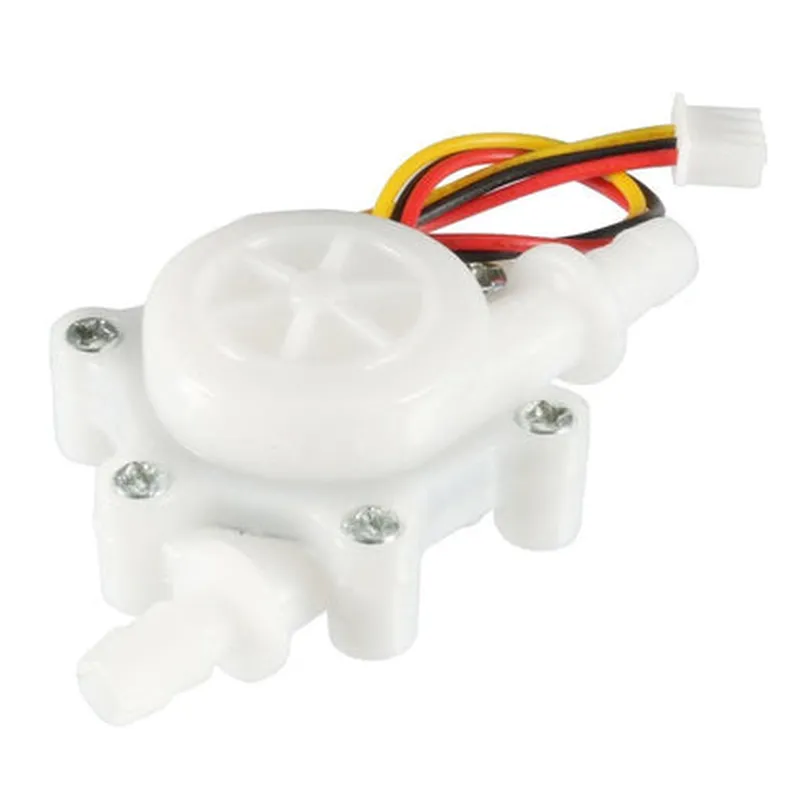
Mini Water Flow Sensor (White)


Buy Now on Stufin

Component Name

Mini Water Flow Sensor (White)
Description

The Mini Water Flow Sensor (White) is a compact, reliable, and accurate sensor designed to measure the flow rate of liquids, particularly water, in a variety of applications. This sensor is ideal for monitoring water flow in industrial, commercial, and residential settings, such as in plumbing systems, irrigation systems, and medical equipment.
Functionality

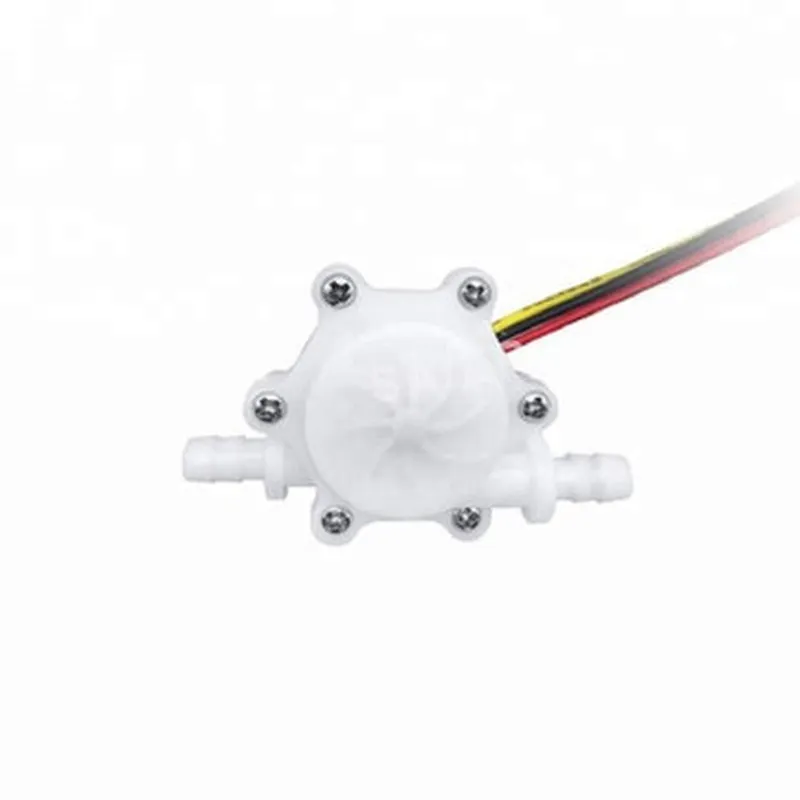
The Mini Water Flow Sensor works on the principle of hall effect, which detects changes in the magnetic field generated by the spinning magnet attached to the rotor. The rotor is connected to a piston that moves in response to the fluid flow, causing the magnet to rotate. The hall effect sensor measures the rotation speed of the magnet, which is directly proportional to the fluid flow rate. The sensor outputs a pulse signal, where the frequency of the pulses is directly proportional to the flow rate.

Key Features

  • High Accuracy: The Mini Water Flow Sensor provides accurate flow rate measurements, with an error margin of 5% of the full-scale range.
  • Compact Design: The sensor's compact size (28mm x 22mm x 12mm) makes it ideal for applications where space is limited.
  • Low Power Consumption: The sensor operates at a low voltage (DC 5-24V) and consumes minimal power (less than 20mA), making it suitable for battery-powered devices.
  • High Sensitivity: The sensor can detect flow rates as low as 1L/min, making it suitable for applications where low-flow detection is crucial.
  • Wide Flow Rate Range: The sensor can measure flow rates from 1L/min to 30L/min, covering a wide range of applications.
  • Sturdy Construction: The sensor's body is made of high-quality plastic, ensuring durability and resistance to corrosion.
  • Easy Installation: The sensor features a 1/2" BSP thread and a compact design, making it easy to install in pipes of various sizes.
  • Output Signal: The sensor outputs a pulse signal, which can be easily interfaced with microcontrollers, PLCs, or other electronic devices.
  • Operating Temperature: The sensor operates in a wide temperature range (-20C to 80C), making it suitable for use in various environmental conditions.

Applications

  • Industrial Automation: Monitor water flow in industrial processes, such as cooling systems, washing machines, and cleaning systems.
  • Smart Home Automation: Measure water flow in residential plumbing systems, detecting leaks and optimizing water usage.
  • Agricultural Irrigation: Monitor water flow in irrigation systems, optimizing crop growth and reducing water waste.
  • Medical Equipment: Measure fluid flow in medical devices, such as dialysis machines and infusion pumps.

Technical Specifications

| Parameter | Value |

| --- | --- |

| Flow Rate Range | 1L/min to 30L/min |

| Accuracy | 5% of full-scale range |

| Operating Voltage | DC 5-24V |

| Power Consumption | Less than 20mA |

| Output Signal | Pulse signal ( frequency proportional to flow rate) |

| Operating Temperature | -20C to 80C |

| Thread Size | 1/2" BSP |

| Sensor Body Material | High-quality plastic |

| Dimensions | 28mm x 22mm x 12mm |

| Weight | Approximately 50g |

Note

The specifications are subject to change without notice. Please verify the specifications with the manufacturer or supplier before using the component in your application.

Pin Configuration

  • Mini Water Flow Sensor (White) Pinout Explanation
  • The Mini Water Flow Sensor (White) is a versatile and compact device used to measure the flow rate of fluids in various IoT applications. This sensor has a simple and intuitive pinout, making it easy to integrate into electronic circuits. Below is a detailed explanation of each pin, along with a step-by-step guide on how to connect them.
  • Pinout:
  • 1. VCC (Red Wire)
  • Function: Power supply (+5V)
  • Description: This pin provides the necessary power to the sensor. Connect it to a 5V power source, such as an Arduino board or a power supply module.
  • 2. GND (Black Wire)
  • Function: Ground
  • Description: This pin is the ground connection for the sensor. Connect it to a GND pin on your microcontroller or power supply module.
  • 3. SIGNAL (Yellow Wire)
  • Function: Output signal
  • Description: This pin provides a pulse output signal proportional to the fluid flow rate. Connect it to a digital pin on your microcontroller, such as an Arduino board.
  • Connection Structure:
  • To connect the Mini Water Flow Sensor (White) to your microcontroller or development board, follow these steps:
  • Step 1: Power Connection
  • Connect the VCC (Red Wire) to the 5V power supply pin on your microcontroller or power supply module.
  • Connect the GND (Black Wire) to the GND pin on your microcontroller or power supply module.
  • Step 2: Signal Connection
  • Connect the SIGNAL (Yellow Wire) to a digital input pin on your microcontroller, such as D2 on an Arduino Uno board.
  • Make sure to use a digital pin that can handle interrupt-based input, as the sensor output is a pulse signal.
  • Example Connection Diagram:
  • Here's an example connection diagram using an Arduino Uno board:
  • VCC (Red Wire) 5V pin on Arduino Uno
  • GND (Black Wire) GND pin on Arduino Uno
  • SIGNAL (Yellow Wire) D2 pin on Arduino Uno
  • Note:
  • Make sure to use a stable 5V power supply to avoid any damage to the sensor.
  • The sensor output signal is a pulse signal, so you'll need to use a digital input pin that can handle interrupt-based input.
  • Always refer to the datasheet and user manual for specific connection requirements and guidelines for your particular microcontroller or development board.

Code Examples

Mini Water Flow Sensor (White) Documentation
Overview
The Mini Water Flow Sensor (White) is a digital flow sensor designed to measure the flow rate of liquid fluids. It's a compact, easy-to-use sensor that provides accurate measurement of fluid flow in industrial, commercial, and residential applications. This sensor is particularly useful in IoT projects related to water management, irrigation systems, and liquid dispensing machines.
Technical Specifications
Operating Voltage: 5V DC
 Output Signal: Digital (High/Low)
 Flow Measurement Range: 1-30 L/min
 Resolution: 1 pulse per liter
 Sensor Material: Brass
 Dimensions: 27mm x 18mm x 12mm (L x W x H)
Pinout
The Mini Water Flow Sensor has three pins:
VCC: 5V power supply
 GND: Ground
 OUT: Digital output signal (High/Low)
Code Examples
### Example 1: Basic Water Flow Measurement using Arduino
In this example, we'll connect the Mini Water Flow Sensor to an Arduino board to measure the water flow rate.
```c++
const int flowSensorPin = 2;  // Digital input pin for flow sensor output
volatile int flowCount = 0;  // Variable to count the pulses
void setup() {
  pinMode(flowSensorPin, INPUT);
  attachInterrupt(digitalPinToInterrupt(flowSensorPin), countFlow, RISING);
  Serial.begin(9600);
}
void loop() {
  Serial.print("Flow Rate: ");
  Serial.print(flowCount);
  Serial.println(" L/min");
  flowCount = 0;  // Reset the counter
  delay(1000);  // Take readings every second
}
void countFlow() {
  flowCount++;  // Increment the pulse counter
}
```
### Example 2: Water Flow Monitoring using Raspberry Pi (Python)
In this example, we'll connect the Mini Water Flow Sensor to a Raspberry Pi to monitor the water flow rate and log the data to a CSV file.
```python
import RPi.GPIO as GPIO
import time
import csv
# Set up GPIO pins
GPIO.setmode(GPIO.BCM)
flowSensorPin = 17  # GPIO pin for flow sensor output
GPIO.setup(flowSensorPin, GPIO.IN, pull_up_down=GPIO.PUD_UP)
# Set up CSV logging
log_file = open('water_flow_log.csv', 'w', newline='')
log_writer = csv.writer(log_file)
while True:
    # Count the pulses for 1 second
    pulse_count = 0
    start_time = time.time()
    while time.time() - start_time < 1:
        if GPIO.input(flowSensorPin) == GPIO.HIGH:
            pulse_count += 1
    flow_rate = pulse_count  # 1 pulse per liter
    log_writer.writerow([time.strftime('%Y-%m-%d %H:%M:%S'), flow_rate])
    log_file.flush()
    print(f"Flow Rate: {flow_rate} L/min")
    time.sleep(1)
```
Note: These code examples are for illustration purposes only and may require modifications to suit your specific project requirements. Ensure you follow proper safety precautions when working with electrical and water-based systems.