1501MG Metal Steering Gear


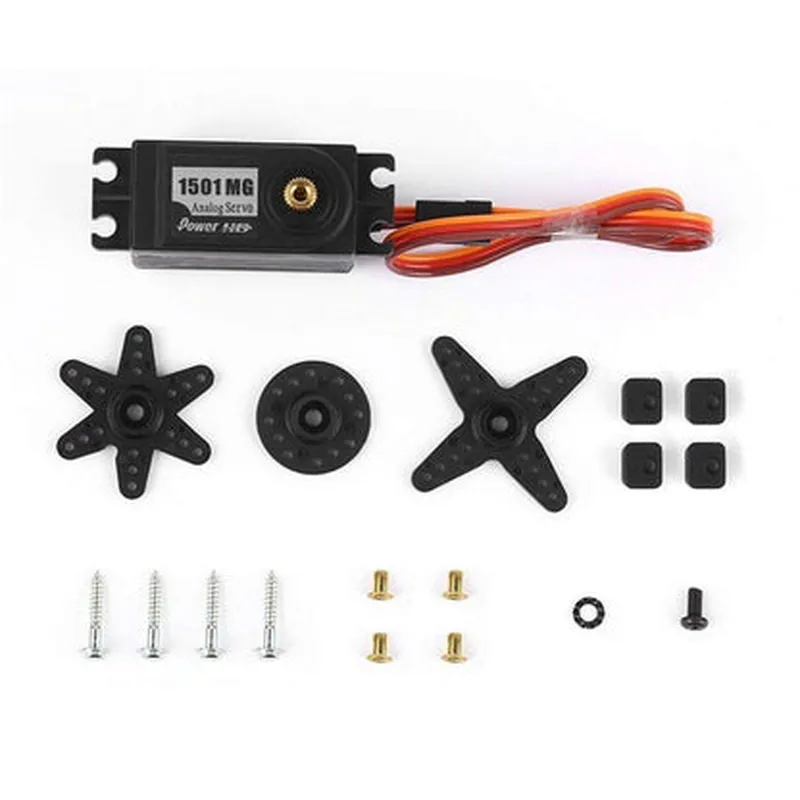
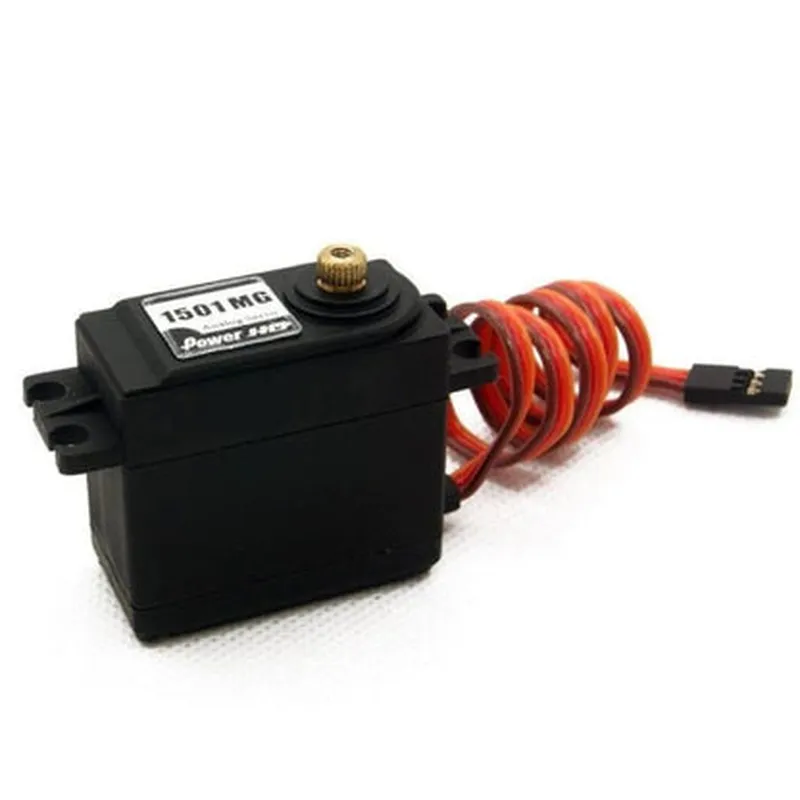
1501MG Metal Steering Gear
The 1501MG Metal Steering Gear is a high-quality, precision-engineered component designed for robotic and mechatronic systems that require accurate and reliable steering capabilities. This component is specifically intended for use in Internet of Things (IoT) applications, where precise control and movement are critical.
The 1501MG Metal Steering Gear serves as a crucial component in robotic and mechatronic systems, enabling smooth and precise steering movements. Its primary function is to transmit rotational motion from a motor or other actuator to a linear motion, allowing the system to change direction or move in a specific path. This component is ideal for applications requiring high accuracy, reliability, and durability, such as autonomous vehicles, robotic arms, and precision assembly systems.
| Adjustable (1 | 1 to 5:1) |
Up to 10 Nm
High-strength steel alloy
High-quality ball bearings
-20C to 80C
60 mm x 40 mm x 20 mm (L x W x H)
250 grams
M3 screw mounting
| The 1501MG Metal Steering Gear is suitable for a wide range of IoT applications, including |
Autonomous vehicles
Robotic arms and grippers
Precision assembly systems
Medical devices
Aerospace systems
Industrial automation systems
The 1501MG Metal Steering Gear is a high-performance component designed for demanding IoT applications that require precise and reliable steering movements. Its robust construction, adjustable steering ratio, and low friction design make it an ideal choice for systems that demand high accuracy and durability.
1501MG Metal Steering Gear DocumentationOverviewThe 1501MG Metal Steering Gear is a high-quality, precision-engineered component designed for use in robotic and automated systems. It provides a robust and reliable steering mechanism for demanding applications, offering a high gear ratio and excellent durability.Technical SpecificationsGear Ratio: 150:1
Operating Voltage: 6-12V DC
Stall Torque: 1.5 kg/cm
No-Load Speed: 60 RPM
Weight: 120gInterface and PinoutThe 1501MG Metal Steering Gear has a standard 3-pin interface:Pin 1: VCC (6-12V DC)
Pin 2: Signal ( PWM or Directional Control)
Pin 3: GNDCode Examples### Example 1: Basic Motor Control using ArduinoThis example demonstrates how to control the 1501MG Metal Steering Gear using an Arduino board and the built-in `Servo` library.
```c
#include <Servo.h>Servo steeringGear; // Create a servo objectvoid setup() {
steeringGear.attach(9); // Attach the steering gear to digital pin 9
}void loop() {
steeringGear.write(0); // Set the steering gear to 0 degrees (center position)
delay(1000);
steeringGear.write(90); // Set the steering gear to 90 degrees (right turn)
delay(1000);
steeringGear.write(-90); // Set the steering gear to -90 degrees (left turn)
delay(1000);
}
```
### Example 2: PWM Control using Raspberry Pi and PythonThis example demonstrates how to control the 1501MG Metal Steering Gear using a Raspberry Pi and Python, utilizing the `RPi.GPIO` library for PWM control.
```python
import RPi.GPIO as GPIO
import timeGPIO.setmode(GPIO.BCM)
GPIO.setup(18, GPIO.OUT) # Set up GPIO 18 as an outputpwm = GPIO.PWM(18, 50) # Create a PWM object with a frequency of 50 Hztry:
while True:
pwm.start(0) # Start the PWM signal
pwm.ChangeDutyCycle(50) # Set the duty cycle to 50% (center position)
time.sleep(1)
pwm.ChangeDutyCycle(75) # Set the duty cycle to 75% (right turn)
time.sleep(1)
pwm.ChangeDutyCycle(25) # Set the duty cycle to 25% (left turn)
time.sleep(1)
except KeyboardInterrupt:
pwm.stop()
GPIO.cleanup()
```
### Example 3: Autonomous Robot Steering using C++ and a MicrocontrollerThis example demonstrates how to integrate the 1501MG Metal Steering Gear into an autonomous robot system using a microcontroller and C++.
```c
#include <iostream>
#include <microcontroller.h>#define STEERING_PIN 2 // Define the steering gear pinvoid setup() {
pinMode(STEERING_PIN, OUTPUT); // Set up the steering gear pin as an output
}void loop() {
// Read sensor data from the robot's sensors
int sensorData = readSensorData();
// Calculate the desired steering angle based on sensor data
int steeringAngle = calculateSteeringAngle(sensorData);
// Set the steering gear to the desired angle
analogWrite(STEERING_PIN, steeringAngle);
delay(50);
}
```
Note: This example assumes a custom `microcontroller.h` header file and `readSensorData()` and `calculateSteeringAngle()` functions, which are not provided in this documentation. You will need to implement these functions based on your specific robot system and sensors.