The SIM908 module features a built-in GPS receiver, which provides location data in the form of NMEA 0183 sentences. This allows devices to track their location, velocity, and other relevant GPS-related data.


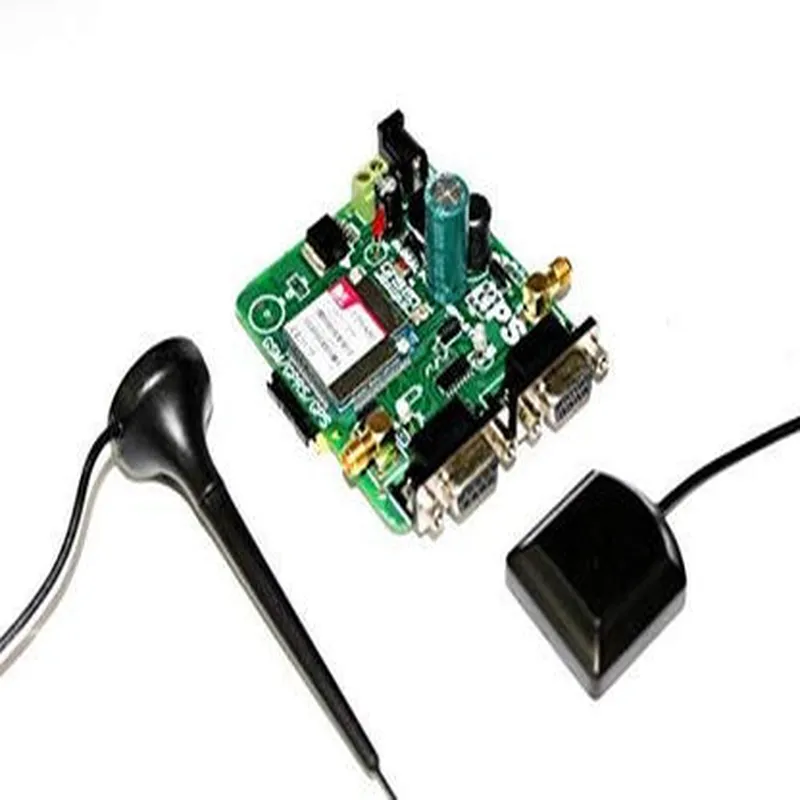
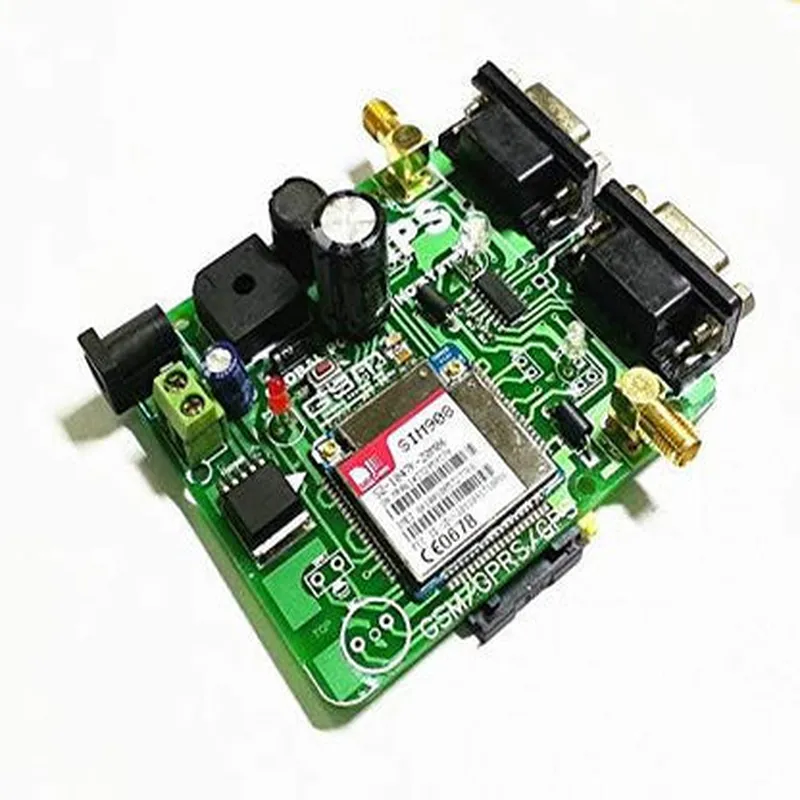
The SIM908 module features a built-in GPS receiver, which provides location data in the form of NMEA 0183 sentences. This allows devices to track their location, velocity, and other relevant GPS-related data.
The module supports data transfer protocols such as TCP/IP, UDP, and HTTP, enabling devices to communicate with remote servers and apps.
Key Features
| The SIM908 GSM-GPRS-GPS Modem offers the following key features | |
| Quad-Band GSM | The module supports four frequency bands, including GSM 850, 900, 1800, and 1900 MHz, ensuring global coverage and compatibility with various cellular networks. |
| GPRS Class 10 | The module supports GPRS class 10, enabling high-speed data transfer rates of up to 85.6 kbps. |
| EDGE Class 10 | The module also supports EDGE class 10, providing data transfer rates of up to 236.8 kbps. |
+ 66-channel tracking
| + Update rate | 1 Hz to 10 Hz |
| + Accuracy | up to 2.5 meters CEP (Circular Error Probable) |
The module features a micro SIM card interface, making it easy to integrate with existing SIM card infrastructure.
The module provides both UART and USB interfaces, allowing for easy integration with a wide range of devices and systems.
The module features advanced power management capabilities, including low-power modes and adaptive power consumption, to minimize energy consumption and prolong battery life.
The module supports various operating systems, including Windows, Linux, and Android.
The SIM908 module meets various certifications, including FCC, CE, and RoHS, ensuring compliance with international regulations and standards.
Technical Specifications
| GSM/GPRS | |
| + Frequency bands | GSM 850, 900, 1800, and 1900 MHz |
| + Data transfer rate | up to 85.6 kbps (GPRS class 10) and 236.8 kbps (EDGE class 10) |
| + UART | 3.3V, 115200 bps (default), 8-bit data, 1 stop bit, no parity |
| + USB | USB 2.0, full-speed (12 Mbps) |
| + Power supply | 3.3V to 4.5V |
| + Power consumption | 1.5A (peak), 0.5A (average) |
+ 24.5 mm x 24.5 mm x 3.2 mm
-40C to +85C
-40C to +125C
Applications
| The SIM908 GSM-GPRS-GPS Modem is suitable for a wide range of applications, including |
IoT devices and sensors
M2M communications
Industrial automation
Telematics and fleet management
Remote monitoring and control systems
Asset tracking and logistics
Wearable devices and fitness trackers
Conclusion
The SIM908 GSM-GPRS-GPS Modem is a versatile and feature-rich component that provides reliable wireless communication and GPS location tracking for various applications. Its compact design, low power consumption, and ease of integration make it an ideal choice for developers and manufacturers of IoT devices and M2M systems.
SIM908 GSM-GPRS-GPS Modem DocumentationOverviewThe SIM908 GSM-GPRS-GPS Modem is a compact, quad-band wireless communication module that integrates GSM, GPRS, and GPS functionalities. It is designed for IoT applications requiring wireless communication, location tracking, and precision timing. This module supports various operating modes, including voice, SMS, USSD, and data transmission.Key FeaturesQuad-band GSM/GPRS (850/900/1800/1900 MHz)
GPS/GLONASS/QZSS/BEIDOU satellite systems
Supports SMS, USSD, and voice calls
HTTP/FTP/TCP/UDP protocols
AT command set compatible
Supply voltage: 3.4-4.5V
Operating temperature: -40C to 85CHardware InterfacesUART interface for communication with microcontrollers
SIM card slot
Antenna connectors for GSM and GPSCode ExamplesHere are three code examples demonstrating how to use the SIM908 GSM-GPRS-GPS Modem in various contexts:Example 1: Sending SMS using AT CommandsThis example shows how to send an SMS using the SIM908 module's AT command set.Hardware RequirementsSIM908 GSM-GPRS-GPS Modem
Microcontroller (e.g., Arduino)
Breadboard and jumper wiresSoftware RequirementsArduino IDECode
```c
#include <SoftwareSerial.h>#define SIM908_TX 2 // UART TX pin
#define SIM908_RX 3 // UART RX pinSoftwareSerial sim908(SIM908_TX, SIM908_RX);void setup() {
sim908.begin(9600); // Set UART baud rate
delay(1000); // Wait for SIM908 to boot up// Set SMS mode
sim908.println("AT+CMGF=1");
delay(100);
}void loop() {
// Send SMS
sim908.println("AT+CMGS=""+1234567890""");
delay(100);
sim908.println("Hello, world!"); // SMS body
delay(100);
sim908.println((char)26); // Send SMS (Ctrl+Z)
delay(100);
}
```
Example 2: Retrieving GPS Location DataThis example demonstrates how to retrieve GPS location data using the SIM908 module's GPS functionality.Hardware RequirementsSIM908 GSM-GPRS-GPS Modem
Microcontroller (e.g., Arduino)
Breadboard and jumper wires
GPS antennaSoftware RequirementsArduino IDECode
```c
#include <SoftwareSerial.h>#define SIM908_TX 2 // UART TX pin
#define SIM908_RX 3 // UART RX pinSoftwareSerial sim908(SIM908_TX, SIM908_RX);void setup() {
sim908.begin(9600); // Set UART baud rate
delay(1000); // Wait for SIM908 to boot up// Initialize GPS
sim908.println("AT+CGPS=1,1"); // Enable GPS
delay(100);
}void loop() {
// Get GPS location data
sim908.println("AT+CGPSINFO"); // Request GPS information
delay(100);
String gpsData = sim908.readStringUntil('
'); // Read GPS data// Parse GPS data
int index = gpsData.indexOf(',');
String latitude = gpsData.substring(0, index);
String longitude = gpsData.substring(index + 1);Serial.print("Latitude: ");
Serial.println(latitude);
Serial.print("Longitude: ");
Serial.println(longitude);delay(1000);
}
```
Example 3: HTTP GET Request using GPRSThis example shows how to send an HTTP GET request using the SIM908 module's GPRS functionality.Hardware RequirementsSIM908 GSM-GPRS-GPS Modem
Microcontroller (e.g., Arduino)
Breadboard and jumper wiresSoftware RequirementsArduino IDECode
```c
#include <SoftwareSerial.h>#define SIM908_TX 2 // UART TX pin
#define SIM908_RX 3 // UART RX pinSoftwareSerial sim908(SIM908_TX, SIM908_RX);void setup() {
sim908.begin(9600); // Set UART baud rate
delay(1000); // Wait for SIM908 to boot up// Initialize GPRS
sim908.println("AT+CGATT=1"); // Attach to GPRS
delay(100);
sim908.println("AT+CIPMODE=0"); // Set CIP mode
delay(100);
sim908.println("AT+CIPCSGP=1,"""