5 Kgf.cm (68.5 oz.in)


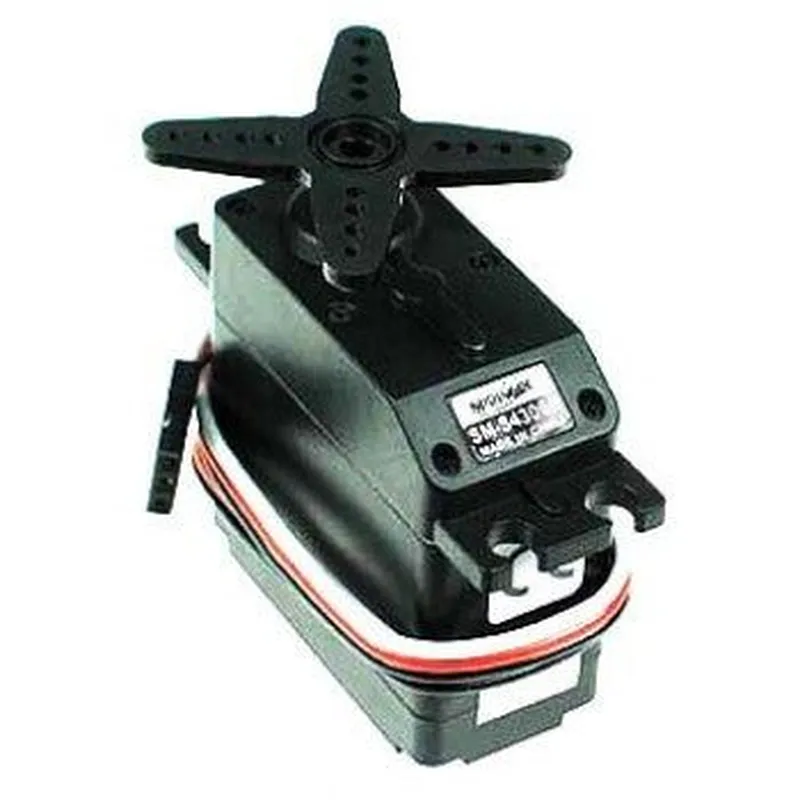
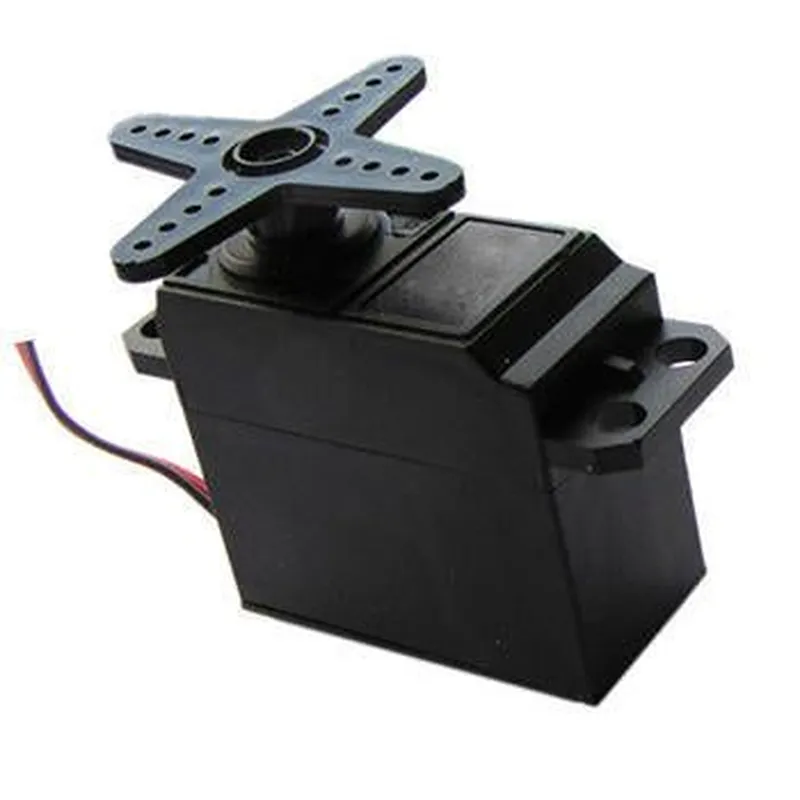
5 Kgf.cm (68.5 oz.in)
0.12 sec/60 (at 6V, 300 mA)
4.8V to 6V
300 mA
50 Hz to 500 Hz
250 mm
28.5 g
Applications
| The VTS 08A Servo Motor is suitable for a wide range of applications, including |
Robotics and robotic arms
CNC machines and automation systems
IoT devices and smart home systems
Medical devices and equipment
Aerospace and defense systems
Industrial automation and control systems
VTS 08A Servo Motor (5 Kgf.cm Torque) DocumentationOverviewThe VTS 08A Servo Motor is a high-torque, high-precision servo motor designed for various robotic and IoT applications. With a maximum torque of 5 Kgf.cm, this servo motor is suitable for powering small to medium-sized mechanisms, such as robotic arms, grippers, and camera platforms.SpecificationsTorque: 5 Kgf.cm (67.7 oz.in)
Speed: 0.12 seconds/60 (4.8V), 0.15 seconds/60 (6.0V)
Operating Voltage: 4.8V - 6.0V
Operating Current: 1.6A (4.8V), 1.8A (6.0V)
Rotation Angle: 0 - 180
Signal Frequency: 50Hz
Weight: 38g
Dimensions: 40.5mm x 20.5mm x 42.5mmCommunication ProtocolThe VTS 08A Servo Motor uses a standard PWM (Pulse Width Modulation) signal to control its rotation angle. The servo motor expects a PWM signal with a frequency of 50Hz and a duty cycle ranging from 5% to 10% to control its rotation.Example CodeThe following examples demonstrate how to use the VTS 08A Servo Motor in various contexts:### Example 1: Arduino ControlIn this example, we will use an Arduino Uno board to control the VTS 08A Servo Motor.```cpp
#include <Servo.h>Servo myservo; // create servo object to control the servo motorvoid setup() {
myservo.attach(9); // attach the servo motor to digital pin 9
}void loop() {
for (int pos = 0; pos <= 180; pos += 1) {
myservo.write(pos); // write the rotation angle to the servo motor
delay(30); // wait 30ms for the servo to reach its position
}
for (int pos = 180; pos >= 0; pos -= 1) {
myservo.write(pos); // write the rotation angle to the servo motor
delay(30); // wait 30ms for the servo to reach its position
}
}
```In this example, we use the Arduino Servo library to control the VTS 08A Servo Motor. We attach the servo motor to digital pin 9 and use the `write()` method to set the rotation angle.### Example 2: Raspberry Pi Control (Python)In this example, we will use a Raspberry Pi to control the VTS 08A Servo Motor using Python.```python
import RPi.GPIO as GPIO
import timeGPIO.setmode(GPIO.BCM) # set GPIO mode to BCM
GPIO.setup(18, GPIO.OUT) # set GPIO 18 as an outputp = GPIO.PWM(18, 50) # create a PWM object with a frequency of 50Hz
p.start(0) # start the PWM signal with a duty cycle of 0%while True:
for dc in range(5, 11, 1): # iterate through duty cycles from 5% to 10%
p.ChangeDutyCycle(dc) # change the duty cycle of the PWM signal
time.sleep(1) # wait 1 second for the servo to reach its position
for dc in range(10, 4, -1): # iterate through duty cycles from 10% to 5%
p.ChangeDutyCycle(dc) # change the duty cycle of the PWM signal
time.sleep(1) # wait 1 second for the servo to reach its position
```In this example, we use the RPi.GPIO library to control the VTS 08A Servo Motor. We set up GPIO 18 as an output and create a PWM object with a frequency of 50Hz. We then iterate through duty cycles from 5% to 10% and back to 5% to control the rotation angle of the servo motor.Additional Resources[VTS 08A Servo Motor Datasheet](https://www.vts-iot.com/datasheets/VTS_08A_Servo_Motor_Datasheet.pdf)
[Arduino Servo Library Documentation](https://www.arduino.cc/en/Reference/Servo)
[RPi.GPIO Library Documentation](https://docs.python.org/3/library/gpio.html)Warranty and SupportThe VTS 08A Servo Motor is warranted for a period of one year from the date of purchase. For technical support, please contact [support@vts-iot.com](mailto:support@vts-iot.com).