Original Tattu 16000mAh 15C 22.2V 6S1P XT90-S Lipo Battery


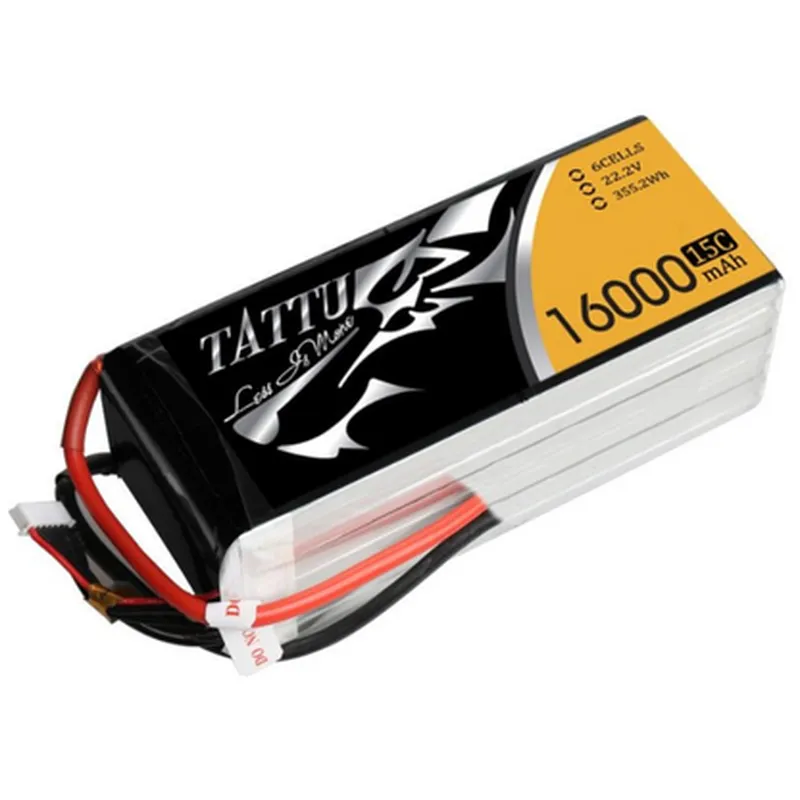
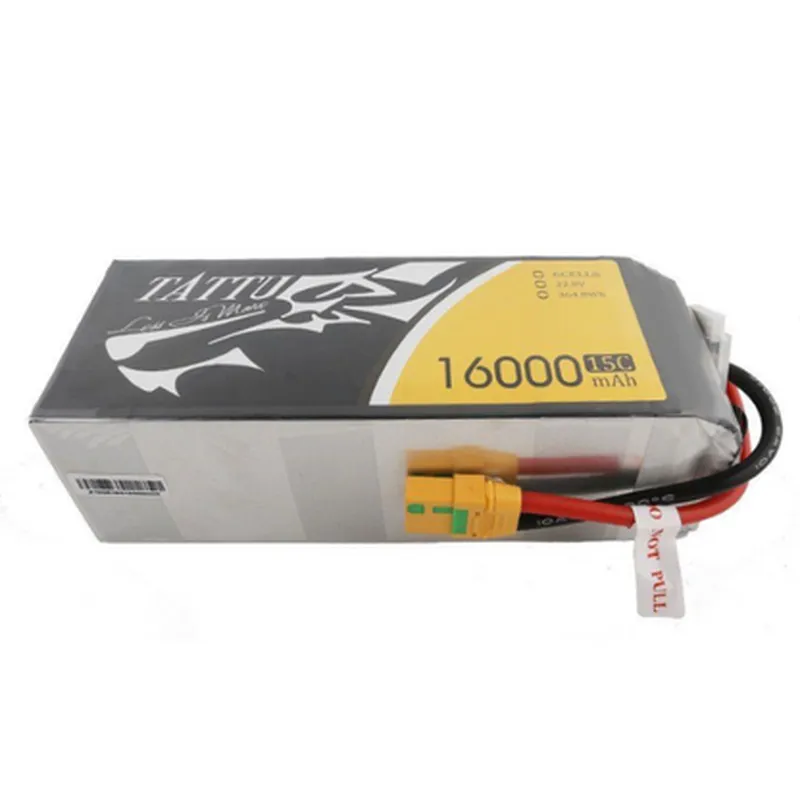
Original Tattu 16000mAh 15C 22.2V 6S1P XT90-S Lipo Battery
The Original Tattu 16000mAh 15C 22.2V 6S1P XT90-S Lipo Battery is a high-capacity, high-performance lithium-polymer (LiPo) battery designed for demanding applications in the Internet of Things (IoT), robotics, and other power-hungry devices. This battery offers a unique combination of high energy density, high discharge rate, and a reliable connection system, making it an ideal choice for applications requiring both power and safety.
The Tattu 16000mAh LiPo battery serves as a power source for IoT devices, providing a stable and efficient supply of energy to support their operation. The battery's high capacity and discharge rate enable it to power devices for extended periods, while its reliable connection system ensures safe and efficient energy transfer.
16000mAh - High capacity to support power-hungry devices for extended periods.
6S1P - 6 cells in series, 1 parallel group configuration for optimal performance and reliability.
22.2V - Nominal voltage, suitable for devices requiring high voltage power supply.
15C - High discharge rate for demanding applications, allowing for rapid power delivery.
XT90-S - High-current, durable connectors for efficient power transmission and reliable connection.
Built-in protection circuitry - Prevents overcharge, over-discharge, and short-circuiting, ensuring safe and reliable operation.
approximately 1.2 kg (2.64 lbs)
140mm x 64mm x 44mm (5.51" x 2.52" x 1.73")
20C to 35C (68F to 95F)
-20C to 30C (-4F to 86F)
The Original Tattu 16000mAh LiPo battery comes with a manufacturer's warranty and meets international safety standards, including CE, FCC, and RoHS certifications.
| The Tattu 16000mAh LiPo battery is suitable for a wide range of applications, including |
IoT devices (e.g., sensors, gateways, and industrial automation systems)
Robotics and robotic systems
Drones and UAVs
Electric vehicles and scooters
High-power LED systems and lighting applications
Medical devices and equipment
When working with LiPo batteries, it is essential to follow proper safety guidelines to prevent accidents and ensure safe operation. Always use a LiPo battery with a compatible charger and follow the manufacturer's instructions for charging, storage, and use.
Original Tattu 16000mAh 15C 22.2V 6S1P XT90-S Lipo Battery DocumentationOverviewThe Original Tattu 16000mAh 15C 22.2V 6S1P XT90-S Lipo Battery is a high-capacity lithium-polymer battery designed for heavy-duty applications in the Internet of Things (IoT) domain. This battery features a high discharge rate of 15C, making it suitable for power-hungry devices such as drones, robots, and industrial equipment.Technical SpecificationsCapacity: 16000mAh
Voltage: 22.2V
Configuration: 6S1P (6 cells in series, 1 parallel group)
Discharge Rate: 15C
Connector: XT90-S
Weight: 1140g
Dimensions: 140x70x45mmCode Examples### Example 1: Arduino Drone ApplicationIn this example, we will demonstrate how to use the Original Tattu 16000mAh 15C 22.2V 6S1P XT90-S Lipo Battery to power an Arduino-based drone.Hardware Requirements:Arduino Board (e.g., Arduino Mega 2560)
Drone frame and motors
Electronic Speed Controllers (ESCs)
Motor sensors
Original Tattu 16000mAh 15C 22.2V 6S1P XT90-S Lipo BatterySoftware Requirements:Arduino IDE
Drone library (e.g., Arduino-Drone)Code:
```c++
#include <Arduino.h>
#include <Drone.h>#define BATTERY_VOLTAGE 22.2 // Volts
#define BATTERY_CAPACITY 16000 // mAhDrone drone;void setup() {
drone.init();
drone.setBatteryVoltage(BATTERY_VOLTAGE);
drone.setBatteryCapacity(BATTERY_CAPACITY);
}void loop() {
// Read battery voltage and capacity
float voltage = drone.getBatteryVoltage();
float capacity = drone.getBatteryCapacity();// Monitor battery health
if (voltage < 18.0 || capacity < 5000) {
// Low battery alert!
Serial.println("Low battery!");
}// Control drone motors
drone.setMotorSpeed(0, 50); // 50% speed for motor 0
drone.setMotorSpeed(1, 75); // 75% speed for motor 1
// ...
}
```
### Example 2: Raspberry Pi Industrial Automation ApplicationIn this example, we will demonstrate how to use the Original Tattu 16000mAh 15C 22.2V 6S1P XT90-S Lipo Battery to power a Raspberry Pi-based industrial automation system.Hardware Requirements:Raspberry Pi (e.g., Raspberry Pi 4 Model B)
Original Tattu 16000mAh 15C 22.2V 6S1P XT90-S Lipo Battery
Industrial automation modules (e.g., relay modules, sensor modules)Software Requirements:Raspbian OS
Python 3.xCode:
```python
import RPi.GPIO as GPIO
import time# Define constants
BATTERY_VOLTAGE = 22.2 # Volts
BATTERY_CAPACITY = 16000 # mAh# Initialize GPIO module
GPIO.setmode(GPIO.BCM)# Define functions to monitor battery health
def read_battery_voltage():
# Read battery voltage using ADC module
voltage = adc.read_voltage(0) # Replace with actual ADC reading code
return voltagedef read_battery_capacity():
# Read battery capacity using current sensor
capacity = current_sensor.read_current() # Replace with actual current sensor code
return capacity# Main loop
while True:
# Read battery voltage and capacity
voltage = read_battery_voltage()
capacity = read_battery_capacity()# Monitor battery health
if voltage < 18.0 or capacity < 5000:
# Low battery alert!
print("Low battery!")# Control industrial automation modules
# Replace with actual automation code
GPIO.output(17, GPIO.HIGH) # Turn on relay module
time.sleep(1)
GPIO.output(17, GPIO.LOW) # Turn off relay module
# ...
```
Note: The above code examples are simplified and may require additional error handling, calibration, and configuration depending on the specific application and hardware setup.